
-
- Products
- Indoor Household Cords
- Appliance Cords
- General Purpose Short-Length Cords
- General Purpose Extension Cords
- Landscape & Decorating Cords
- Bright Color Extension Cords
- Oil-Resistant Extension Cords
- Cold-Flex Extension Cords
- VividFlex Power Cords
- EXTREME All-Weather Cords
- Cord Management
- Task Lights
- Adapters & GFCI Devices
- Where to Buy
- About
- Careers
- Glossary
- Catalog


2026 Best Bath Ventilation Fan for Global Buyers?
Choosing the 2026 Best Bath Ventilation Fan for Global Buyers requires more than comparing airflow numbers. Bathrooms differ across climates, building types, voltage systems, and installation standards. A quiet fan for a Canadian apartment may not suit a humid coastal home in Southeast Asia. Real performance depends on duct length, outlet design, ceiling height, and maintenance access.
Building-science expert Joseph Lstiburek often says, “A building is a system.” That principle matters here. A Bath Ventilation Fan must work with the room, ductwork, doors, windows, and heating system. A powerful motor cannot compensate for a crushed duct or a blocked exterior grille. The fan should remove moisture efficiently without creating uncomfortable drafts or excessive noise.
This guide compares practical features for international buyers, including airflow ratings, sound levels, humidity sensors, backdraft dampers, energy use, and voltage compatibility. We will examine both metric and imperial measurements, since manufacturers present specifications differently. Local electrical rules and ventilation requirements still deserve professional verification.
Small details matter.
A 100-millimeter duct may restrict airflow when poorly installed. A timer switch can reduce lingering humidity after a shower. A washable cover can make cleaning less unpleasant. However, no single model wins everywhere. This review may overlook unusual installation conditions, especially in older buildings. Buyers should treat published specifications as a starting point, then confirm warranty coverage, replacement parts, and local service support before purchasing.
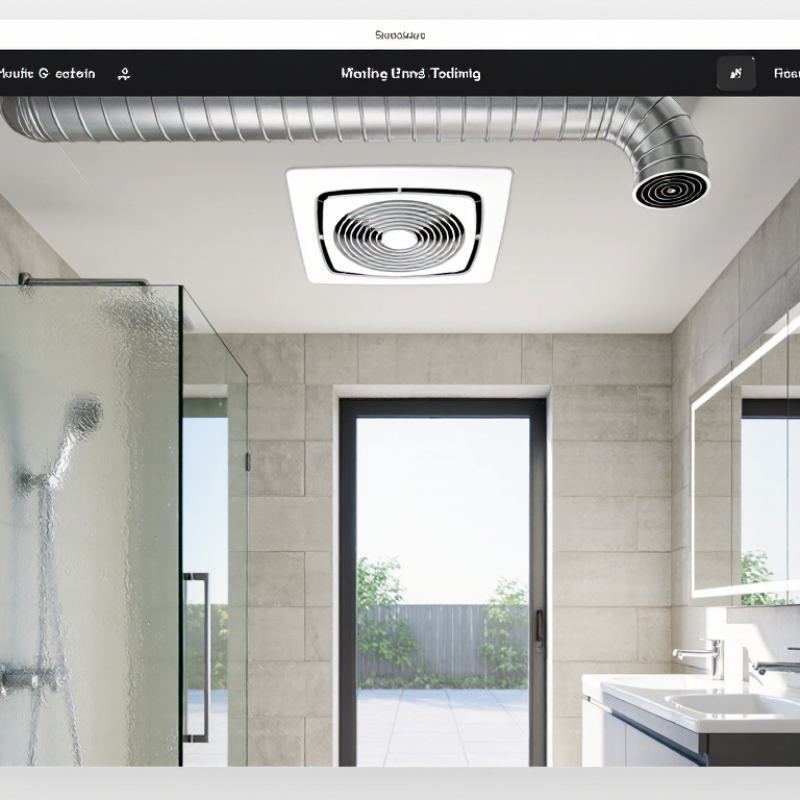
Table of Contents [Hide]
What Is a Bath Ventilation Fan and Why Does It Matter?
What Is a Bath Ventilation Fan and Why Does It Matter?
A bath ventilation fan removes humid air, odors, and airborne pollutants from a bathroom. It pulls warm, wet air outdoors through a duct, reducing condensation on mirrors, ceilings, and painted surfaces. ASHRAE Standard 62.2-2022 recommends at least 50 cubic feet per minute for intermittent bathroom exhaust. Continuous operation requires at least 20 cubic feet per minute. These figures provide a practical design baseline. A 50-square-foot bathroom may still need stronger airflow when showers run frequently. Humidity creates hidden damage. It can weaken drywall, stain grout, and support mold growth. The World Health Organization links indoor dampness and mold with respiratory symptoms and asthma. The U.S. Environmental Protection Agency also reports that indoor pollutant levels can exceed outdoor levels, sometimes by two to five times. Air carries consequences.
For global buyers, performance involves more than airflow. The Home Ventilating Institute Certified Ratings Program evaluates airflow, sound, and energy performance under standardized conditions. A quieter fan may encourage longer use, especially in homes with bedrooms near bathrooms. Duct length, bends, outdoor temperature, voltage, and local installation rules also affect results. In humid coastal climates, backdraft protection and insulated ducting deserve careful attention. In cold regions, poor duct insulation can create condensation inside the ceiling. A perfect specification can still fail after careless installation. I would also question very high airflow claims without independent testing. Bigger is not automatically better. Oversized fans may waste energy, increase noise, and remove conditioned air unnecessarily. Reliable selection combines verified ratings, suitable duct design, and the actual bathroom’s moisture load.