
-
- Products
- Indoor Household Cords
- Appliance Cords
- General Purpose Short-Length Cords
- General Purpose Extension Cords
- Landscape & Decorating Cords
- Bright Color Extension Cords
- Oil-Resistant Extension Cords
- Cold-Flex Extension Cords
- VividFlex Power Cords
- EXTREME All-Weather Cords
- Cord Management
- Task Lights
- Adapters & GFCI Devices
- Where to Buy
- About
- Careers
- Glossary
- Catalog


2026 Best MCCB Circuit Breaker Types for Global Buyers?
Choosing the right Mccb Circuit Breaker in 2026 requires more than comparing prices or ampere ratings. Global buyers must examine fault levels, installation standards, operating environments, and long-term maintenance needs. A 400 A breaker for a 415 V motor panel may need adjustable thermal and magnetic protection. Its Icu and Ics ratings must match the prospective short-circuit current. Small details matter.
The IEA Electricity 2024 report projects global electricity demand to grow by about 4% annually through 2026. This growth increases pressure on industrial plants, data centers, renewable projects, and commercial buildings. Grand View Research also identifies infrastructure development, industrial expansion, and grid modernization as important circuit breaker market drivers. These trends support stronger demand for reliable MCCB products, but market forecasts cannot replace engineering judgment.
John Cadick, electrical safety author and founder of Cadick Corporation, wrote, “The purpose of grounding is safety, not the operation of equipment.” His point remains practical. A breaker cannot compensate for poor grounding, incorrect conductor sizing, or weak maintenance procedures. It is only one part of a protection system. Buyers should compare IEC 60947-2 or UL 489 compliance, temperature derating, altitude limits, accessory availability, and local certification requirements. Some catalogs look complete. They are not always complete.
This guide compares major MCCB types for global applications. It considers thermal-magnetic, electronic-trip, adjustable, and current-limiting designs. It also examines breaking capacity, selectivity, installation conditions, and service support. The imperfect reality is simple: the cheapest breaker may become the most expensive choice after one serious fault.
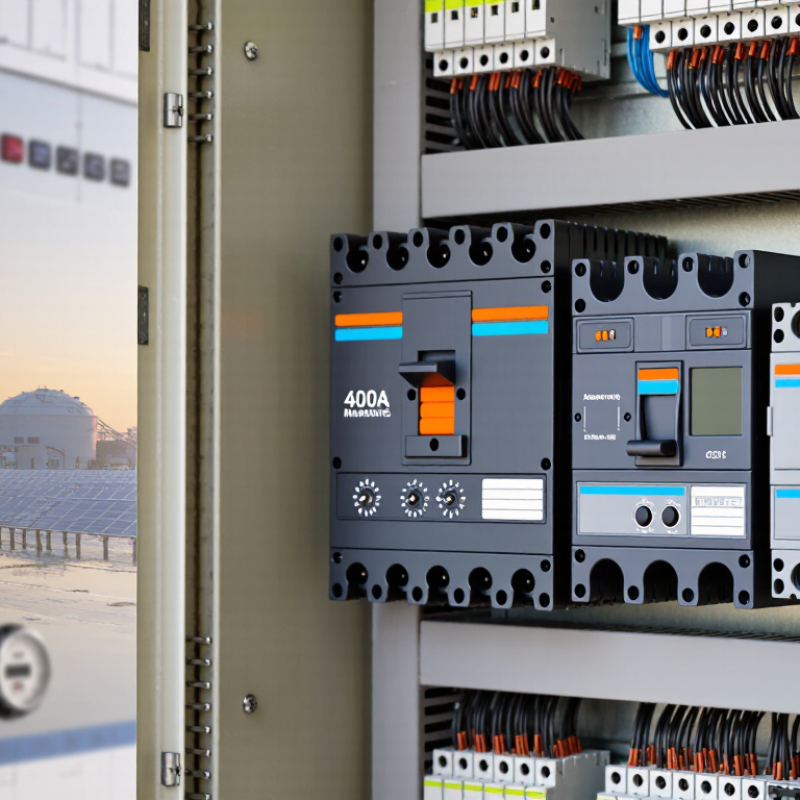
Table of Contents [Hide]
MCCB Circuit Breaker Basics and Core Protection Functions
2026 Best MCCB Circuit Breaker Types for Global Buyers?
MCCB means molded case circuit breaker. It protects low-voltage circuits from overloads and short circuits. Its thermal trip responds to sustained heating. Its magnetic trip reacts almost instantly to severe fault current. Electronic trip units can add adjustable protection and ground-fault sensing. Small detail, major consequence.
The International Energy Agency’s Electricity 2024 report expects global electricity demand to grow by an average 3.4% annually through 2026. Its World Energy Investment 2024 report estimates total energy investment will reach about USD 3 trillion in 2024. More electrical projects mean more attention to interrupting capacity, coordination, and safe isolation. Buyers should compare rated operational voltage, continuous current, Icu, and Ics values under IEC 60947-2. A high ampere rating alone proves little.
In practical panel work, protection settings must match cable size, load behavior, and ambient temperature. Thermal performance can change inside a hot enclosure. Derating is easy to overlook. Selective coordination helps an upstream breaker remain closed when a downstream fault occurs. Adjustable electronic units offer better control, but incorrect settings can weaken protection. I have seen specifications copied between projects without checking prospective fault current. That shortcut needs reconsideration. Mechanical endurance, terminal quality, test access, and auxiliary contacts also matter for global installation teams. Each market still requires verification against applicable local codes.