
-
- Products
- Indoor Household Cords
- Appliance Cords
- General Purpose Short-Length Cords
- General Purpose Extension Cords
- Landscape & Decorating Cords
- Bright Color Extension Cords
- Oil-Resistant Extension Cords
- Cold-Flex Extension Cords
- VividFlex Power Cords
- EXTREME All-Weather Cords
- Cord Management
- Task Lights
- Adapters & GFCI Devices
- Where to Buy
- About
- Careers
- Glossary
- Catalog


2026 Best Textile Lamination Machine Buying Guide
Choosing the right Textile Lamination Machine in 2026 requires more than comparing speed, price, and attractive specifications. A machine may promise 30 meters per minute, yet unstable tension can create wrinkles, weak bonding, or uneven edges. The real test appears on the production floor, beside the roll stand, heated rollers, and finished fabric.
Dr. Behnam Pourdeyhimi, a respected textile materials researcher, offers a useful principle: “Performance must be measured in the finished material, not just in the machine.” This idea should guide every purchasing decision. Buyers need to examine substrate compatibility, adhesive application, heating accuracy, pressure control, web width, and cooling performance. Energy consumption also matters. So does operator training.
This guide evaluates the 2026 best Textile Lamination Machine options through practical and technical criteria. It considers textile manufacturers, nonwoven producers, protective fabric suppliers, and flexible material converters. The strongest machine is not always the fastest one. Sometimes, a slower system delivers cleaner bonding and fewer rejected rolls.
Small details matter.
Check tension recovery after a roll change. Inspect adhesive coating under real production conditions. Ask whether spare parts arrive quickly. Review service records, not only brochures. A machine can look impressive during a demonstration, but daily maintenance may reveal its weaknesses. No buying guide can remove every uncertainty. However, careful testing, transparent supplier communication, and measurable quality targets can reduce expensive mistakes. That is where informed purchasing begins.
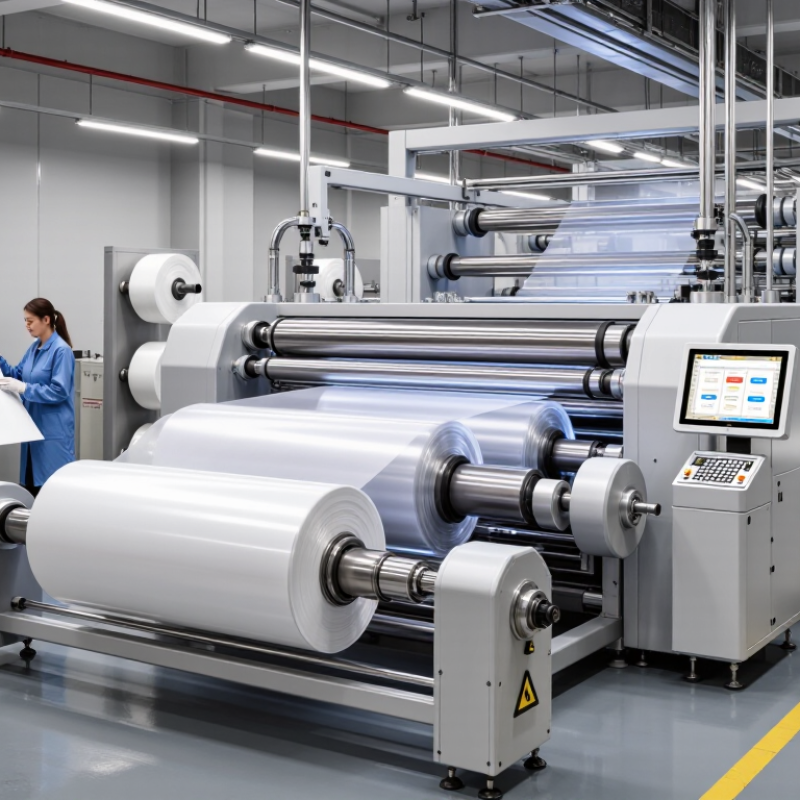
Table of Contents [Hide]
What Is a Textile Lamination Machine and How Does It Work?
A textile lamination machine bonds fabric with another layer, such as film, foam, foil, or nonwoven material. It creates a combined textile with improved water resistance, insulation, strength, or surface protection. The machine usually includes unwinding units, tension controls, heating rollers, a laminating nip, cooling rollers, and a rewinding system.
During operation, the fabric and bonding layer travel at a controlled speed. Heat softens the adhesive or thermoplastic surface. Pressure then presses both materials together. Cooling helps stabilize the finished laminate. Some machines apply liquid adhesive before pressing, while others use pre-coated films. Temperature, pressure, speed, and tension must remain balanced. A small setting error can cause wrinkles, weak bonding, or adhesive marks. The first trial is rarely perfect.
Tips: Test the actual fabric before purchasing. Check its thickness, stretch, heat sensitivity, and surface texture. Ask for production samples at your expected speed. Review coating width, temperature range, roller design, and cleaning access. Operators should also inspect alignment and bond strength during long runs. A simple peel test can reveal problems early. Do not judge performance by speed alone. Stable tension often matters more.