
-
- Products
- Indoor Household Cords
- Appliance Cords
- General Purpose Short-Length Cords
- General Purpose Extension Cords
- Landscape & Decorating Cords
- Bright Color Extension Cords
- Oil-Resistant Extension Cords
- Cold-Flex Extension Cords
- VividFlex Power Cords
- EXTREME All-Weather Cords
- Cord Management
- Task Lights
- Adapters & GFCI Devices
- Where to Buy
- About
- Careers
- Glossary
- Catalog


2026 Top Fuel Pump Carbon Commutator Manufacturers
Fuel-pump reliability depends on small parts doing demanding work. A Fuel Pump Carbon Commutator transfers electrical current while rotating against brushes, often inside a compact, hot, vibration-prone assembly. Its material mix, surface finish, dimensions, and wear behavior can influence motor consistency and service life. Small variations matter.
The market context is changing, but demand needs careful interpretation. OICA’s 2024 production statistics report approximately 92.5 million motor vehicles manufactured worldwide. The International Energy Agency’s Global EV Outlook 2025 reports that electric-car sales exceeded 17 million in 2024, representing more than one-fifth of global car sales. These figures describe broad vehicle trends, not commutator demand directly. Electric vehicles also do not all use conventional fuel-pump assemblies. That distinction is easy to overlook.
This 2026 manufacturer overview should therefore assess more than company size or catalog breadth. Buyers need evidence of stable carbon formulations, controlled machining, brush compatibility, documented inspection, and repeatable supply. Useful questions include whether suppliers can share dimensional tolerances, endurance-test conditions, and batch traceability. A polished brochure is not test data. Public, comparable performance figures for carbon commutators remain limited, so any ranking should state its criteria and acknowledge gaps. The manufacturers worth closer review are those able to connect engineering claims with verifiable production controls and application-specific support. That is a practical standard, though not a perfect one.
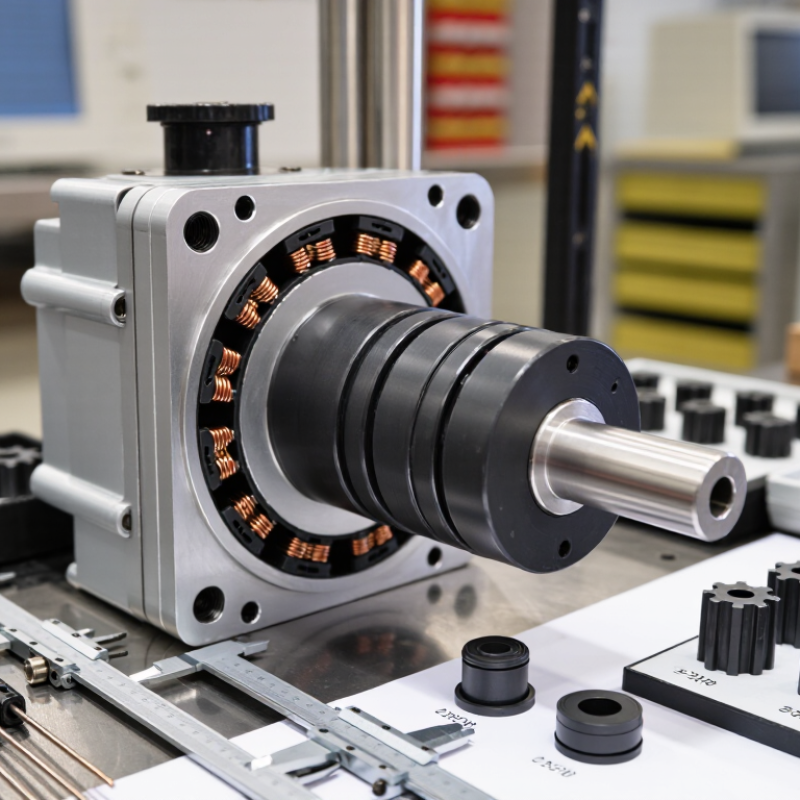
Table of Contents [Hide]
What Is a Carbon Commutator in a Fuel Pump?
What Is a Carbon Commutator in a Fuel Pump?
A fuel-pump carbon commutator is part of the small electric motor that drives the pump. In many product descriptions, “carbon commutator” loosely means the contact system, rather than a commutator made entirely of carbon. The commutator is commonly built from copper segments; carbon brushes press against it and transfer current as the rotor spins. That switching keeps the motor turning. It is small, but its contact surface works continuously in a hot, vibrating environment.
OICA’s 2023 production statistics recorded about 93.5 million motor vehicles built worldwide. This figure describes vehicle production, not fuel-pump demand, but it shows the scale of systems that depend on durable motor components.
In service, brush pressure, surface finish, and electrical load all affect wear. Fine dark dust, uneven contact marks, or rising electrical resistance can signal deterioration. A worn commutator may cause intermittent pump operation, though those symptoms can have other causes. The terminology is imperfect, and inspection alone does not always identify the fault. SAE technical literature on brushed DC motors likewise treats brush-commutator contact as a key factor in motor performance and durability.