
-
- Products
- Indoor Household Cords
- Appliance Cords
- General Purpose Short-Length Cords
- General Purpose Extension Cords
- Landscape & Decorating Cords
- Bright Color Extension Cords
- Oil-Resistant Extension Cords
- Cold-Flex Extension Cords
- VividFlex Power Cords
- EXTREME All-Weather Cords
- Cord Management
- Task Lights
- Adapters & GFCI Devices
- Where to Buy
- About
- Careers
- Glossary
- Catalog


2026 Best Portable Oxygen Generator Buying Guide?
Choosing the right Portable Oxygen Generator in 2026 requires more than comparing prices and battery claims. Real-world performance depends on oxygen output, delivery mode, battery life, noise, weight, and maintenance. A device that feels light in a showroom may become tiring after several hours outdoors. Small details matter. Think about crowded trains, uneven sidewalks, cold mornings, and limited charging access.
This buying guide examines specifications that deserve careful attention. We will compare continuous-flow and pulse-dose systems, explain oxygen concentration ratings, and discuss alarms, filters, warranties, and replacement parts. Certification and clinical suitability also matter. Always follow a qualified healthcare professional’s prescription, because oxygen requirements vary between users and medical conditions. Product labels can appear impressive, yet they may not reflect performance at higher altitudes or during physical activity.
Independent testing, manufacturer documentation, and verified user experiences provide stronger evidence than advertisements alone. Still, no single source is perfect. Some reviews overlook long-term battery degradation or service delays. That deserves reflection. The most expensive model is not automatically the safest choice, and the smallest model may not meet every user’s needs. We will also consider travel preparation, charging habits, carrying comfort, and local transport rules. Requirements may differ by country and carrier, so confirm them before departure. By the end, readers should have a practical framework for selecting a reliable unit, asking better questions, and avoiding costly assumptions.
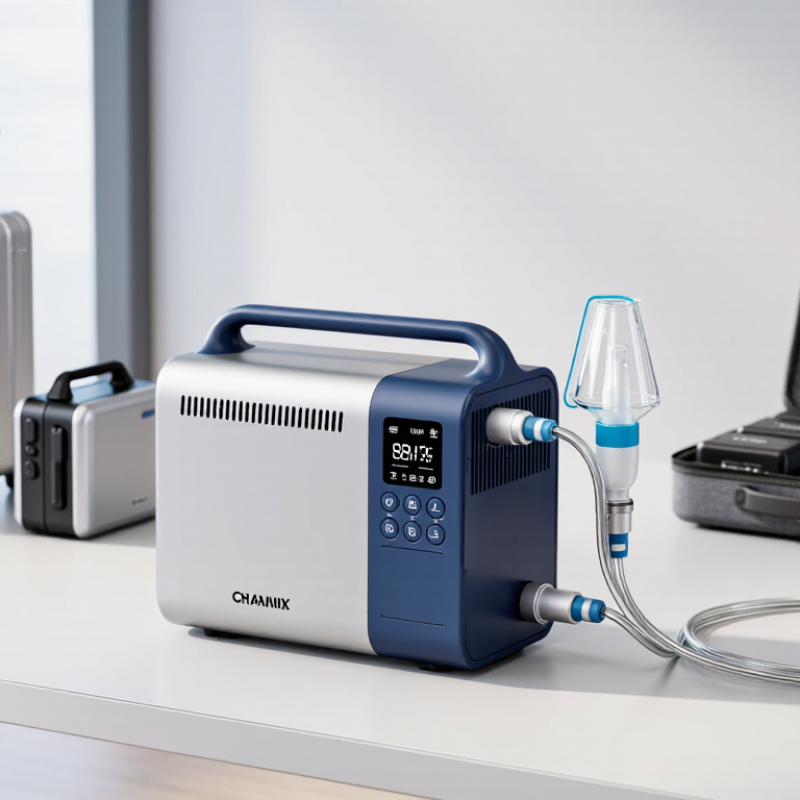
Table of Contents [Hide]
What Is a Portable Oxygen Generator and How Does It Work?
A portable oxygen generator is usually an oxygen concentrator. It does not create oxygen through combustion or chemical reactions. Instead, it draws in ordinary room air, which contains about 21% oxygen, and separates nitrogen from it.
Inside, compressor-driven air passes through molecular sieve beds. These materials capture nitrogen while oxygen-rich gas moves toward the outlet. The device then delivers oxygen through a nasal cannula. Some models provide continuous flow, while others release measured pulses when they detect inhalation. Oxygen concentration can vary with altitude, airflow settings, temperature, and maintenance.
In practical use, the machine may sit beside a chair, hum softly, and display battery status or oxygen purity. A portable design does not always mean effortless travel. Battery life, weight, noise, charging time, and alarm visibility can affect daily comfort. That trade-off is easy to underestimate. A lighter unit may require more frequent charging.
Users should follow a qualified clinician’s prescribed flow setting. Changing it independently can be unsafe. Keep the equipment away from flames, smoking materials, oils, and excessive heat. Check filters, tubing, alarms, and battery condition according to the instruction manual. A trustworthy device should provide clear specifications, safety warnings, maintenance guidance, and accessible technical support. The word “generator” can mislead buyers, because the machine mainly filters and concentrates oxygen from surrounding air.