
-
- Products
- Indoor Household Cords
- Appliance Cords
- General Purpose Short-Length Cords
- General Purpose Extension Cords
- Landscape & Decorating Cords
- Bright Color Extension Cords
- Oil-Resistant Extension Cords
- Cold-Flex Extension Cords
- VividFlex Power Cords
- EXTREME All-Weather Cords
- Cord Management
- Task Lights
- Adapters & GFCI Devices
- Where to Buy
- About
- Careers
- Glossary
- Catalog


2026 Top 4 Pin Female Connector Types for Global Buyers?
Choosing the right 4 Pin Female Connector in 2026 requires more than comparing prices or catalog photos. Global buyers must examine contact materials, mating cycles, voltage ratings, wire gauges, and environmental protection. A connector used inside a control cabinet faces different demands from one exposed to rain, vibration, or engine heat.
This guide introduces four practical connector types for international sourcing: wire-to-wire, wire-to-board, waterproof circular, and automotive-style connectors. Each option solves a different installation problem. Quick decisions can become expensive.
Real purchasing experience shows that small details often cause major failures. A loose crimp may pass an initial test but overheat after months of vibration. An attractive IP rating may apply only when the connector is fully mated. Some datasheets also present unclear current values, so buyers should request test conditions and samples.
Reliable evaluation should include terminal plating, housing temperature limits, locking design, sealing performance, and supplier quality records. Buyers should also check relevant IEC, UL, RoHS, and REACH documentation for their target markets. These references support responsible procurement, but they do not replace application testing.
The best connector is not always the most advanced one. It is the one that fits the cable, equipment, environment, and maintenance plan. A low-cost model may work perfectly in a dry enclosure. It may fail quickly outdoors. This comparison helps engineers, distributors, and purchasing teams reduce uncertainty before committing to volume orders. Minor mistakes remain possible, especially when specifications change between suppliers. Verification matters.
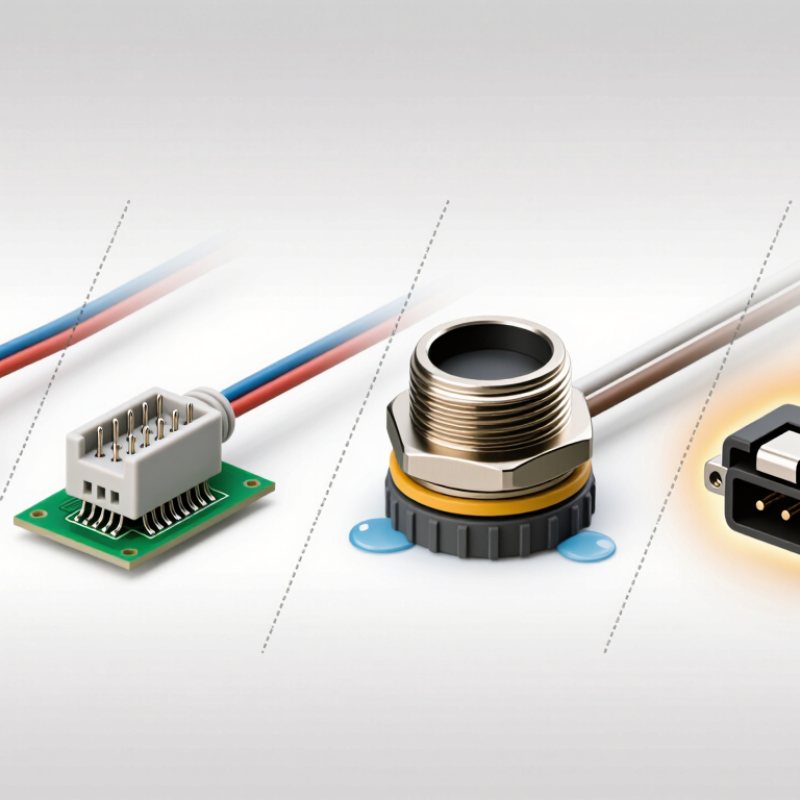
Table of Contents [Hide]
Define the Top Four 4-Pin Female Connector Families by IEC 60512 Criteria
For global buyers, four-pin female connectors are best grouped by application: wire-to-board, wire-to-wire, circular industrial, and sealed automotive types. IEC 60512 does not define these families. It provides test methods for electrical, mechanical, and environmental performance. Key checks include contact resistance, insulation resistance, dielectric strength, mating durability, and termination security. A four-pin housing can look suitable, yet fail after repeated vibration.
Wire-to-board designs suit control panels and compact equipment. Wire-to-wire types support field replacement and harness extensions. Circular industrial connectors resist twisting and accidental pulling, especially near motors. Sealed automotive connectors add protection against water, dust, and thermal cycling.
According to Bishop & Associates’ 2024 connector industry analysis, the global connector market exceeded 80 billion dollars, showing why standardised testing matters across supply chains. Market estimates differ, though. That difference deserves scrutiny before purchasing.
Tips: Request IEC 60512 test records, not only catalogue ratings. Check the actual cable size, plating, locking force, and operating temperature. Ask for mating-cycle results with the chosen wire. In one practical review, a connector passed electrical tests but failed after poor crimp control. Small details matter. Also verify ingress protection through the complete assembly, not the female housing alone.