-
- Products
- Indoor Household Cords
- Appliance Cords
- General Purpose Short-Length Cords
- General Purpose Extension Cords
- Landscape & Decorating Cords
- Bright Color Extension Cords
- Oil-Resistant Extension Cords
- Cold-Flex Extension Cords
- VividFlex Power Cords
- EXTREME All-Weather Cords
- Cord Management
- Task Lights
- Adapters & GFCI Devices
- Where to Buy
- About
- Careers
- Glossary
- Catalog


2026 Top Cable Protection Sleeve Types for Global Buyers?
Choosing the right Cable Protection Sleeve in 2026 requires more than comparing prices or attractive product images. Global buyers now assess abrasion resistance, heat tolerance, flexibility, installation speed, and long-term reliability. A sleeve used near robotic joints faces different stresses from one protecting wiring beneath a truck chassis. That difference matters.
This guide examines leading sleeve types, including braided expandable sleeves, split braided sleeves, heat-shrink sleeves, corrugated conduits, fiberglass sleeves, and heavy-duty abrasion covers. Each option offers practical advantages. Each also has limits. Braided sleeves can improve airflow and flexibility, but exposed edges may need careful finishing. Heat-shrink products create a tight seal, yet future cable replacement can become difficult. No shortlist is perfect.
Our comparison reflects common purchasing experience across industrial automation, automotive systems, renewable energy equipment, marine applications, and data infrastructure. We focus on measurable details, such as temperature range, wall thickness, bend radius, flame behavior, chemical exposure, and installation conditions. Buyers should still verify current technical data, certifications, and regional requirements with manufacturers before ordering.
Small details often decide performance. A sleeve that fits a 20-millimeter cable bundle may fail after connectors are added. A warehouse team may value quick installation more than maximum thermal resistance. That is easy to overlook. This overview helps engineers, distributors, and procurement teams match sleeve construction with real operating conditions, not just catalog claims.
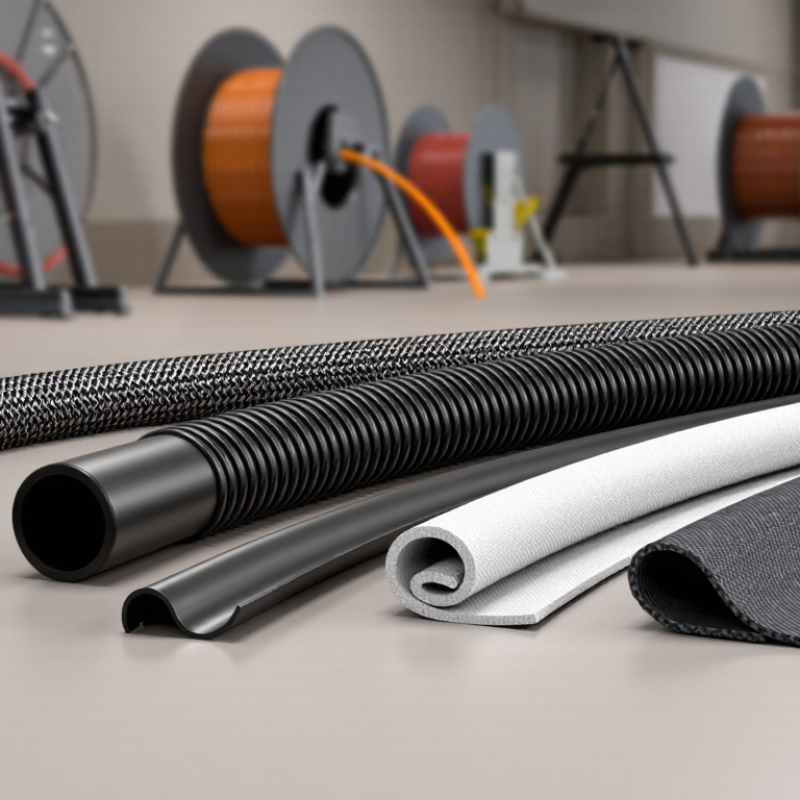
Table of Contents [Hide]
What Cable Protection Sleeves Are and Why Global Buyers Need Them
Cable protection sleeves are flexible covers placed around wires, harnesses, and hoses. They reduce damage from abrasion, heat, moisture, dust, and repeated movement. Common types include expandable braided sleeves, split-wrap sleeves, heat-shrink tubing, and flame-resistant textile sleeves. Each design solves a different site problem.
A 2024 MarketsandMarkets report estimated the global cable management market at about USD 23.9 billion in 2023. It also projected growth to roughly USD 36.2 billion by 2028. Cable sleeves support this wider market by extending cable service life and simplifying maintenance.
In factories, a braided sleeve can prevent rubbing against sharp machine frames. In vehicles, heat-resistant sleeving can protect wiring near engines or exhaust systems. In data centers, organized bundles improve inspection access and airflow. That matters.
Global buyers should check temperature ratings, abrasion cycles, chemical resistance, flame performance, and installation space. IEC 60332 test classifications can help evaluate flame behavior, but compliance needs product-specific evidence.
A 2023 report from Grand View Research identified rising industrial automation and infrastructure investment as major cable management drivers. Still, selecting by price alone creates risk. Some low-cost sleeves loosen, trap moisture, or become difficult to remove during repairs. I have seen specifications look excellent on paper, yet fail when bend radius and actual heat exposure were ignored. Procurement teams should request test reports, material details, batch traceability, and samples under real operating conditions.