
-
- Products
- Indoor Household Cords
- Appliance Cords
- General Purpose Short-Length Cords
- General Purpose Extension Cords
- Landscape & Decorating Cords
- Bright Color Extension Cords
- Oil-Resistant Extension Cords
- Cold-Flex Extension Cords
- VividFlex Power Cords
- EXTREME All-Weather Cords
- Cord Management
- Task Lights
- Adapters & GFCI Devices
- Where to Buy
- About
- Careers
- Glossary
- Catalog


2026 Top Tray Ladder Rack Types and Buying Guide
Choosing the right Tray Ladder Rack begins with a practical question: what must it carry, and under which conditions?
Market research from Grand View Research and MarketsandMarkets shows continued growth across vehicle storage, fleet equipment, and cable-management systems. However, these reports rarely separate tray ladder racks from broader rack categories. That limitation deserves attention. Market size alone cannot prove product quality, loading safety, or daily usability.
A strong buying decision should examine rack material, tray width, load rating, mounting method, corrosion resistance, and vehicle compatibility. Picture a service van entering a low garage with a ladder secured above its roof. A few centimeters can determine whether the rack works or becomes a costly problem. Weight distribution matters too. A ladder sliding sideways can damage equipment, vehicles, or people nearby.
Safety standards provide a useful baseline. OSHA 29 CFR 1910.23 addresses ladder-related workplace risks, while ANSI ladder standards support safer design and use practices. These standards do not replace manufacturer instructions or trained installation. They work together.
Dr. John Howard, former NIOSH Director, has repeatedly emphasized a practical principle: “The future of work must be safe and healthy.” That principle fits every Tray Ladder Rack purchase. Convenience should never outrank secure transport.
This guide compares common rack types for contractors, fleet managers, and maintenance teams. It considers real installation details, not only catalog specifications. Some recommendations may still require judgment. No single rack suits every van, ladder, route, or climate. The best choice is usually the one that remains stable, accessible, and maintainable after months of demanding use.
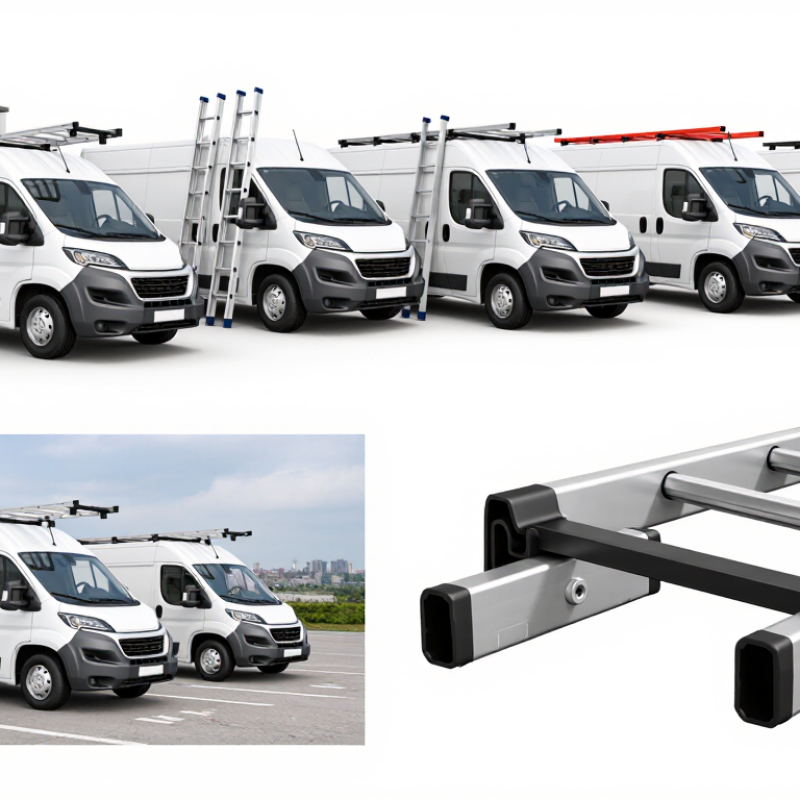
Table of Contents [Hide]
Tray Ladder Racks: Definition, Purpose, and Main Components
A tray ladder rack is a vehicle-mounted support system for carrying ladders above the cargo area. Unlike a simple roof bar, it uses a shaped tray to keep ladder rails aligned and reduce sliding during travel. Common designs include fixed, adjustable, side-loading, and multi-level configurations.
Its purpose is practical: preserve interior space, improve loading speed, and keep long equipment away from passengers. A complete system normally includes a ladder tray, vertical uprights, crossbars, mounting feet, clamps, tie-down points, and protective padding. The tray should match the ladder width, while the mounting feet must spread weight across strong roof or body locations. A visible load label matters.
The safety reason is substantial. OSHA recorded 395 fatal falls to lower levels among 1,069 construction fatalities in 2022. A secure rack cannot prevent every fall, but it can reduce loose-equipment movement around the vehicle. FMCSA cargo-securement guidance also considers forward, rearward, and lateral forces during transport. Those forces are easy to underestimate.
In field use, the strongest-looking rack is not always the best choice. Check the vehicle roof rating, fastener condition, corrosion resistance, and daily access height. Padding can wear quietly. Recheck it. A careless tie-down can damage both ladder and rack, despite a high published capacity.