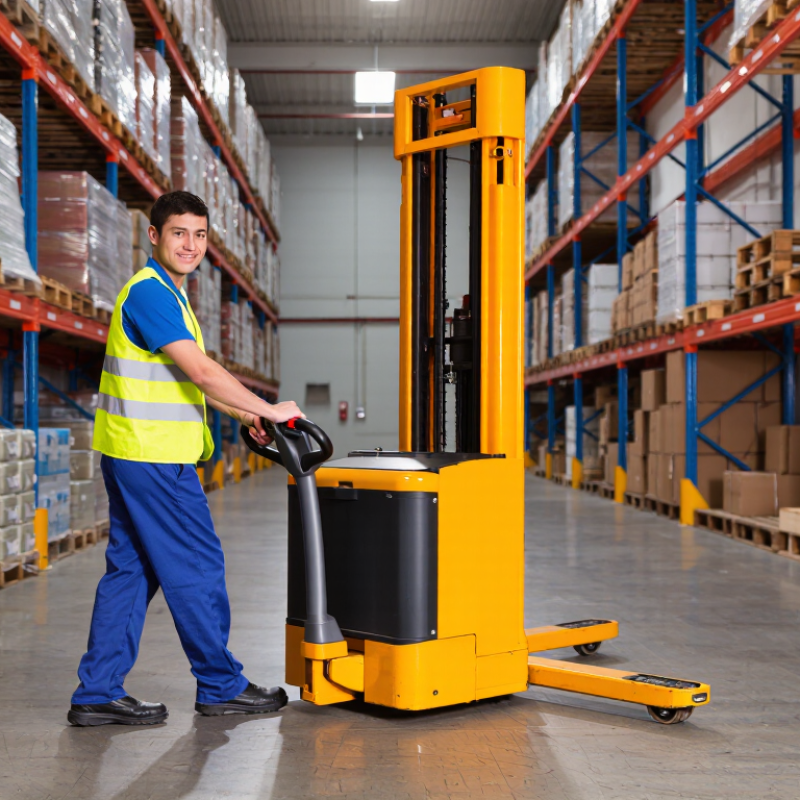
| Basic Definition and Capacity |
| Rated load capacity | 3,000 kg (approximately 6,614 lb) | The truck is designed to move loads up to its rated capacity when the load is correctly positioned and the floor is suitable. | Never exceed the capacity shown on the truck's data plate. Capacity may decrease when the load center increases. |
| Load center | Common reference: 600 mm | The load center is the horizontal distance from the fork face to the center of gravity of the load. | A longer or unevenly distributed load can reduce the safe working capacity. Use the manufacturer's capacity chart where provided. |
| Truck type | Manual hydraulic or electric walk-behind | A manual model uses a handle and hydraulic pump to raise the forks. An electric model uses a battery-powered drive and lifting system. | Only trained and authorized operators should use powered versions. |
| Primary function | Short-distance pallet transport and positioning | The forks enter the pallet openings, lift the pallet slightly clear of the floor, and move it across a prepared surface. | It is not normally intended for lifting people, stacking at height, or operating as a high-lift forklift. |
| Typical Technical Dimensions |
| Fork length | Approximately 1,150 mm is common | Forks support the pallet from underneath and transfer the load to the load wheels. | Forks should enter the pallet far enough to provide stable support without striking the opposite side of the pallet. |
| Fork outside width | Commonly about 540–685 mm | The spacing must match the pallet openings and maintain balanced support. | Confirm fork spacing and pallet compatibility before entering the load. |
| Lowered fork height | Typically about 75–85 mm | Low forks slide beneath standard pallets when the entry path is clear. | Do not force the forks under a damaged pallet or against an obstruction. |
| Raised fork height for travel | Usually only slightly above floor level, about 75–125 mm | The load is raised just enough to clear the floor and travel safely. | Keeping the load low improves stability and reduces the risk of striking objects. |
| Turning radius | Often about 1,500–2,300 mm, depending on design | The steering handle pivots the steer wheel or drive unit to guide the truck around corners. | Allow extra clearance for the load, rear swing, pedestrians, and fixed equipment. |
| Operating surface | Level, firm, clean, and capable of supporting the combined weight | The wheels carry the truck and load across the floor; uneven surfaces increase rolling resistance and instability. | Avoid steep slopes, loose debris, potholes, wet areas, and surfaces with inadequate load capacity. |
| How a 3 Ton Pallet Truck Works |
| Fork insertion | Forks aligned centrally with the pallet openings | The operator positions the forks squarely and pushes or drives them beneath the pallet. | Keep the load centered and ensure both forks are inserted to a similar depth. |
| Hydraulic lifting | Handle pump or powered lift raises the forks | On a manual truck, repeated handle strokes pressurize hydraulic fluid and extend the lift mechanism. On an electric truck, a motor-driven pump performs the lift. | Stop lifting if the pallet tilts, the load shifts, or unusual noise or leakage is detected. |
| Load support | Forks, frame, and load wheels share the load | The load transfers through the forks and frame to the load wheels and steering assembly. | Distribute the load evenly and keep heavy items low and close to the fork face. |
| Steering and travel | Handle-controlled steering; manual push or electric drive | The operator guides the steering wheel or drive unit while moving at a controlled walking speed. | Maintain a clear view and travel with the load trailing when that provides better visibility. |
| Lowering mechanism | Controlled hydraulic release or powered lowering control | Opening the lowering valve or using the lowering control allows the forks to descend gradually. | Keep feet, hands, and other body parts away from the forks, wheels, and pinch points. |
| Safe Operating Procedure |
| 1. Pre-use inspection | Complete before every shift or use | Check forks, welds, frame, wheels, steering handle, hydraulic system, controls, battery, warning devices, and data plate. | Tag out and report the truck if there is hydraulic leakage, structural damage, faulty braking, damaged wheels, or uncontrolled lowering. |
| 2. Assess the load | Confirm weight, dimensions, stability, and pallet condition | Compare the load with the rated capacity and make sure the pallet can support the weight. | Do not move loose, unstable, damaged, or excessively high loads without suitable controls. |
| 3. Position the forks | Approach squarely and centrally | Align the truck with the pallet, keep the forks level, and insert them fully enough to support the load. | Do not lift with only the fork tips or with one fork carrying most of the load. |
| 4. Lift for travel | Raise only enough to clear the floor | Use smooth pumping or lift controls until the pallet is stable and just clear of the floor. | Avoid sudden acceleration, braking, or steering while the load is raised. |
| 5. Travel safely | Controlled walking speed with a clear route | Sound a warning at blind corners where required, watch for pedestrians, and maintain adequate stopping distance. | Do not carry passengers, place body parts under the load, or travel with obstructed visibility. |
| 6. Operate on slopes | Avoid slopes whenever possible | If slope travel is permitted by the equipment instructions, keep the load positioned toward the uphill side and move slowly. | Never turn sharply, coast, or leave a loaded truck unattended on a slope. |
| 7. Set down the load | Stop fully before lowering | Position the pallet at the designated location, apply the brake if fitted, and lower the forks in a controlled manner. | Ensure the pallet is stable before withdrawing the forks and keep clear of crush zones. |
| 8. Park after use | Forks fully lowered and controls neutralized | Park in an authorized area, lower the forks, switch off powered equipment, and apply the parking brake where fitted. | Do not block exits, fire equipment, emergency routes, aisles, or access to electrical equipment. |
| Key Risk Controls |
| Overloading | Maximum permitted load: 3,000 kg only under specified conditions | Capacity depends on the rated load, load center, load distribution, and equipment configuration. | Use the capacity plate as the controlling source rather than relying on the nominal 3 ton description. |
| Pedestrian interaction | Separate routes where practical | Use marked aisles, adequate lighting, mirrors, warning signals, and site traffic rules. | Pedestrians have priority according to site policy; stop if a person enters the travel path. |
| Pinch and crush points | Keep clear of forks, wheels, frame, and pallet edges | Hydraulic and powered movement can create high-force pinch points even at low travel speeds. | Never place hands or feet beneath raised forks or between the truck and a fixed object. |
| Operator training | Documented training and site-specific authorization | Training should cover equipment controls, load handling, traffic rules, inspection, emergency actions, and practical operation. | Follow local occupational safety requirements and the equipment operating manual. |
| Source of final specifications | Truck data plate, load chart, and operating manual | Actual dimensions, capacity, speed, battery requirements, braking system, and slope limits vary by model and configuration. | The manufacturer's documentation and workplace risk assessment take precedence over typical values in this table. |