
-
- Products
- Indoor Household Cords
- Appliance Cords
- General Purpose Short-Length Cords
- General Purpose Extension Cords
- Landscape & Decorating Cords
- Bright Color Extension Cords
- Oil-Resistant Extension Cords
- Cold-Flex Extension Cords
- VividFlex Power Cords
- EXTREME All-Weather Cords
- Cord Management
- Task Lights
- Adapters & GFCI Devices
- Where to Buy
- About
- Careers
- Glossary
- Catalog


7 Best Parking Locks for Cars in 2026
A Parking Lock can add a visible barrier between your car and an open parking space, but the right choice depends on more than its shape. In 2026, buyers can compare manual folding posts, remote-controlled barriers, and connected models with app features. Each design brings different trade-offs. A sturdy-looking arm may still be awkward to operate when rain is falling or your hands are full.
This guide explores seven parking locks for cars, focusing on practical details that matter at home, in shared lots, and in commercial spaces. We consider construction, mounting requirements, power options, controls, visibility, and resistance to everyday weather. Fit matters. Measure your parking space and check the ground surface before choosing a model; concrete, paving, and uneven surfaces can affect installation. Also consider whether the barrier leaves enough clearance for your vehicle and neighboring cars.
Features alone do not guarantee reliable protection. A remote needs dependable power, while a manual lock needs a mechanism you can raise and secure without struggle. No device is foolproof. Even a well-built lock may need regular checks for loose fixings, corrosion, or a weakening battery. Small details count. The best option is the one that suits your space, routine, and maintenance habits—not simply the one with the most impressive specifications.
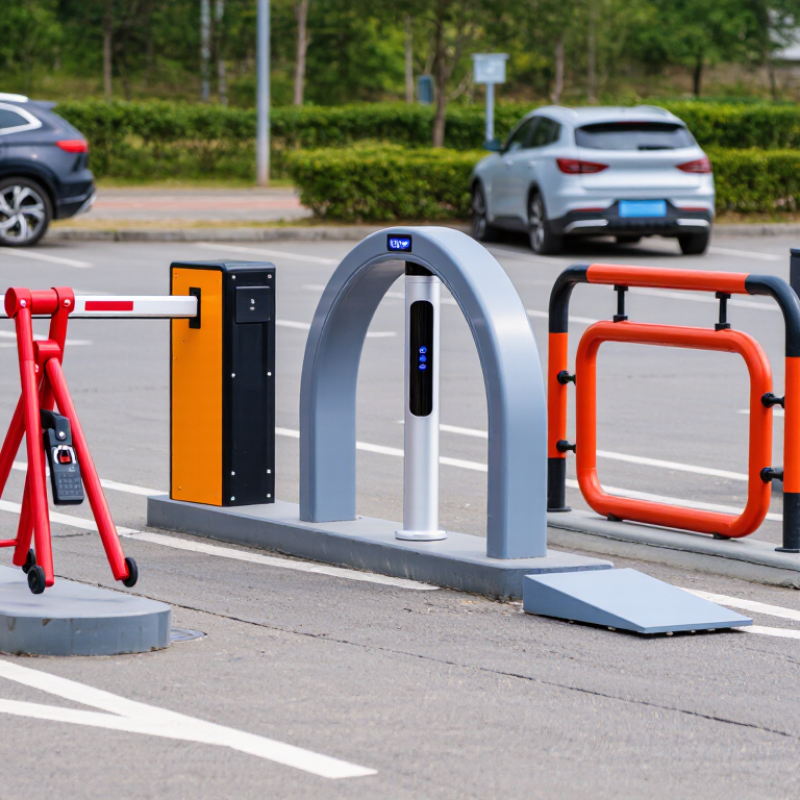
Table of Contents [Hide]
How Parking Locks Protect Cars and Control Access
A parking lock creates a visible, physical barrier between an open parking space and an arriving vehicle. Raised models block the front or rear of a car; authorized users lower them with a key or remote. This simple step can help control access to a reserved driveway, apartment space, or small fleet area.
The National Insurance Crime Bureau’s 2023 Hot Wheels report recorded 1,020,729 vehicle thefts in the United States, about 1% more than in 2022. That figure shows why layered precautions matter, but it does not prove that parking locks prevent theft.
The barrier works best when it fits the space and is anchored securely to a suitable surface. Check the car’s bumper clearance, the lock’s folded height, and whether pedestrians can see it at night. A lock that scrapes a low bumper or blocks a walkway creates its own problem. Small details matter.
A parking lock controls entry; it does not make a car theft-proof. Pair it with locked doors, a well-lit parking area, and careful key control. Test the release before relying on it, especially after rain or freezing weather. And remember, someone can forget to raise it. Human habits are part of the security system, too.