
-
- Products
- Indoor Household Cords
- Appliance Cords
- General Purpose Short-Length Cords
- General Purpose Extension Cords
- Landscape & Decorating Cords
- Bright Color Extension Cords
- Oil-Resistant Extension Cords
- Cold-Flex Extension Cords
- VividFlex Power Cords
- EXTREME All-Weather Cords
- Cord Management
- Task Lights
- Adapters & GFCI Devices
- Where to Buy
- About
- Careers
- Glossary
- Catalog


Best Anti Flammable Cabinet 2026 for Safe Storage
Choosing the Best Anti Flammable Cabinet for 2026 means looking beyond color and price. These cabinets help keep flammable liquids organized and reduce exposure to fire risks when selected and used appropriately. A dependable model should have clear capacity information, sturdy construction, secure doors, and storage features suited to the chemicals on hand. Check the product documentation, too. A cabinet that looks robust may still be a poor fit for your workspace.
Laboratory safety educator James A. Kaufman has said, “Safety is not an intellectual exercise to keep us in work; it is a matter of life and death.” That perspective matters when comparing cabinets. Consider where the unit will stand, how staff will access containers, and whether labels remain visible under everyday use. Think about the small details: a door that closes smoothly, shelves that support the expected load, and enough room to avoid cramming bottles together. The right choice depends on your materials and work routine, not just a feature list.
This guide examines practical selection points, including capacity, construction, access, and maintenance. It also encourages careful review of manufacturer instructions and applicable workplace requirements. No cabinet makes careless storage safe. That part is easy to forget. A thoughtful choice can support safer routines, though it cannot replace staff training or regular checks. Before buying, compare models against real storage needs—and be honest about what your team may overlook.
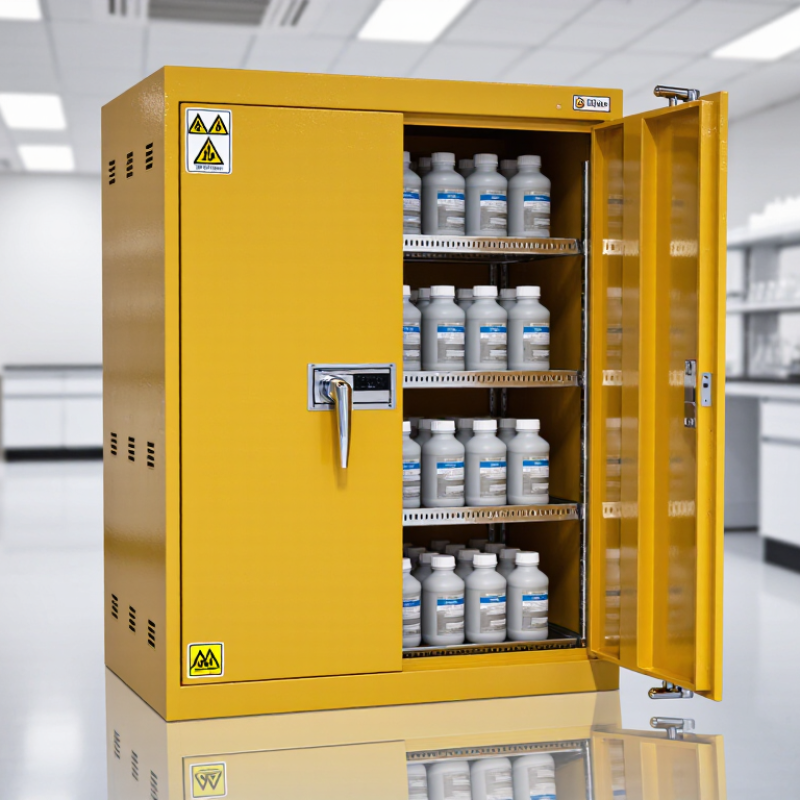
Table of Contents [Hide]
What Defines the Best Flammable-Liquid Cabinet for Safe Storage in 2026?
The best flammable-liquid cabinet in 2026 is not simply the largest or most heavily built. It should match the liquid’s classification, the quantity stored, and the way staff use it. OSHA’s 29 CFR 1910.106 sets cabinet limits of 60 gallons for Category 1, 2, or 3 flammable liquids, and 120 gallons for Category 4 liquids. NFPA 30 also provides guidance for storing flammable and combustible liquids. Check the current standards and local requirements before choosing a cabinet.
Look for durable construction, secure doors, and shelves that contain small spills. Confirm that the cabinet materials suit the liquids inside; a label alone cannot establish chemical compatibility. Think about daily access, too: a cabinet placed beside a busy doorway may be compliant on paper but awkward in practice. I would not assume one cabinet design fits every workspace. Storage volumes, transfer routines, and ventilation needs can differ.
Tips: Keep an up-to-date inventory, follow the cabinet’s stated capacity, and keep containers closed when not in use. Train staff to check for leaks and damaged doors. Small details matter. Revisit the setup after processes change.