
-
- Products
- Indoor Household Cords
- Appliance Cords
- General Purpose Short-Length Cords
- General Purpose Extension Cords
- Landscape & Decorating Cords
- Bright Color Extension Cords
- Oil-Resistant Extension Cords
- Cold-Flex Extension Cords
- VividFlex Power Cords
- EXTREME All-Weather Cords
- Cord Management
- Task Lights
- Adapters & GFCI Devices
- Where to Buy
- About
- Careers
- Glossary
- Catalog


2026 Best Appliance Cords for Every Home Need?
In today’s rapidly evolving technology landscape, the importance of quality appliance cords cannot be overstated. Reports indicate that faulty cords contribute to over 30% of electrical appliance failures, leading to potential hazards. The market for appliance cords is expected to reach $5 billion by 2026, reflecting growing consumer awareness of safety and reliability.
Choosing the right appliance cords is essential for optimal performance. Consumers often underestimate the impact of cord quality on device efficiency. Inadequate cords can cause overheating, reduce lifespan, and even lead to appliance malfunctions. This reality calls for a careful approach when selecting cords for home use.
Despite advances in manufacturing, not all cords meet safety standards. Testing and certification processes are crucial, yet many products slip through the cracks. A lack of awareness persists among consumers regarding potential risks associated with cheap or generic appliance cords. As we advance towards 2026, prioritizing safety and quality in appliance cords will be vital for every household.
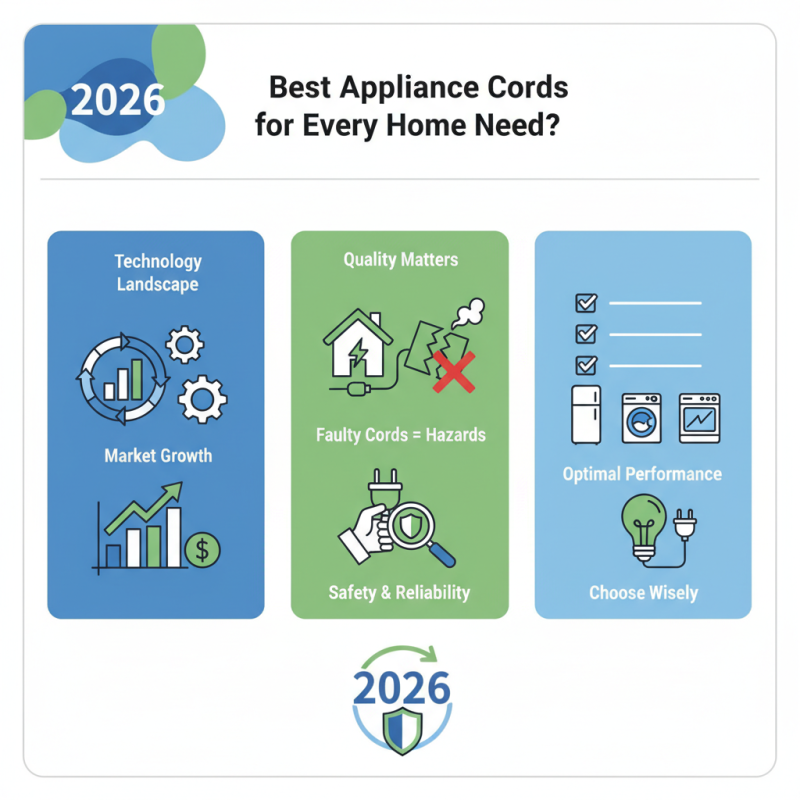
Table of Contents
[Hide]
Overview of Appliance Cords and Their Importance in Homes
Appliance cords are essential for the smooth operation of household devices. They transport electricity from outlets to various appliances, ensuring they work efficiently. A recent report by the National Fire Protection Association indicates that faulty cords can lead to over 30,000 home fires annually. Proper selection and maintenance of appliance cords is crucial for safety.
When choosing cords, consider factors like length and capacity. Look for cords that can handle the wattage of your devices. For example, a 12-gauge cord can manage heavier appliances, while 16-gauge is suitable for lighter ones. Be aware that many homeowners overlook the wear and tear of cords. Regular inspections can help identify frayed wires or exposed connections.
Tips: Avoid overloading your outlets. Using multiple high-wattage devices on one outlet can strain the system. Always unplug cords when not in use, as this can prevent unnecessary wear. It's easy to neglect cords, but being proactive can save you from potential hazards. Ultimately, the right cords enhance safety and performance in every home.
2026 Best Appliance Cords for Every Home Need
| Cord Type | Length (Feet) | Material | Amp Rating | Price ($) |
|---|---|---|---|---|
| Indoor Extension Cord | 25 | PVC | 15 | 15.99 |
| Outdoor Extension Cord | 50 | Rubber | 12 | 24.99 |
| Heavy-Duty Power Cord | 10 | PVC | 20 | 29.99 |
| Cord with Surge Protection | 15 | PVC | 16 | 19.99 |
| Multi-Outlet Power Strip | 6 | Plastic | 15 | 12.99 |
Related Posts
-
2025 Top Types of Appliance Cords: Essential Guide and Tips
-
2025 Top Short Power Cord Innovations for Efficient Home and Office Use
-
Top 10 Facts About General Wire and Cable You Should Know?
-
Top 10 Extension Cables: Your Ultimate Guide to Choosing the Best
-
Top Extension Cord Wire Types and Their Best Uses?
-
How to Choose the Right Short Extension Cord for Your Needs