What Are the Best China Power Cord Adapters for Global Buyers?

Choosing the best China power cord adapters requires more than comparing prices on a supplier platform. A plug may fit a wall socket, yet the adapter can still fail under the wrong voltage, frequency, load, or grounding conditions. Small plug. Large consequences. The International Energy Agency’s World Energy Outlook 2024 highlights continuing differences in electricity access and infrastructure quality across regions. These differences make electrical compatibility a practical purchasing issue, not a cosmetic detail.

Global buyers should examine destination-specific plug types, rated voltage, current capacity, conductor size, insulation quality, and strain relief. IEC 60884-1 provides an important reference for household plugs and socket outlets, while national requirements may add testing, marking, or certification obligations. UL Solutions, TÜV Rheinland, and Intertek also emphasize traceability, product testing, and manufacturing controls in electrical supply chains. A credible Chinese manufacturer should provide clear specifications, batch records, factory details, and current test reports. Photos alone are not evidence.

Logistics adds another layer. The UNCTAD Review of Maritime Transport 2024 describes continuing pressure on global shipping networks, which can affect delivery schedules and inventory planning. Grand View Research’s reports on travel and electrical accessories also indicate steady demand linked to international mobility and cross-border commerce. Still, market growth does not guarantee product quality. That assumption deserves challenge. Buyers should request samples, inspect markings, verify plug dimensions, and test adapters with realistic loads before ordering at scale. The best power cord adapters are therefore not simply the cheapest products from China. They are documented, tested, correctly rated, and suitable for the exact country, appliance, and operating environment. Reliability begins with uncomfortable questions.
What Are the Best China Power Cord Adapters for Global Buyers?

What Are China Power Cord Adapters and How Do They Work?

What Are the Best China Power Cord Adapters for Global Buyers?

What Are China Power Cord Adapters and How Do They Work?

China power cord adapters connect Chinese electrical plugs with sockets used in other countries. They mainly change the plug shape, not the electrical voltage. Mainland China commonly uses 220V and 50Hz power. Many destination markets use different voltages, socket designs, or grounding systems. Therefore, an adapter alone may not protect sensitive equipment. A voltage converter may be necessary.

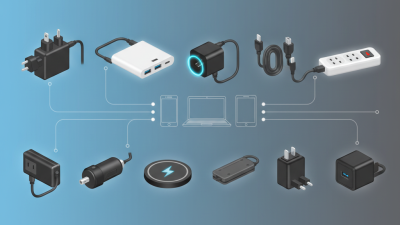
A typical adapter contains conductive metal contacts, an insulated housing, and sometimes a grounding connection. When inserted correctly, its contacts link the appliance plug with the wall socket. IEC 60884-1 provides widely used requirements for household plugs and socket outlets. Buyers should still verify destination standards and testing documents. The International Energy Agency’s Electricity 2024 report expects global electricity demand to grow by about 3.3% annually through 2026. That growth increases demand for reliable connection accessories, but quality differences remain significant.

In practical sourcing, check the rated voltage, current, plug type, grounding method, and heat resistance. A compact adapter can feel solid while hiding weak contacts. That is an easy mistake. UN Comtrade trade data also places China among the leading exporters of electrical connection products, but export volume does not prove safety or durability. Request sample testing, inspect terminal tightness, and compare markings with independent laboratory reports. The best choice is not always the cheapest unit. It is the adapter that matches the appliance, socket, and operating environment precisely.

Which Plug Types and Electrical Standards Apply in China?

China’s household supply is generally 220 volts at 50 hertz, according to the U.S. International Trade Administration’s China Country Commercial Guide. Travelers may encounter Type A, Type C, and Type I sockets, although Type I outlets are especially common in newer buildings. Type A uses two flat parallel pins. Type C uses two round pins. Type I has angled flat pins and may include an earth contact. Socket combinations can vary between hotels, factories, and older apartments.

A plug adapter only changes the physical connection. It does not convert voltage or frequency. Equipment rated “100–240V, 50/60Hz” is usually suitable when paired with the correct adapter. Single-voltage devices need a properly rated transformer, not a simple travel adapter. IEC 60884-1 and China’s GB/T 2099 standards address household plugs and socket safety, while IEC 60038 provides reference voltage classifications for electrical systems. Check the product label, grounding design, current rating, and certification markings before shipping.

In practical testing, a loose Type C connection may feel secure but still heat under heavy loads. That is an easy detail to miss. I would also avoid assuming every Type I socket is wired identically, especially in renovated spaces. The International Electrotechnical Commission notes that connector compatibility depends on both geometry and electrical ratings. For global buyers, adapters with insulated contacts, strain relief, and clear 10A or 16A ratings offer a more dependable starting point.

How Can Global Buyers Match Adapters With Their Devices?

Choosing a China power cord adapter starts with the device, not the plug shape. Check the device label for voltage, frequency, wattage, and grounding requirements. Mainland China commonly uses 220V and 50Hz power. Many travel adapters change the plug shape only. They do not convert voltage.

A dual-voltage device marked “100–240V, 50/60Hz” usually needs only a suitable mechanical adapter. Match the adapter’s socket with the device plug, then confirm the Chinese plug fits the destination outlet. For grounded equipment, select an adapter with a real earth connection. Avoid two-pin adapters for metal-bodied appliances, desktop computers, or high-power tools.

Wattage matters. A small adapter rated for 10A may handle a laptop charger, but a heater can demand far more current. Calculate load with watts = volts × amps, and leave a safety margin. I have seen buyers focus on shape while missing frequency limits on motors and timers. That mistake is easy to repeat.

For international procurement, review insulation quality, contact firmness, heat resistance, cable thickness, and available test documentation. A loose connection can create warmth, noise, or intermittent charging. Test one sample with the actual device before ordering in volume. It is not perfect, but this step reveals fit problems that product photos cannot show. Also check the destination’s plug standard and local electrical requirements before shipment.

How Can Global Buyers Match China Power Cord Adapters With Their Devices?

A plug adapter changes the plug shape but does not convert voltage or frequency. Global buyers should first check the device label: equipment marked “100–240V, 50/60Hz” can generally use a suitable China-to-destination plug adapter, while single-voltage equipment may require a voltage converter. China commonly uses 220V and 50Hz with Type A, C, and I-compatible plug configurations. Always match the adapter’s plug geometry, grounding design, current rating, and destination standard with the device.

What Safety, Certification, and Quality Factors Should Buyers Check?

Global buyers should treat China power cord adapters as safety components, not simple accessories. Start by matching the plug shape, voltage, frequency, and grounding method with the destination market. A correct-looking plug can still contain unsuitable insulation or wiring.

Check whether the adapter meets applicable national standards, IEC requirements, and destination-market certification rules. Common documents may include test reports, factory audit records, material declarations, and traceability information. Verify the certificate number with the issuing body when possible. Do not rely on a supplier’s logo or a scanned document alone. Certification scope matters. It should cover the exact model, rated current, plug configuration, and production site.

Inspect the cord gauge, copper conductors, insulation thickness, strain relief, and flame-retardant housing. Pull the cable firmly. It should not loosen near the plug. Look for secure terminals, clean molding, and consistent labeling. Temperature-rise, dielectric-strength, continuity, and overload tests can reveal hidden weaknesses. Small details matter.

A practical inspection should include production samples, not only pre-production units. Batch variation is easy to underestimate. I have seen adapters pass visual checks while showing loose internal connections. That mistake is costly. Ask for serial or batch tracking, incoming-material controls, and corrective-action records. Factory quality systems help, but they are not perfect. Independent laboratory testing is worth considering for high-volume orders or unfamiliar suppliers. Never assume one approval covers every destination. Requirements can change, and product revisions may quietly invalidate older reports.

What Are the Best China Power Cord Adapters for Global Buyers? — What Safety, Certification, and Quality Factors Should Buyers Check?

Adapter Configuration Compatible China Plug or Socket Format Typical Destination Markets Electrical Compatibility Grounding and Polarity Relevant Standards or Marking Checks Quality and Safety Factors to Verify Suitability
China Type A/C to North America Type A/B Accepts common Chinese two-pin Type A or Type C plugs and connects to North American Type A/B outlets. United States, Canada, Mexico, Japan, and other markets using Type A or Type B outlets. A plug adapter only. It does not convert voltage or frequency. Chinese mains are generally 220 V, 50 Hz; North American systems commonly use 100–127 V, 60 Hz. Two-pin versions are ungrounded. A three-pin version is required for equipment that needs a protective earth connection. Check applicable national requirements, recognized laboratory evaluation where required, conductor markings, and correct plug dimensions. Verify flame-retardant insulating material, secure pin retention, fully enclosed contacts, strain relief, temperature rise, and a stated current rating. Conditional
China Type A/C to Continental Europe Type C/E/F Suitable for compatible two-pin Chinese plugs when the adapter provides the correct mechanical fit. Most continental European countries, including markets using Type C, Type E, or Type F systems. European supply is commonly 220–240 V, 50 Hz, which is generally close to China’s nominal 220 V, 50 Hz supply. Type C is ungrounded. Type E/F-compatible adapters must provide a functional earth path for Class I equipment. Check compliance with the applicable national plug and socket requirements and the relevant parts of IEC 60884 for household plug and socket systems. Confirm that earth contacts engage before live contacts, pins are correctly spaced, the housing is heat resistant, and the adapter does not obstruct adjacent sockets. Generally Suitable
China Type A/C to United Kingdom Type G Accepts compatible Chinese two-pin plugs and connects to the three-rectangular-pin UK socket system. United Kingdom, Ireland, Cyprus, Malta, Malaysia, Singapore, and several markets using Type G outlets. Destination supply is commonly 230 V, 50 Hz. The adapter does not provide voltage conversion. Type G sockets normally include an earth connection and shutter protection. A two-pin device may remain ungrounded if it is double-insulated. Check the applicable Type G requirements, including BS 1363-related design and fuse requirements where applicable. A CE mark alone is not proof of independent safety certification. Verify the correct fuse arrangement, shutter operation, pin dimensions, earth continuity, impact resistance, and resistance to overheating under rated load. Generally Suitable
China Type A/C to Australia/New Zealand Type I Connects compatible Chinese plugs to angled-flat-pin Type I outlets. Australia, New Zealand, Argentina, and selected Pacific markets. Supply is typically 230 V, 50 Hz in Australia and New Zealand. The adapter does not convert voltage. Type I systems may include an earth pin. Grounded equipment requires an adapter with a continuous protective-earth connection. Check the applicable national Type I requirements, certification rules, and approval markings for the destination country. Confirm pin angle and dimensions, insulation around live pins, earth continuity, plug retention, material temperature rating, and resistance to insertion force. Conditional
China Plug to South Africa Type M/N Requires a dedicated adapter designed for the large-pin Type M system or the Type N system used in some installations. South Africa, Brazil, and selected markets with related large-pin or Type N configurations. Supply commonly ranges around 220–240 V, 50/60 Hz depending on the market. Frequency must be checked for motor-driven equipment. Grounded appliances require an adapter with a correctly connected earth path; a two-pin travel adapter is not sufficient. Check destination-specific approval requirements and the applicable IEC or national standards for the plug system. Verify high-current contact spacing, robust earth contacts, heat-resistant construction, secure molding, and protection against accidental contact. Conditional
Universal Travel Adapter with China Input Accepts several plug formats, including common Chinese Type A or Type C plugs, through a sliding or modular mechanism. Multi-country business travel, hotels, offices, and mixed-destination supply programs. Usually rated for 100–250 V, 50/60 Hz, but the exact rating must be printed on the product. It is not automatically a voltage converter. Many compact universal adapters are ungrounded. Do not use them with exposed-metal Class I equipment unless a verified earth path is provided. Check destination-market approvals, applicable IEC requirements, declaration documentation, and whether the product has been evaluated as an adapter rather than only as a charger. Inspect shutter protection, locking mechanism, contact pressure, thermal performance, overload protection, fuse or circuit-breaker design, and compatibility with high-power loads. Conditional
Grounded China-to-Destination Power Cord Uses a molded cable with a fixed Chinese plug on one end and a destination-specific appliance connector or plug on the other. Computers, monitors, test equipment, networking hardware, and other permanently installed or semi-permanent equipment. Commonly supports 220–240 V, 50 Hz, but the cable, appliance inlet, and destination plug must all have compatible ratings. Provides a dedicated protective-earth conductor when correctly wired. Ground continuity should be verified by testing. Check the destination plug standard, cable construction requirements, conductor identification, current rating, and applicable national certification. Verify conductor cross-sectional area, insulation thickness, bend radius, molded strain relief, earth-pin connection, connector retention, and marking durability. Best for Fixed Equipment
Adapter with Integrated Fuse or Overload Protection Available in several China-to-destination configurations; protection features vary by design. Recommended where the destination plug system requires a fuse or where additional overload protection is specified. The protection device does not change voltage or frequency. Confirm the rated voltage, current, and interrupt capability. Fuse protection is not a substitute for protective earthing, correct polarity, insulation, or a residual-current device. Check the applicable plug standard, fuse type, fuse rating, accessibility, replacement instructions, and destination-market approval documentation. Verify that the fuse is correctly located, the enclosure prevents bypassing, contacts do not loosen during repeated use, and the adapter passes abnormal-operation testing. Preferred for Higher-Risk Loads
Important buyer check: A plug adapter changes the physical plug configuration only; it does not normally convert voltage or frequency. Before purchase, confirm the appliance input label, destination voltage and frequency, grounding class, rated current, required certification, and whether the adapter is intended for continuous or temporary use. USB charging ports, surge protection, and voltage conversion should be evaluated as separate functions.

How Should Buyers Compare Suppliers, Prices, and Bulk Options?

What Are the Best China Power Cord Adapters for Global Buyers?

Supplier comparison should begin with compliance, not the lowest quote. Ask for current test reports, material declarations, factory audit records, and samples from the same production line. IEC 60884-1 provides widely used safety requirements for plugs and socket-outlets. However, destination-market rules still differ. A supplier experienced with one region may misunderstand another. Check plug type, voltage rating, frequency, grounding method, cable size, and labeling before negotiating price.

Price comparisons need identical specifications. Request quotes by unit, tooling, packaging, testing, and shipping separately. Copper and plastic costs can change quickly; the World Bank Commodity Markets Outlook regularly tracks these commodity movements. A quote that is 8% lower may hide thinner conductors, shorter cables, or weaker strain relief. It happens. I would test samples after bending, heating, and repeated insertion, not only inspect appearance.

Bulk buyers should compare total landed cost at 500, 5,000, and 50,000 units. Include inspection fees, defect allowances, customs charges, and replacement stock. The International Trade Centre’s Trade Map helps buyers review export patterns and supplier concentration by product category. Lead time also matters. A factory promising seven days may lack stable capacity during peak seasons. Negotiate staged deliveries, inspection checkpoints, and written acceptance criteria. Keep one approved sample sealed. Small details prevent large disputes.