
-
- Products
- Indoor Household Cords
- Appliance Cords
- General Purpose Short-Length Cords
- General Purpose Extension Cords
- Landscape & Decorating Cords
- Bright Color Extension Cords
- Oil-Resistant Extension Cords
- Cold-Flex Extension Cords
- VividFlex Power Cords
- EXTREME All-Weather Cords
- Cord Management
- Task Lights
- Adapters & GFCI Devices
- Where to Buy
- About
- Careers
- Glossary
- Catalog


7 Best Circuit Breaker Parts for Global Buyers
Selecting reliable Circuit Breaker Parts is not a simple catalog exercise. Global buyers must examine electrical ratings, material quality, compatibility, and supplier consistency. A part that looks identical online may perform differently under heat, vibration, or repeated switching. Small details matter.
This guide introduces seven practical circuit breaker components for international purchasing teams. It considers contacts, terminals, trip units, arc chutes, operating mechanisms, insulation barriers, and auxiliary contacts. Each part affects safety, service life, or maintenance efficiency. The discussion reflects common industrial inspection practices, including checking datasheets, sample dimensions, terminal plating, and test documentation. Experienced buyers should also confirm voltage, current, frequency, breaking capacity, and installation conditions before approval.
There is no universal “best” component. A compact molded-case breaker may suit a factory panel, while a robust air-breaker assembly may fit heavy industrial distribution. Supplier reputation matters, but paperwork alone is not enough. Request samples.
In practical sourcing, I have found that overlooked details cause many delays. A mismatched terminal can stop installation. An incorrect trip setting can create nuisance shutdowns. Even a strong supplier may provide an unsuitable part when specifications remain vague. That is an uncomfortable point, but it deserves attention. Reliable decisions require technical comparison, traceable quality records, and communication with qualified electrical professionals. This introduction prepares global buyers to evaluate seven Circuit Breaker Parts with greater confidence, caution, and technical clarity.
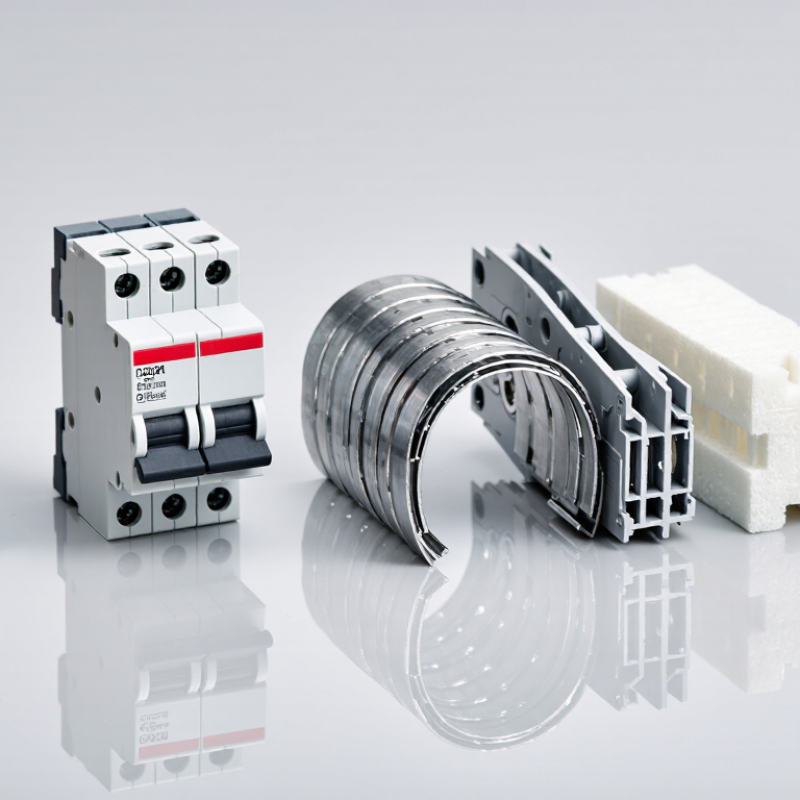
Table of Contents [Hide]
What Circuit Breaker Parts Do and How They Work
7 Best Circuit Breaker Parts for Global Buyers
What Circuit Breaker Parts Do and How They Work
Circuit breakers rely on seven key parts: contacts, trip units, arc chutes, operating mechanisms, terminals, insulation housings, and auxiliary contacts. The contacts carry current during normal operation. When a fault appears, the trip unit detects excessive current and releases the mechanism. The contacts separate quickly. The arc chute then divides and cools the electrical arc. It is a small component with a serious responsibility. IEA’s Electricity 2024 report forecasts global electricity demand will grow by about 3.4% annually from 2024 to 2026, increasing pressure on reliable protection equipment.
Terminals connect the breaker to cables or busbars. Poor torque can create heat, discoloration, and eventual failure. The insulation housing prevents unintended contact and must suit the system’s voltage, temperature, and pollution level. Auxiliary contacts provide remote status signals, which help control panels identify whether a breaker is open or closed. IRENA’s Renewable Capacity Statistics 2024 reports 473 GW of renewable capacity additions in 2023. More distributed generation means protection parts must handle changing current directions and frequent switching.
For global buyers, check interrupting capacity, rated voltage, frequency, terminal size, and environmental ratings. Standards matter, but paperwork alone cannot reveal weak assembly quality. I still inspect contact alignment and mechanism movement manually. It takes minutes. A breaker may pass a basic test yet fail under heat, vibration, or repeated operation. That uncomfortable gap deserves attention.