
-
- Products
- Indoor Household Cords
- Appliance Cords
- General Purpose Short-Length Cords
- General Purpose Extension Cords
- Landscape & Decorating Cords
- Bright Color Extension Cords
- Oil-Resistant Extension Cords
- Cold-Flex Extension Cords
- VividFlex Power Cords
- EXTREME All-Weather Cords
- Cord Management
- Task Lights
- Adapters & GFCI Devices
- Where to Buy
- About
- Careers
- Glossary
- Catalog


China Best CNC Lathe Parts Manufacturers
Choosing among China’s best CNC lathe parts manufacturers requires more than comparing prices or polished factory photos. The market operates at a serious industrial scale. The International Federation of Robotics reported 276,288 industrial robots installed in China in 2023, representing 51% of global installations. That figure, published in World Robotics 2024, reflects a highly automated manufacturing base—but it does not certify any individual supplier. Details matter.
For buyers, Cnc Lathe Parts quality is visible in less dramatic places: a consistent shaft diameter, clean threads, burr-free edges, and a batch inspection report that matches the shipped components. Ask manufacturers about material traceability, dimensional inspection methods, surface finishes, and how they handle drawing revisions. Request samples that represent normal production, not only a specially prepared showcase piece. A coordinate-measuring machine report can help verify critical dimensions, while clear records make recurring orders easier to assess. These checks are useful for automotive, machinery, medical-device, and electronics applications, where fit and repeatability affect assembly and service life.
Price still matters. So do lead times, communication, and the supplier’s willingness to flag a tolerance that may be difficult to hold. No shortlist replaces direct verification. Samples can mislead. A careful comparison should weigh documented process controls alongside cost and capacity, rather than treating “best” as a universal label. The strongest manufacturer for one drawing may not suit another project’s material, volume, or inspection needs. This guide explains how to evaluate Chinese CNC lathe suppliers with evidence, practical questions, and realistic expectations.
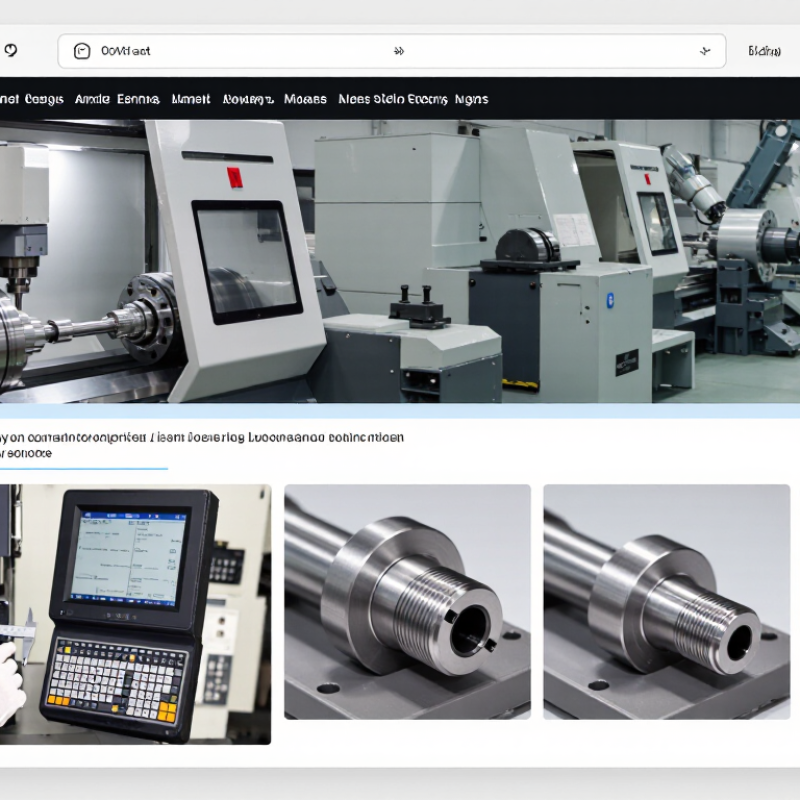
Table of Contents [Hide]
What CNC Lathe Parts Manufacturers in China Produce
China Best CNC Lathe Parts Manufacturers
CNC lathe parts manufacturers in China produce components by cutting rotating bar stock or blanks. Common products include precision shafts, sleeves, bushings, pins, threaded fittings, spacers, and rollers. Small parts may fit inside a fingertip; larger turned pieces support industrial equipment. Materials often include aluminum, stainless steel, brass, and carbon steel, selected for load, corrosion exposure, and cost.
Many workshops combine turning with drilling, boring, threading, grooving, and face milling. Live-tooling machines can add cross-holes or flats without moving the part to another setup. That can reduce handling. It does not guarantee perfect results, though: thin walls may distort, and long shafts can deflect during cutting. Good production planning considers geometry, batch size, and operation sequence before machining begins.
Manufacturers may also provide deburring, polishing, heat-treatment coordination, and finishes such as anodizing or plating. Quality checks commonly use micrometers, gauges, and coordinate-measuring equipment to verify diameters, runout, and threads. Buyers should share clear drawings, material requirements, and realistic tolerances. A smooth surface looks reassuring, but it cannot prove dimensions are correct. Inspection records and sample approval offer stronger evidence, though documentation may not reveal every variation between batches.