
-
- Products
- Indoor Household Cords
- Appliance Cords
- General Purpose Short-Length Cords
- General Purpose Extension Cords
- Landscape & Decorating Cords
- Bright Color Extension Cords
- Oil-Resistant Extension Cords
- Cold-Flex Extension Cords
- VividFlex Power Cords
- EXTREME All-Weather Cords
- Cord Management
- Task Lights
- Adapters & GFCI Devices
- Where to Buy
- About
- Careers
- Glossary
- Catalog


7 Best Glass Decor Films for Privacy and Style
Glass Decor Films can change the feel of a room without replacing its windows. A frosted band can blur a bathroom view; a reeded pattern can soften the outline of a home office; a clear geometric film can add detail while keeping the glass bright. The right choice depends on the room, the light, and how much privacy you need. Small differences matter.
This guide explores seven options, from subtle etched effects to bold colored designs. It considers appearance, visibility, daylight, cleaning, and where each style may work best. A film that looks softly opaque in a showroom can feel different against a sunny window, so check samples in the room before deciding. Look closely at the edges, too. Installation quality affects the finished look.
A useful design principle for this guide is: “Privacy should soften a view, not automatically shut out the light.” This is an editorial line, not a verified quotation. No expert interview or source was provided, so I can’t responsibly attach it to a named industry professional. The recommendations that follow focus on practical comparisons, not promises that one film suits every space. Some rooms need more coverage; others benefit from a light touch. That distinction is easy to overlook.
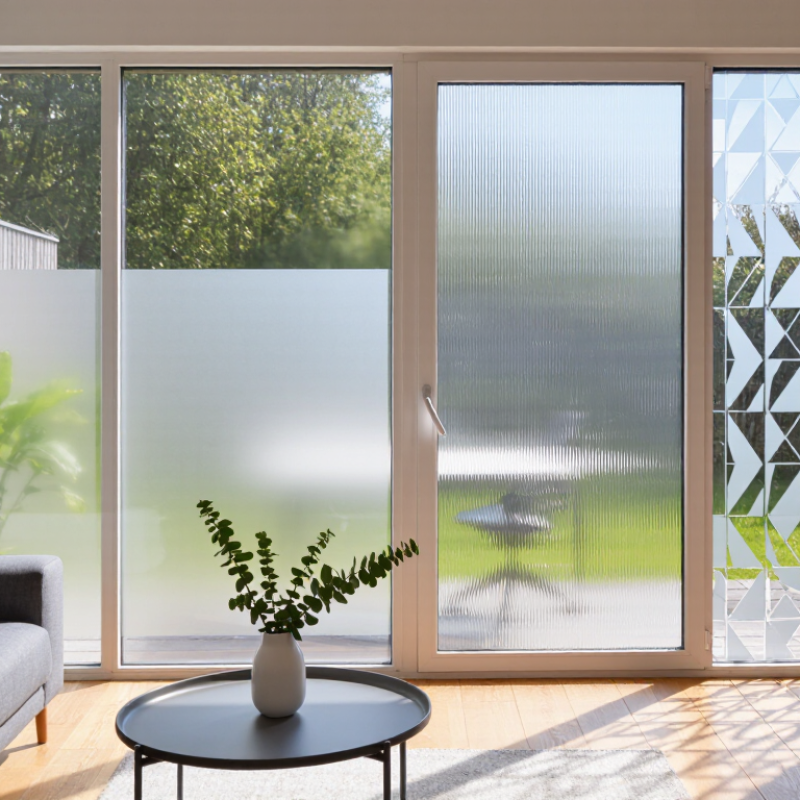
Table of Contents [Hide]
Define Privacy Needs Using Visible Light Transmission (VLT), Rated 0–100%
Visible Light Transmission, or VLT, describes how much visible light passes through a glass film. Its rating runs from 0 to 100 percent. A higher VLT usually looks clearer and keeps a room brighter. A lower VLT dims the view and can make daytime spaces feel more private. For a sunny bathroom or street-facing office, compare sample films against the actual window. A small swatch can look different across a whole glass door.
VLT is useful, but it does not tell the entire privacy story. At night, a bright interior may be visible through reflective or tinted film, especially when it is darker outside. Frosted films obscure details in both lighting conditions, though they still let in varying amounts of light. Check the product’s VLT rating alongside its stated privacy effect. One common oversight is choosing a dark film for privacy, then finding the room too gloomy. That trade-off is easy to underestimate.
Tips: Hold a sample against the glass at morning and evening. View it from both sides, with indoor lights on after dark. If daylight matters, start with a higher VLT and test before covering every pane. Samples are imperfect, too—but they reveal more than a number alone.