
-
- Products
- Indoor Household Cords
- Appliance Cords
- General Purpose Short-Length Cords
- General Purpose Extension Cords
- Landscape & Decorating Cords
- Bright Color Extension Cords
- Oil-Resistant Extension Cords
- Cold-Flex Extension Cords
- VividFlex Power Cords
- EXTREME All-Weather Cords
- Cord Management
- Task Lights
- Adapters & GFCI Devices
- Where to Buy
- About
- Careers
- Glossary
- Catalog


7 Best RFID Locker Systems for Smart Secure Storage?
Smart storage is no longer just a row of metal doors and keys. In workplaces, campuses, and delivery areas, users expect to collect or store items quickly, with clear access records. A Rfid Locker System can link each compartment to a badge, card, or mobile credential, while software records who opened it and when. The practical difference is easy to picture: fewer shared keys, visible audit trails, and less time spent tracking down a missing parcel. Small details matter.
Industry forecasts help explain the growing interest. Grand View Research estimated the global smart locker market at about US$1.15 billion in 2023 and projected an 11.5% compound annual growth rate from 2024 to 2030. These figures signal investment, not a guarantee that every installation will pay off. Site layout, network reliability, user training, and maintenance still shape results. A locker that fits a brochure may not fit a busy shift change.
This guide compares seven RFID locker systems for secure, practical storage. It considers credential options, management software, integration, durability, and support—not just reader specifications. The right choice depends on the people using it and the items being stored. No single model fits every site. And yes, even good systems need review: access rules can become confusing when nobody owns them.
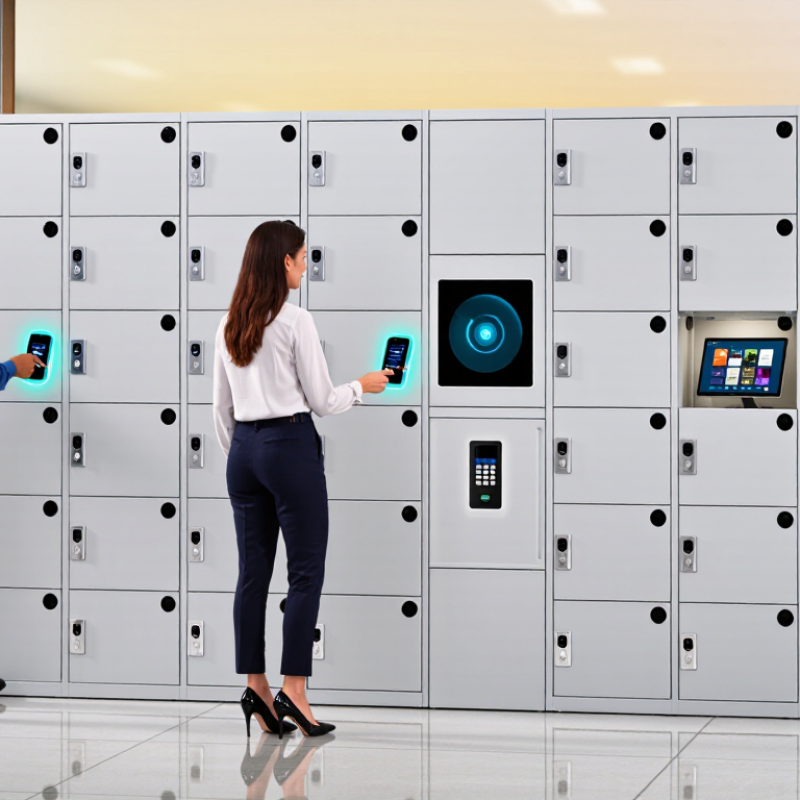
Table of Contents [Hide]
RFID Locker Systems Explained: Tags, Readers, Antennas, and Access Control
RFID Locker Systems Explained: Tags, Readers, Antennas, and Access Control
A smart locker works through several parts, not a tag alone. Each compartment carries an RFID tag with a unique identifier. A reader sends radio signals, while antennas shape where those signals travel. When a user presents an authorized credential, the access-control system checks permissions and releases the assigned door. The interaction should feel simple: tap, hear a click, open the correct compartment. Placement matters. Metal doors, crowded installations, and nearby antennas can weaken or confuse reads, so installers should test each locker under real operating conditions.
RFID designs differ in range and frequency. High-frequency systems are often suited to close, deliberate taps; ultra-high-frequency systems can read farther, but may need tighter control around adjacent doors. The EPC RFID market report from Grand View Research estimates the market reached USD 14.5 billion in 2023, reflecting broad adoption across industries—not a guarantee that every locker deployment will perform equally well. For secure storage, choose tags that tolerate expected wear, readers with clear feedback, and access software that records events consistently. Test missed reads and accidental neighboring reads before launch. Small details matter. A tag that works on a clean test bench may behave differently on a busy, metal-lined wall.