
-
- Products
- Indoor Household Cords
- Appliance Cords
- General Purpose Short-Length Cords
- General Purpose Extension Cords
- Landscape & Decorating Cords
- Bright Color Extension Cords
- Oil-Resistant Extension Cords
- Cold-Flex Extension Cords
- VividFlex Power Cords
- EXTREME All-Weather Cords
- Cord Management
- Task Lights
- Adapters & GFCI Devices
- Where to Buy
- About
- Careers
- Glossary
- Catalog


What Is the Best Rust Cleaning Agent in 2026?
Choosing the best Rust Cleaning Agent in 2026 is not simply a matter of selecting the strongest formula. Rust varies by surface, thickness, moisture exposure, and the metal beneath it. A product that works quickly on a steel tool may stain aluminum, dull painted panels, or damage a delicate finish.
Pierre R. Roberge, a respected corrosion-engineering authority, explains corrosion as “the degradation of a material due to reaction with its environment.” That principle matters when comparing modern rust removers. Effective evaluation should consider active ingredients, contact time, residue, odor, surface compatibility, and environmental handling. A reliable Rust Cleaning Agent should loosen iron oxide without attacking sound metal. It should also provide clear instructions for rinsing, drying, and preventing flash rust.
Real-world testing is essential. Apply a small amount to a hidden area. Watch the surface closely. Note the color change. Check whether the product leaves an oily film or a chalky residue. These details often matter more than a dramatic laboratory claim.
Still, no single formula wins every situation. Chelating agents can be gentle but slower. Acid-based products may act faster, yet demand greater care. Mechanical scrubbing may remain necessary for deep, layered corrosion. That is inconvenient.
This guide compares leading options through practical performance, safety information, material compatibility, and user experience. It also recognizes an uncomfortable truth: “best” depends on the job. A thoughtful choice protects the metal, saves time, and reduces avoidable rework.
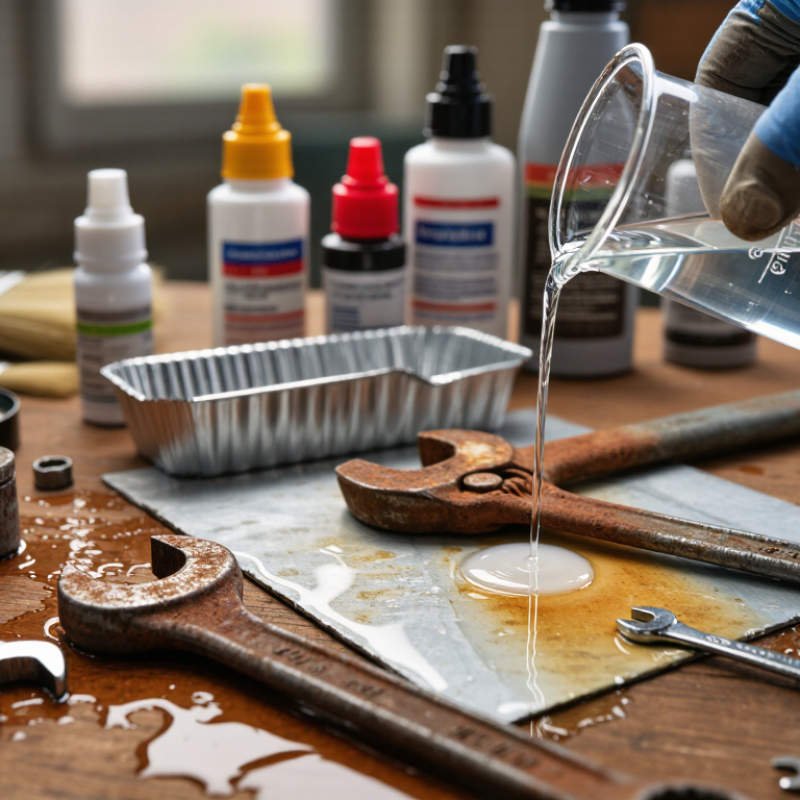
Table of Contents [Hide]
What Makes a Rust Cleaning Agent Effective in 2026?
An effective rust cleaning agent in 2026 should remove corrosion without attacking the surface beneath it. The best formulas balance chemical strength, material safety, and practical control. Acids can dissolve rust quickly, but excessive exposure may dull chrome, weaken coatings, or damage nearby stone. Chelating agents often work more gradually. They bind iron oxides and may offer better control on delicate parts.
I test a small hidden area before treating the entire object. This simple habit has prevented expensive mistakes. A useful cleaner should show visible progress within its recommended contact time. It should also rinse clean, leave minimal residue, and reduce flash rust after drying. Clear instructions matter. Vague dilution guidance creates inconsistent results.
Surface temperature, rust thickness, and moisture can change performance. A thick orange layer may need gentle brushing and repeated applications, not one aggressive treatment. Ventilation, gloves, and eye protection remain sensible, even with milder formulas. “Eco-friendly” does not always mean harmless to every material. I have seen a supposedly gentle solution stain an old painted tool because I trusted the label too quickly. Compatibility testing and careful timing still matter more than marketing claims. In 2026, the strongest choice is a rust cleaner supported by transparent ingredients, tested directions, and evidence across steel, coated metal, and household surfaces.