
-
- Products
- Indoor Household Cords
- Appliance Cords
- General Purpose Short-Length Cords
- General Purpose Extension Cords
- Landscape & Decorating Cords
- Bright Color Extension Cords
- Oil-Resistant Extension Cords
- Cold-Flex Extension Cords
- VividFlex Power Cords
- EXTREME All-Weather Cords
- Cord Management
- Task Lights
- Adapters & GFCI Devices
- Where to Buy
- About
- Careers
- Glossary
- Catalog


10 Best Shipping Tarps for Cargo Protection in 2026
A reliable Shipping Tarp does more than cover a load. It helps shield cargo from rain, road spray, dust, and sun during storage or transport. The right choice depends on what you carry, how far it travels, and how it will be secured. A compact tarp may suit bundled materials, while bulky equipment often needs wider coverage and reinforced corners. Details matter.
Our 2026 guide compares ten shipping tarps by practical features, including material, thickness, seam construction, grommet placement, size options, and stated weather resistance. These specifications can help narrow the choices, but they do not tell the whole story. A heavy tarp may resist wear yet feel awkward to handle. A lighter one may be easier to fold, but less suitable for repeated exposure or rough contact. There is no perfect fit for every load.
Before choosing, measure the cargo and allow enough coverage to secure the edges without leaving loose fabric flapping in the wind. Check the product details carefully, and use tie-down points that match the tarp’s design. Small oversights can matter. This roundup is intended to help readers compare options with clearer expectations, not promise that one tarp will protect every load in every condition. Consider your route, handling needs, and likely weather before making a final decision.
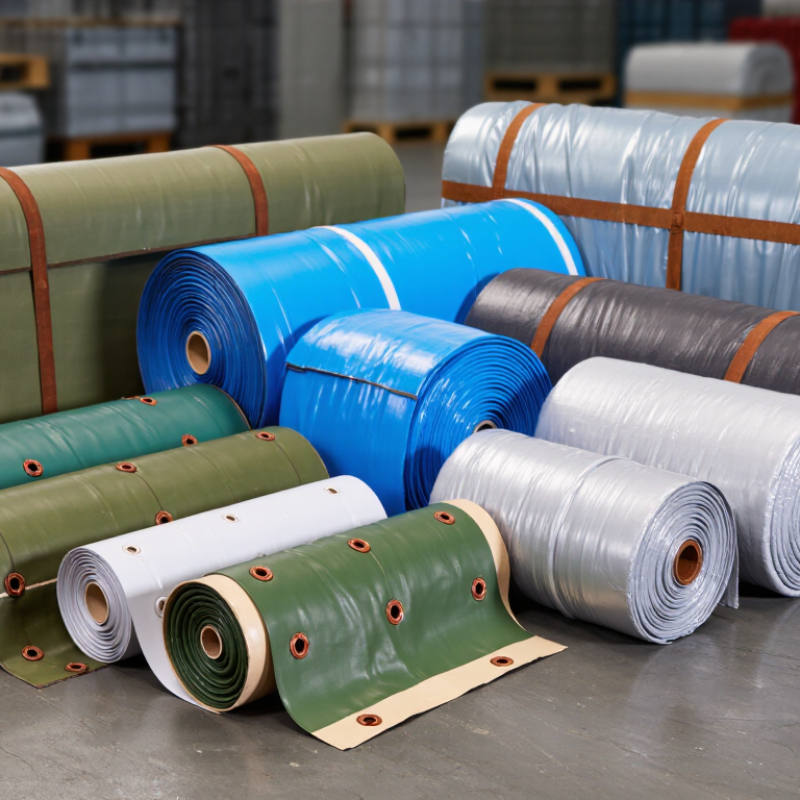
Table of Contents [Hide]
Shipping Tarps Explained: Materials, Coatings, GSM, and Denier
Shipping tarps are defined by more than thickness. GSM measures fabric mass in grams per square meter, while denier measures yarn mass per 9,000 meters. ASTM D3776/D3776M and ISO 2286-2 describe methods for measuring textile and coated-fabric mass. These figures help compare samples, but they do not reveal everything.
For woven tarps, higher-denier yarns can resist abrasion and tearing, yet weave, stitching, and load placement matter too. A heavy tarp can still split at a poorly reinforced corner. Not always obvious. Polyethylene coatings are typically lightweight and water-resistant; PVC coatings can offer tougher abrasion protection, though added weight may make handling harder. The coating’s quality and bond to the base fabric deserve attention.
ASTM D751 outlines tests for coated fabrics, including strength and coating-related properties. Ask for test results, not just a GSM or denier claim. Check the tarp’s edges, grommets, and seams against the cargo’s sharp corners and expected movement. Higher GSM is not an automatic upgrade. I would also compare finished-tarp weight and repairability, details that spec sheets sometimes leave out.