
-
- Products
- Indoor Household Cords
- Appliance Cords
- General Purpose Short-Length Cords
- General Purpose Extension Cords
- Landscape & Decorating Cords
- Bright Color Extension Cords
- Oil-Resistant Extension Cords
- Cold-Flex Extension Cords
- VividFlex Power Cords
- EXTREME All-Weather Cords
- Cord Management
- Task Lights
- Adapters & GFCI Devices
- Where to Buy
- About
- Careers
- Glossary
- Catalog


7 Carbon Steel Mesh Buying Tips for Global Buyers
Carbon Steel Mesh may look simple on a product sheet, yet small specification differences can affect fit, strength, and service life. Wire diameter, opening size, sheet or roll dimensions, and edge finish all matter. A mesh with a 25-millimeter opening behaves differently from one with a 10-millimeter opening, even when both use similar wire. Start with the job it must perform. Screening, fencing, reinforcement, and machine guards each call for different characteristics. Details matter.
For global buyers, clear specifications also reduce avoidable delays. Confirm the steel grade, dimensional tolerances, surface treatment, packaging, and required inspection documents with the supplier. Ask how measurements are checked, and request a sample when a close fit is important. A photograph can help, but it cannot confirm wire diameter. Not quite enough. Compare quotes on the same specifications, including coating, quantity, and delivery terms, rather than choosing by price alone. Check that rolls or panels will suit your handling and installation equipment. Salt air, moisture, and outdoor exposure may influence whether untreated or coated mesh is appropriate. No single choice fits every project. Supplier claims deserve practical questions, and even a careful checklist can miss a detail. The seven tips below offer a grounded way to compare options, clarify expectations, and make a more informed purchasing decision.
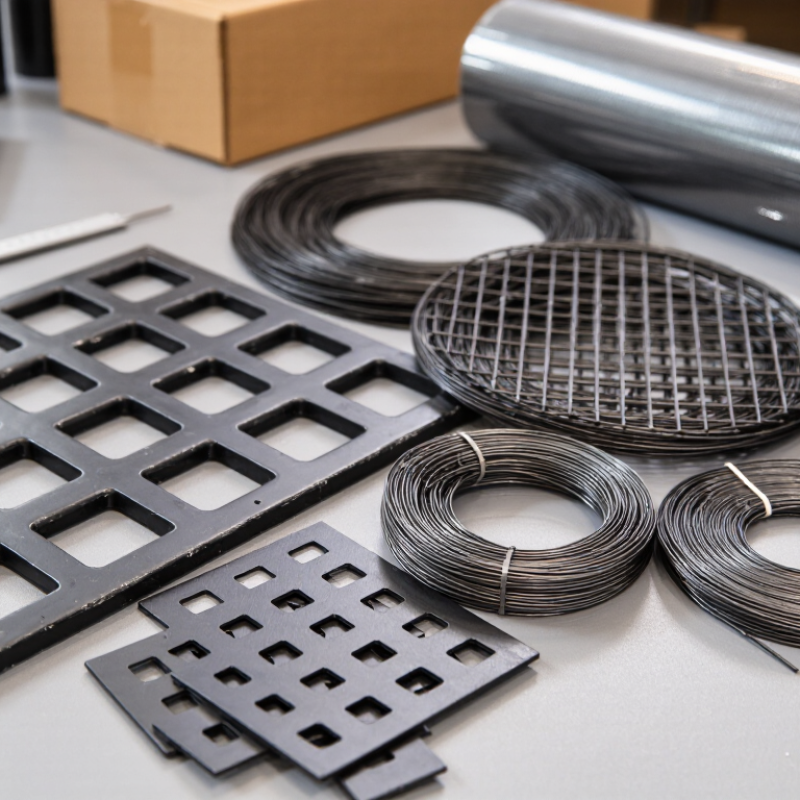
Table of Contents [Hide]
Define the Application, Environment, and Performance Requirements
Before requesting carbon steel mesh quotations, define what the mesh must do. A screen separating coarse aggregate needs different openings from a guard panel or filter. Record the material being handled, expected particle size, flow rate, and whether the mesh will carry weight. Specify wire diameter and opening size together; either measurement alone can give buyers an incomplete picture. Small details matter.
Describe the installation environment clearly. Indoor, dry storage differs from a washdown area, coastal site, or space exposed to chemicals. Note moisture, cleaning agents, salt spray, temperature changes, and contact with other metals. These conditions affect corrosion risk and coating choices. Galvanizing may help in some settings, but it is not a universal solution. I would avoid promising service life without site conditions and maintenance details.
Translate performance needs into checks a supplier can verify. Ask for opening and wire-diameter tolerances, weld consistency, flatness, and any required load or tensile data. For a heavy panel, describe its support spacing and expected load rather than saying only “strong mesh.” Request a sample and measure several openings across it; one measurement can miss variation. Test the actual fit, too. Procurement specifications are sometimes imperfect, so record assumptions and resolve them before production.