
-
- Products
- Indoor Household Cords
- Appliance Cords
- General Purpose Short-Length Cords
- General Purpose Extension Cords
- Landscape & Decorating Cords
- Bright Color Extension Cords
- Oil-Resistant Extension Cords
- Cold-Flex Extension Cords
- VividFlex Power Cords
- EXTREME All-Weather Cords
- Cord Management
- Task Lights
- Adapters & GFCI Devices
- Where to Buy
- About
- Careers
- Glossary
- Catalog


China Best Industrial Cable Reel Manufacturer?
Choosing China’s best Industrial Cable Reel manufacturer starts with your operating conditions, not a polished catalog. A reel used on a factory floor faces different demands from one installed on a service vehicle. Consider cable length, conductor size, voltage, current, duty cycle, and working environment. These details shape the drum, slip ring, drive system, and enclosure. Small omissions matter.
Ask manufacturers for drawings, material specifications, inspection procedures, and test records relevant to your application. Check how they manage cable winding, strain relief, grounding, and overheating risks. A well-built reel should wind smoothly and protect the cable from sharp bends, dust, and routine impact. Ask what happens when a component needs replacement. Clear answers are useful. Vague promises are not.
Production capability matters, but so does communication. Compare response times, engineering support, sample availability, and experience with similar installations. Request references or project examples where appropriate, then verify that the operating conditions genuinely match yours. Certifications can support a decision, but they do not replace checking the actual product and its documentation. One detail is easy to overlook: a reel that works in a factory may perform poorly outdoors. Confirm temperature, moisture, corrosion, and mounting requirements before ordering. There is no universal winner. The best manufacturer is the one that can demonstrate a suitable design, consistent quality controls, and dependable support for your specific use. Even then, inspect the delivered unit. Plans and production do not always align perfectly.
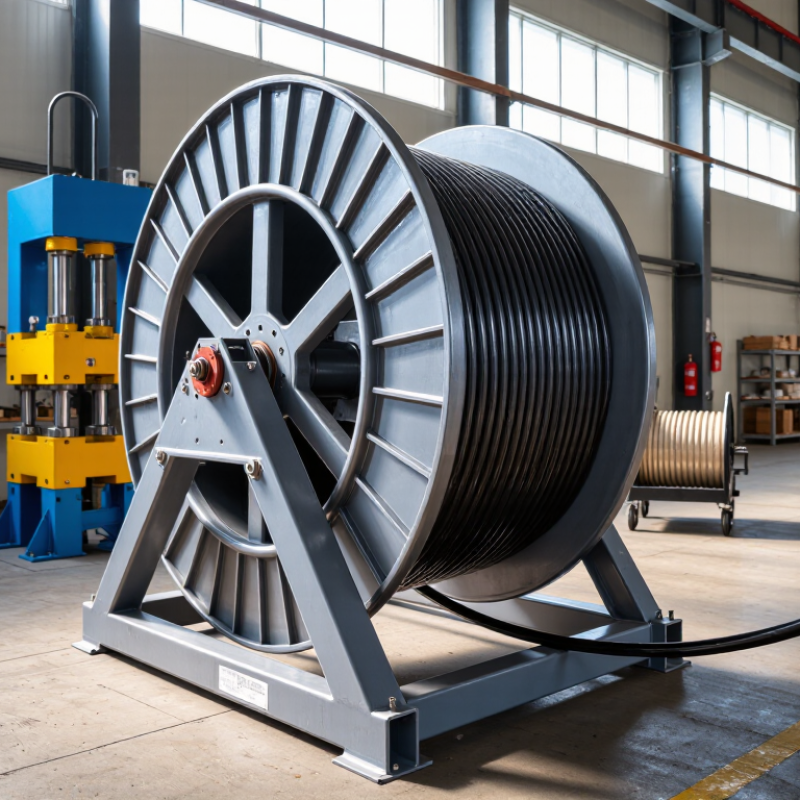
Table of Contents [Hide]
What Is an Industrial Cable Reel?
China Best Industrial Cable Reel Manufacturer?
What Is an Industrial Cable Reel?
An industrial cable reel is a device that stores and manages electrical cable, hose, or wire. It holds the line on a rotating drum, helping users unwind the length they need and rewind it after work. A typical reel includes a drum, frame, axle, and handle or drive mechanism. Some models also use a slip ring to maintain an electrical connection while the drum turns. That detail matters.
On a workshop floor, a reel can keep a heavy power cable off wet concrete and away from passing carts. In a warehouse, it may supply equipment across a changing work area. The reel’s size, cable capacity, and load rating should match the actual job. A reel that is too small may strain the cable; one that is poorly mounted can tip or bind. Simple, but easy to overlook.
“Industrial” does not describe one universal design. Reels vary by cable type, operating environment, and how often workers pull or retract the line. Manual models suit some tasks; spring-driven or motorized versions may be more practical for frequent use. Check the cable’s bend limits and the reel’s rated capacity before installation. Also inspect for wear, dirt, and loose fittings. A tidy reel helps, but it cannot fix a damaged cable. Real work is rarely as neat as a product diagram.