
-
- Products
- Indoor Household Cords
- Appliance Cords
- General Purpose Short-Length Cords
- General Purpose Extension Cords
- Landscape & Decorating Cords
- Bright Color Extension Cords
- Oil-Resistant Extension Cords
- Cold-Flex Extension Cords
- VividFlex Power Cords
- EXTREME All-Weather Cords
- Cord Management
- Task Lights
- Adapters & GFCI Devices
- Where to Buy
- About
- Careers
- Glossary
- Catalog


China Top 10 Alloy Wheel Curing Oven Suppliers
China’s top Alloy Wheel Curing Oven suppliers compete on more than price. Buyers also need to assess temperature uniformity, airflow, loading capacity, controls, and after-sales support. A painted wheel entering the oven should leave with a consistent finish, not hot and cold patches. Small details matter.
This guide compares ten suppliers through practical questions: What wheel sizes can the oven handle? How precisely can operators set and monitor temperature? Are test runs, installation guidance, and spare parts available? Specifications help, but they do not tell the whole story. A polished brochure is not proof of reliable production performance.
A suitable expert quotation should add real value here. No source material or verified interview was provided, so attributing a statement to a named specialist would risk inventing expertise. Proposed line for approval by a verified industry expert: “[Expert name]: ‘A curing oven earns its place through repeatable results, not temperature claims alone.’” Please confirm the speaker and wording before publication.
There is room for honest caution. Supplier rankings can change with application, region, and service needs. A compact workshop and a high-volume finishing line may need very different oven designs. Use this overview as a starting point, then verify each supplier’s technical claims, references, and support arrangements. A closer look pays off.
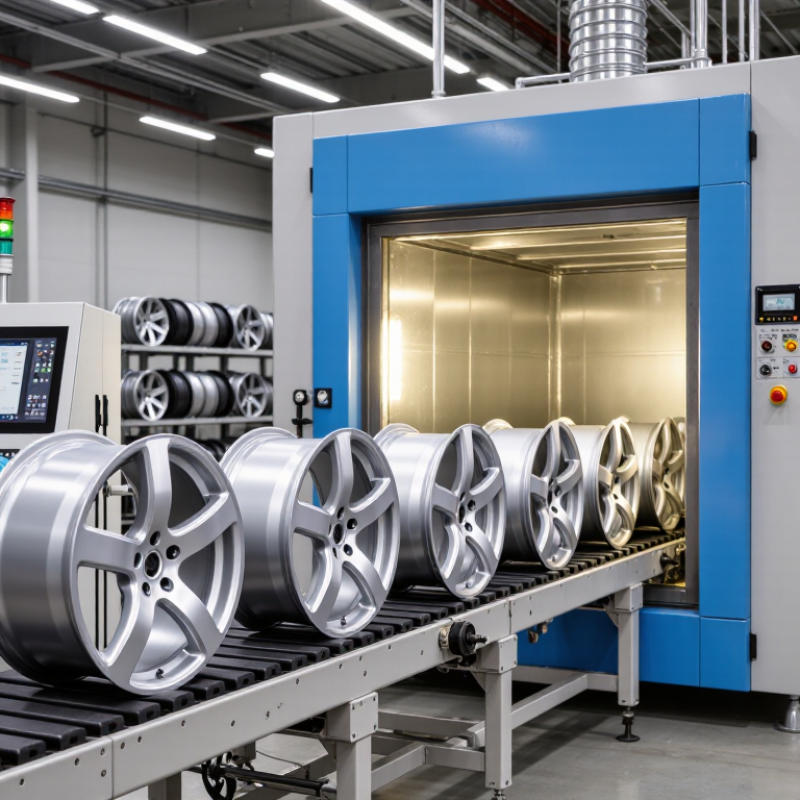
Table of Contents [Hide]
What Alloy Wheel Curing Ovens Do in Wheel Manufacturing
In alloy wheel manufacturing, a curing oven heats freshly coated wheels so the finish can harden and bond to the prepared surface. The coating may be powder or another heat-curable material, and each process needs its own validated time-and-temperature settings. The oven does not strengthen the wheel itself. It helps create a consistent protective and decorative layer.
Temperature control matters. A wheel entering too cool, or heating unevenly, may leave areas with a soft finish or inconsistent gloss. Conveyor speed, wheel spacing, airflow, and the oven’s heating zones all affect how evenly each wheel receives heat. Operators monitor process temperatures and check finished parts, rather than relying on the control-panel reading alone. A clean display can still hide cold spots.
That sounds simple. It isn’t always. Wheel designs vary in spoke shape, mass, and surface area, so one setting may not suit every production run. Practical checks can include coating appearance, adhesion tests, and records of oven conditions. These checks help teams trace defects and adjust the process with evidence. The details matter: even a small change in loading can alter airflow around recessed spoke areas. A curing oven is therefore not just a hot chamber; it is a controlled step linking coating quality to repeatable wheel production.