
-
- Products
- Indoor Household Cords
- Appliance Cords
- General Purpose Short-Length Cords
- General Purpose Extension Cords
- Landscape & Decorating Cords
- Bright Color Extension Cords
- Oil-Resistant Extension Cords
- Cold-Flex Extension Cords
- VividFlex Power Cords
- EXTREME All-Weather Cords
- Cord Management
- Task Lights
- Adapters & GFCI Devices
- Where to Buy
- About
- Careers
- Glossary
- Catalog


How to Choose a Reliable Blow Maker Machine?
Choosing a reliable Blow Maker begins with the product, not the machine’s advertising claims. A container for shampoo needs different control from a thick automotive duct. Wall thickness, resin type, mold size, output targets, and permitted tolerances should guide every decision. High speed looks impressive. It can also create unstable parison control, uneven walls, and expensive scrap.
Dominick V. Rosato, a respected plastics author and processing specialist, offered a practical principle: “The best machine is matched to the product, not simply the highest-output machine.” That idea remains useful when comparing modern equipment. Check the extrusion system, clamp strength, mold-changing method, cooling design, and control platform. Ask for measured cycle data from a similar application. Sales brochures rarely show the difficult details. They may not show rejected bottles, maintenance delays, or energy consumption during long production runs.
A dependable Blow Maker should also have accessible service support. Spare screws, heaters, sensors, and seals must be available within a reasonable time. Speak with existing users, not only the supplier. Their workshop experience may reveal vibration, software limitations, or cleaning problems. Still, one reference cannot prove everything. Factory conditions differ.
I would inspect a running machine personally. Listen for abnormal noise. Watch the parison. Examine finished parts under consistent lighting. Small defects matter. My own judgment may be incomplete, especially when new automation is involved. Therefore, request a documented trial, clear acceptance criteria, training, warranty coverage, and lifecycle cost estimates. Reliability is not a single feature. It is consistent performance, practical support, and honest evidence over time.
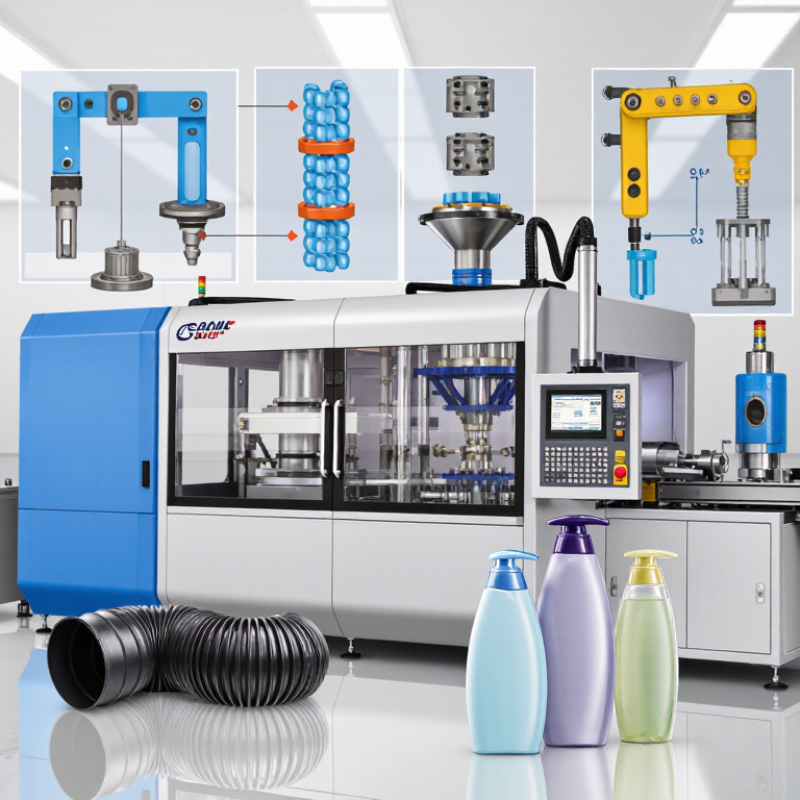
Table of Contents [Hide]
Define Blow Molding Types: PET ISBM, HDPE, and 1–10 L Bottle Ranges
How to Choose a Reliable Blow Maker Machine?
Choosing a reliable blow maker machine starts with identifying the molding process, not comparing machine prices. PET ISBM equipment suits clear, lightweight bottles with precise neck finishes and strong stretch orientation. It usually forms a preform before stretching and blowing it inside a mold. This process demands stable heating, accurate stretch-rod movement, and consistent cooling. Small temperature changes can create cloudy areas or uneven walls.
HDPE bottles commonly use extrusion blow molding. This method works well for opaque containers, wider openings, handles, and practical shapes. Ask how accurately the machine controls parison thickness. Poor control may cause heavy bottoms, thin shoulders, or unstable containers. I have found that sample testing reveals more than a polished specification sheet. Request bottles made with your actual resin, mold, and target weight.
For 1–10 L bottles, capacity changes the selection significantly. A 1 L container may need fast cycling and tight weight control. A 10 L bottle requires stronger clamping, larger extrusion capacity, and reliable handle formation when needed. Check mold dimensions, maximum bottle height, neck range, air pressure, cooling performance, and hourly output. Confirm whether the machine can maintain quality across the full size range. It is easy to trust a stated output figure. Real production conditions can differ. Review test records, maintenance access, spare-part availability, operator training, and service response times. A machine that runs quickly but requires frequent adjustment is not truly reliable.