How to Choose the Best Extension Cords for Your Home and Outdoor Needs
When it comes to ensuring safety and convenience in electrical applications both indoors and outdoors, selecting the right extension cords is essential. According to the National Fire Protection Association (NFPA), electrical distribution and lighting equipment, including extension cords, accounted for approximately 5% of all reported home structure fires between 2014 and 2018. This statistic underscores the importance of choosing extension cords that meet safety standards and are appropriate for specific tasks.
Moreover, the American National Standards Institute (ANSI) emphasizes that understanding the capacity and ratings of extension cords is critical for preventing overloads and potential hazards. With the growing trend of utilizing multiple electronic devices for work and leisure, it’s vital for consumers to be aware that extension cords come in various wattage capacities and lengths tailored for different purposes. Selecting the best extension cords not only enhances the efficiency of your electrical setup but also significantly mitigates risks associated with improper use. As we delve deeper into the best practices for choosing extension cords, we will explore key factors such as length, gauge, and safety ratings to ensure optimal performance for all home and outdoor needs.

Understanding Different Types of Extension Cords for Home Use
When selecting extension cords for home use, it's essential to understand the different types available and their specific applications. There are primarily three types of extension cords: indoor, outdoor, and heavy-duty. Indoor extension cords are typically lightweight and designed for indoor appliances like lamps and electronics. According to the National Electrical Manufacturers Association (NEMA), these cords have a lower insulation rating, making them suitable for environments free from moisture.
Outdoor extension cords, on the other hand, are engineered to withstand the rigors of harsh weather conditions. They come with higher insulation ratings and may feature additional protective layers to guard against moisture and abrasion. The Consumer Product Safety Commission (CPSC) reports that improper use of extension cords can lead to electrical hazards, making it crucial to choose cords rated for outdoor use when needed. Heavy-duty cords are rated for higher amperage, making them ideal for power tools and equipment.
**Tips:** When selecting an extension cord, always check the amperage rating and match it with the power requirements of your devices. Ensure that the cord is appropriately rated for its intended use, as using an indoor cord outdoors can pose severe risks. Avoid overloading extension cords by plugging in too many devices or appliances, as this can lead to overheating and potential fires. Always inspect cords for damage before use, and if any fraying or exposure is detected, it's best to replace the cord immediately to maintain safety.
Determining the Right Length of Extension Cord for Your Needs
When selecting the right length of extension cord for your needs, the first step is to assess the distance between your power source and the devices you intend to use. Measure the distance accurately and consider the layout of your space, including potential obstacles such as furniture or outdoor features. It's advisable to select a cord that exceeds this distance slightly to ensure that you have adequate slack for movement and flexibility, preventing strain on both the cord and the connected devices.
Additionally, consider the environment where the extension cord will be used. For outdoor applications, you might need a longer cord to reach from your wall outlet to various outdoor areas. Longer cords offer greater reach but can also introduce voltage drop, which may affect the performance of the devices used. Generally, for indoor use, a cord length of 25 to 50 feet should suffice for most scenarios. For outdoor use, a length of 50 to 100 feet is often more appropriate, depending on the specific requirements of your outdoor activities. Ensuring the right length and type of extension cord helps you achieve safe and efficient use across your home and outdoor settings.
How to Choose the Best Extension Cords for Your Home and Outdoor Needs - Determining the Right Length of Extension Cord for Your Needs
| Cord Length |
Usage Scenario |
Recommended Gauge |
Maximum Load (Watts) |
| 6 feet |
Indoor use (e.g., small appliances) |
16 gauge |
1625 watts |
| Extension Cord |
Indoor use (e.g., tools, lights) |
14 gauge |
1925 watts |
| 25 feet |
Outdoor tools (e.g., lawnmowers) |
12 gauge |
2400 watts |
| 50 feet |
Heavy-duty outdoor appliances |
10 gauge |
3600 watts |
| 100 feet |
Far distance outdoor needs |
8 gauge |
4800 watts |
Evaluating the Ampacity and Voltage Ratings of Extension Cords
When selecting extension cords for your home and outdoor needs,
understanding ampacity and voltage ratings is crucial.
Ampacity refers to the maximum amount of electrical current a cord can safely carry.
This rating is significant because using an extension cord that is not rated for the power requirements
of your devices can lead to overheating and potential hazards. To ensure safety, always check the wattage
of your devices and select an extension cord rated to handle a higher ampacity
than your load.
Voltage ratings are equally important and indicate
the maximum voltage the cord can safely handle. For typical household use, the voltage rating is usually 120 volts,
but for specific outdoor applications or heavy-duty usage, you may require a cord rated for 240 volts or more.
It is essential to match the voltage rating of the extension cord with your power requirements to prevent electrical malfunctions.
Additionally, consider the cord gauge; lower gauge numbers indicate
thicker wires that can handle more current, making them suitable for outdoor or high-power appliances. By carefully evaluating
both ampacity and voltage ratings, you can choose extension cords that meet your needs safely and effectively.
Safety Features to Look for in Outdoor Extension Cords
When selecting outdoor extension cords, safety features should be your top priority. One of the most critical features is the cord's insulation. Look for cords that are rated for outdoor use, as they are designed to withstand varying weather conditions, UV rays, and moisture. Heavy-duty insulation not only protects the wires but also reduces the risk of overheating, which can lead to fires.
Another essential safety consideration is the cord's gauge. A lower gauge number indicates a thicker wire that can handle more power. For outdoor applications, especially when using high-wattage tools, a 12 or 14-gauge cord is recommended to prevent voltage drops and ensure safe operation. Additionally, make sure the extension cord is equipped with a ground fault circuit interrupter (GFCI), which provides protection from electrical shock.
Tips: Always check the manufacturer's specifications for your tools and appliances to ensure compatibility with the extension cord. When using extension cords outdoors, keep the cord elevated off the ground and away from water to avoid damaging the insulation. Regularly inspect the cord for any signs of wear or fraying, and replace it immediately if any damage is found to maintain a safe environment.
Best Practices for Using and Storing Extension Cords Safely
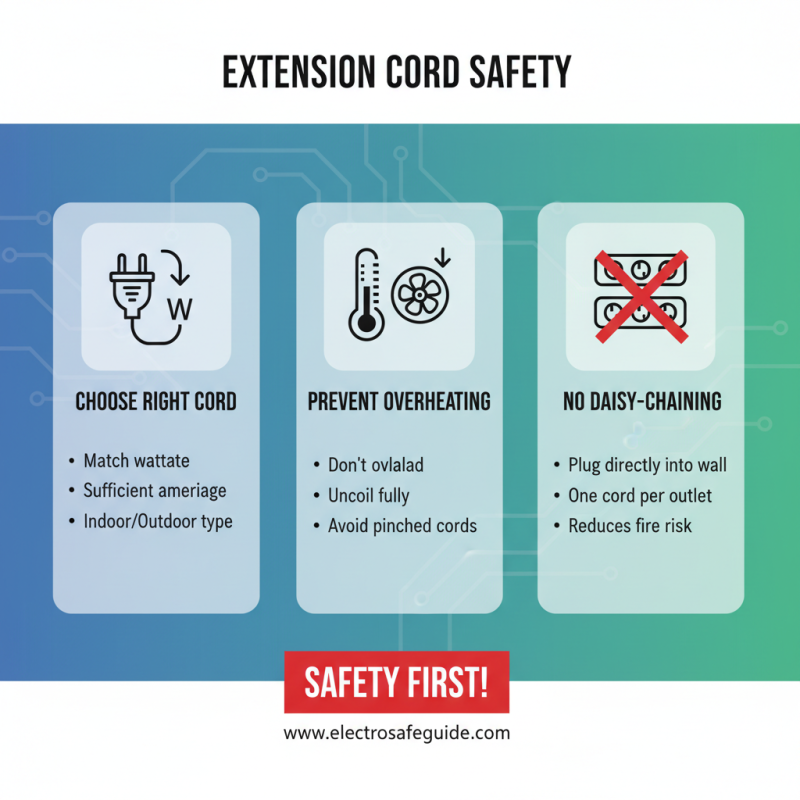
When it comes to using extension cords, safety should always be a top priority. Proper usage is crucial to prevent electrical hazards. Always choose the right extension cord for your needs by considering the wattage of the devices you intend to connect. Make sure that your extension cord has a sufficient amperage rating to handle the load without overheating. Additionally, avoid daisy-chaining multiple cords together, as this can lead to potential overloading and fire risks.
Storing extension cords safely is another important aspect of their use. After using them, unwinding and storing them properly can help prolong their lifespan and maintain safety. Always coil extension cords loosely, avoiding tight knots that can cause damage. Store them in a dry, cool place to prevent moisture accumulation that could lead to short circuits. It’s also wise to regularly inspect cords for frays or wear and replace any that show signs of damage.
**Tips:** Always unplug extension cords when not in use to reduce the risk of accidents. When using them outdoors, ensure they are rated for outdoor use to withstand moisture and temperature changes. Lastly, keep cords away from high-traffic areas to prevent tripping hazards and potential damage.