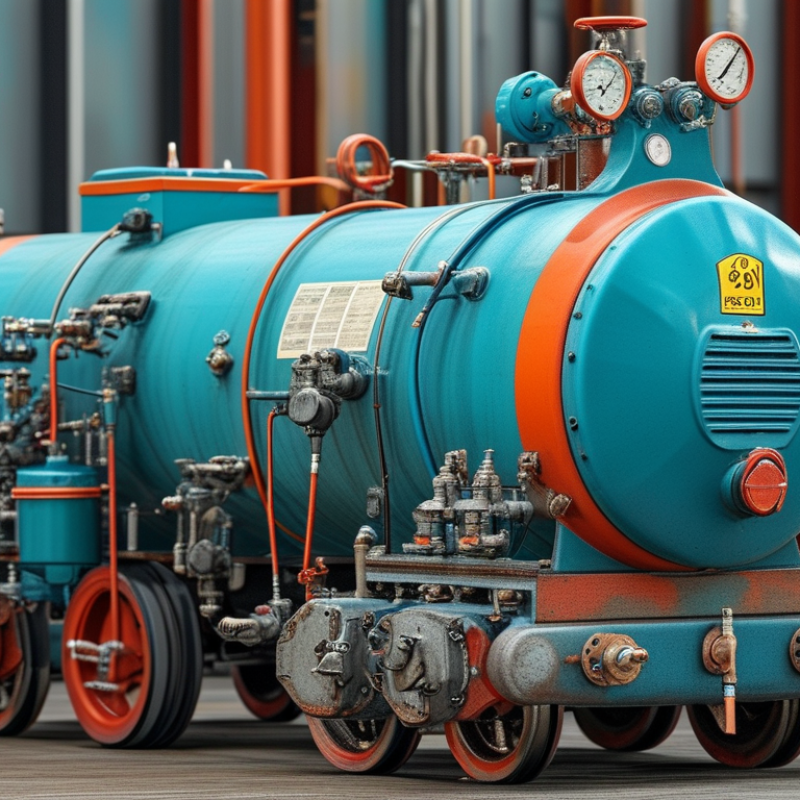
| Boiler Configuration | Fire-tube, water-tube, or once-through design | A burner releases heat in a furnace. Heat transfers to water, producing steam for process or heating applications. | Fire-tube units are often suitable for lower and medium capacities. Water-tube designs are generally preferred for higher pressure, higher capacity, or faster steam response. | General arrangement drawing, pressure-part design, flow diagram, and applicable pressure-vessel compliance documents |
| Rated Steam Capacity | Approximately 0.5–30 tonnes per hour for common industrial installations | Capacity is determined by the amount of water converted into steam per unit of time at the specified pressure and feedwater temperature. | Select capacity from the measured peak load plus a reasonable operating margin. Oversizing can increase cycling, fuel consumption, and maintenance. | Steam-load calculation, production schedule, peak-demand profile, and boiler output test method |
| Working Pressure | Common process-steam range: approximately 0.7–2.0 MPa; higher-pressure designs are available | Pressure raises the saturation temperature of water and determines the steam conditions delivered to the process. | Use the minimum pressure required by the equipment, allowing for distribution losses. Confirm local pressure-vessel rules before purchase. | Design pressure, test pressure, safety-valve set pressure, and pressure classification certificates |
| Oil Fuel Type | Light fuel oil, diesel, kerosene, or heavy fuel oil where permitted | The burner atomizes liquid fuel into fine droplets, mixes them with combustion air, and ignites the mixture in the furnace. | Confirm fuel availability, sulfur content, viscosity, flash point, storage requirements, and local emissions restrictions. | Fuel specification sheet, burner compatibility list, fuel-system schematic, and storage-tank requirements |
| Thermal Efficiency | Typically about 80–92%, depending on design, fuel, load, and heat-recovery equipment | Efficiency compares useful heat delivered to the steam system with the chemical energy in the fuel. | Ask whether the quoted value is gross or net efficiency and identify the test load, feedwater temperature, flue-gas temperature, and fuel condition. | Performance guarantee, efficiency test procedure, heat-balance calculation, and flue-gas test report |
| Burner Turndown | Commonly around 3:1 to 5:1 for modulating industrial burners | The control system adjusts fuel and combustion air to match steam demand without frequent burner starts and stops. | Higher turndown can improve low-load stability and reduce cycling, but actual performance depends on burner design and fuel quality. | Turndown test results, control sequence, minimum stable firing rate, and burner commissioning procedure |
| Feedwater Temperature | Frequently 80–105°C when an economizer or deaerated feedwater system is used | Preheating feedwater reduces the energy required inside the boiler and can improve overall efficiency. | Verify water-treatment capacity, condensate-return percentage, deaerator requirements, and the effect of colder makeup water. | Water-treatment specification, feedwater analysis, condensate-return data, and economizer design information |
| Water Quality Control | Softened, demineralized, or otherwise treated water according to boiler pressure and design | Chemical treatment and blowdown control limit scale, corrosion, carryover, and deposits on heat-transfer surfaces. | Poor water quality can reduce efficiency, damage pressure parts, and create unsafe operating conditions. | Water-quality limits, chemical-treatment program, blowdown calculation, and laboratory test requirements |
| Emissions and Combustion | NOx, SOx, particulate matter, carbon monoxide, and carbon dioxide require assessment | Fuel composition and combustion conditions influence pollutant formation. Air-fuel control and flue-gas treatment may be required. | Emission limits differ by country, region, fuel sulfur level, boiler size, and installation date. Obtain permits before finalizing the design. | Guaranteed emission values, stack calculation, combustion test report, and local environmental compliance checklist |
| Safety and Protection | Safety valves, low-water cutoff, flame failure protection, high-pressure cutoff, and emergency shutdown | Sensors and interlocks stop fuel input or isolate the boiler when unsafe pressure, water level, flame, or airflow conditions occur. | Protection devices must be accessible, tested regularly, and selected to meet the governing boiler and electrical codes. | Safety-instrument list, cause-and-effect chart, emergency shutdown logic, inspection plan, and operator training record |
| Chimney and Draft System | Natural draft or induced-draft arrangement, with stack height based on site and regulations | The system removes combustion gases while maintaining suitable furnace pressure and safe dispersion of exhaust. | Consider flue-gas temperature, corrosion risk, wind conditions, noise, access, and local stack-height requirements. | Draft calculation, chimney design, flue-gas composition, material specification, and installation drawings |
| Fuel Storage and Handling | Storage tanks, transfer pumps, filters, heaters for viscous fuel, and leak-containment systems | Fuel is stored, filtered, pumped, and conditioned before reaching the burner at the required pressure and viscosity. | Heavy fuel oil may require heating and insulation. Tank size should reflect delivery intervals, consumption, safety rules, and emergency reserves. | Fuel-system P&ID, tank sizing calculation, secondary-containment plan, filtration specification, and fire-safety assessment |
| Automation and Monitoring | PLC or dedicated boiler controller, touchscreen HMI, remote alarms, and data logging | The controller coordinates burner firing rate, water level, steam pressure, feedwater flow, alarms, and safety interlocks. | Confirm control voltage, communication protocol, cybersecurity requirements, language options, spare-part availability, and manual override functions. | I/O list, control philosophy, alarm list, software backup, network diagram, and operator-interface manual |
| Installation Conditions | Indoor boiler room or outdoor package installation, depending on climate and enclosure design | Boiler performance depends on adequate combustion air, ventilation, drainage, access, foundation strength, and service clearances. | Check ambient temperature, altitude, seismic requirements, power supply, water supply, lifting access, and local construction codes. | Site survey, foundation load data, utility list, ventilation calculation, layout drawing, and installation method statement |
| Maintenance Requirements | Daily operating checks, periodic burner tuning, water testing, blowdown, inspection, and annual servicing | Regular maintenance preserves heat transfer, combustion quality, safety-device performance, and pressure-part integrity. | Evaluate technician availability, consumable costs, burner access, tube cleaning method, inspection intervals, and spare-parts lead time. | Preventive-maintenance schedule, recommended spares list, inspection checklist, service procedures, and training plan |
| Total Cost of Ownership | Purchase price, installation, fuel, water treatment, labor, maintenance, compliance, and disposal costs | The lifecycle cost reflects fuel consumed to produce useful steam, not only the initial equipment price. | Compare annual fuel consumption at expected load, service costs, operating hours, fuel price volatility, and the value of recovered heat. | Lifecycle-cost model, annual fuel estimate, warranty terms, service-cost schedule, and efficiency assumptions |
| International Compliance | Applicable pressure-equipment, electrical, combustion, environmental, and workplace-safety requirements | The boiler must be designed, manufactured, tested, installed, and operated in accordance with the destination market’s rules. | Requirements vary by jurisdiction. Confirm inspection authority, language, labeling, certification, import rules, and operator licensing. | Code compliance matrix, certificates, material records, welding records, inspection reports, manuals, and translated labels |
| Operating Principle Summary | Fuel combustion → heat transfer → water circulation → steam separation → steam distribution | Oil is atomized and burned; heat passes through the furnace and heat-transfer surfaces; treated water absorbs the heat and becomes steam. | A suitable boiler must match steam demand, pressure, fuel properties, water quality, emissions limits, site conditions, and available technical support. | Process flow diagram, operating manual, commissioning report, acceptance test, and emergency operating instructions |