
-
- Products
- Indoor Household Cords
- Appliance Cords
- General Purpose Short-Length Cords
- General Purpose Extension Cords
- Landscape & Decorating Cords
- Bright Color Extension Cords
- Oil-Resistant Extension Cords
- Cold-Flex Extension Cords
- VividFlex Power Cords
- EXTREME All-Weather Cords
- Cord Management
- Task Lights
- Adapters & GFCI Devices
- Where to Buy
- About
- Careers
- Glossary
- Catalog


How to Choose the Best Marine Washing Machine?
Choosing the best Marine Washing Machine requires more than comparing prices or drum sizes. Life at sea creates unusual demands. Salt air attacks metal surfaces. Limited freshwater changes every wash cycle. Vessel movement also affects vibration, drainage, and machine stability.
Marine systems author Nigel Calder offers a practical principle: “Choose equipment for the vessel, not the brochure.” This advice matters in real conditions. A compact washer may fit beneath a galley counter, yet struggle during rough passages. A larger model may clean heavy workwear better, but consume too much water or power. The right decision depends on your vessel’s electrical system, crew size, laundry frequency, and available installation space.
Check the details carefully. Confirm voltage, frequency, water pressure, drum capacity, and freshwater consumption. Look for corrosion-resistant panels and secure mounting points. Drainage should work safely when the boat heels. Controls should remain understandable with wet hands. Service access matters too. A broken pump in a remote anchorage can become a serious inconvenience.
Small details matter.
I have seen buyers focus on capacity and overlook vibration control. That mistake can create noise, movement, and premature wear. Manufacturer specifications are useful, but independent reviews and service records deserve equal attention. No machine is perfect. Even an efficient Marine Washing Machine may need careful loading and regular cleaning. This guide compares practical performance, installation demands, maintenance needs, and long-term reliability, helping owners choose with clearer expectations rather than attractive marketing alone.
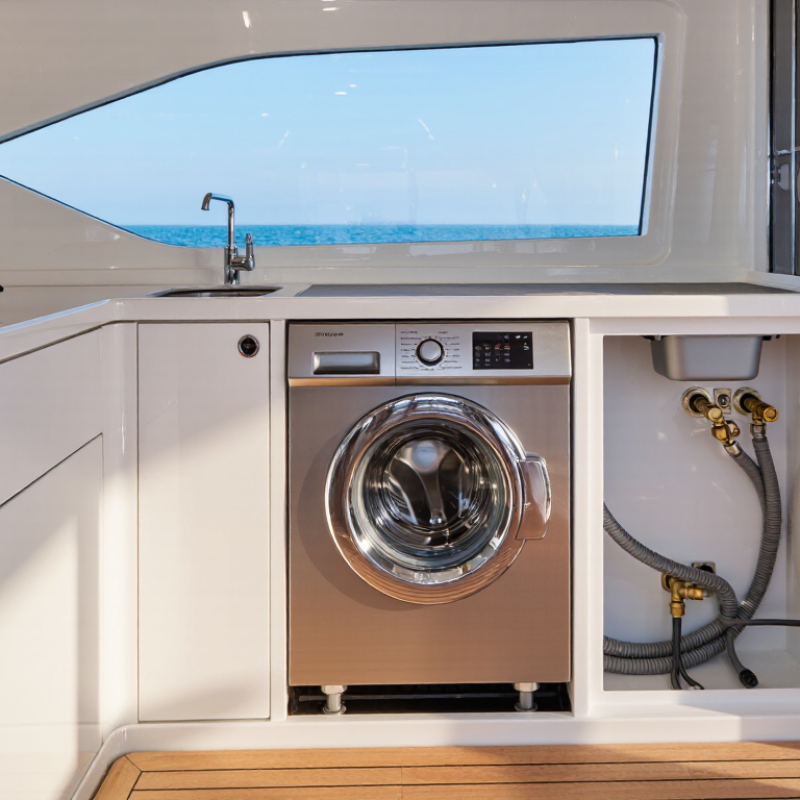
Table of Contents [Hide]
Understanding Marine Washing Machine Types and Applications
Choosing a marine washing machine starts with understanding the vessel, not the laundry basket. Different designs suit different onboard conditions.
Compact front-loading machines work well on yachts and small cruising vessels. They use less water and fit beneath counters, but installation must allow door clearance. Top-loading models can be easier to load in narrow cabins. However, they may need more vertical space. Washer-dryer combinations save room on long voyages, although drying often takes longer in humid cabins. Semi-automatic units suit vessels with limited plumbing. They require more manual handling, which some crews may find inconvenient.
Applications also change the selection. A family yacht may need a quiet machine for towels, swimwear, and daily clothing. A workboat needs stronger vibration control and simple controls. Larger passenger vessels may require higher-capacity equipment with clear maintenance access. Check the vessel’s power supply carefully. Confirm freshwater pressure, drainage height, and electrical protection before installation. Salt air is another concern. Stainless or corrosion-resistant external parts usually provide better durability, but internal seals still need inspection.
During an onboard trial, run the machine while the vessel is moving gently. Listen for cabinet movement and unusual pump noise. A level base matters more than many buyers expect. I have seen specifications look suitable, yet cramped access made servicing difficult. That detail is easy to miss. Leave space around filters, hoses, and the drain connection. Also consider realistic loads. A machine that handles bedding efficiently may be excessive for two crew members.