
-
- Products
- Indoor Household Cords
- Appliance Cords
- General Purpose Short-Length Cords
- General Purpose Extension Cords
- Landscape & Decorating Cords
- Bright Color Extension Cords
- Oil-Resistant Extension Cords
- Cold-Flex Extension Cords
- VividFlex Power Cords
- EXTREME All-Weather Cords
- Cord Management
- Task Lights
- Adapters & GFCI Devices
- Where to Buy
- About
- Careers
- Glossary
- Catalog


How to Choose the Best Solar Street Light for Your Project?
Choosing the best Solar Street Light begins with the site, not the product brochure. A reliable decision considers road width, pole spacing, nighttime traffic, weather, and available sunlight. In my project reviews, small details often decide performance. A shaded pole can reduce daily charging. A dusty lens can weaken illumination. A poorly sized battery may fail during several cloudy nights.
Energy expert Dr. Steven Chu once said, “The sun provides more energy to Earth in one hour than humanity uses in one year.” His observation highlights solar power’s potential, but potential alone does not guarantee dependable lighting. A suitable Solar Street Light must match the project’s energy demand and local conditions. Check the lamp’s real lumen output, not only its wattage. Review the solar panel’s efficiency and battery capacity. Confirm the expected autonomy during winter or rainy periods. Also inspect the protection rating, operating temperature, controller quality, and warranty terms.
Look closely at the road.
The best choice may not be the brightest model. Excessive brightness can create glare, uneven visibility, and wasted energy. A practical design distributes light evenly across the target area. It also allows safe maintenance without frequent replacements. However, product specifications can be optimistic. Independent testing and installation experience deserve attention. Even experienced buyers can overlook shading, battery aging, or future tree growth. That is why a careful site assessment should guide every specification, quotation, and final purchase decision.
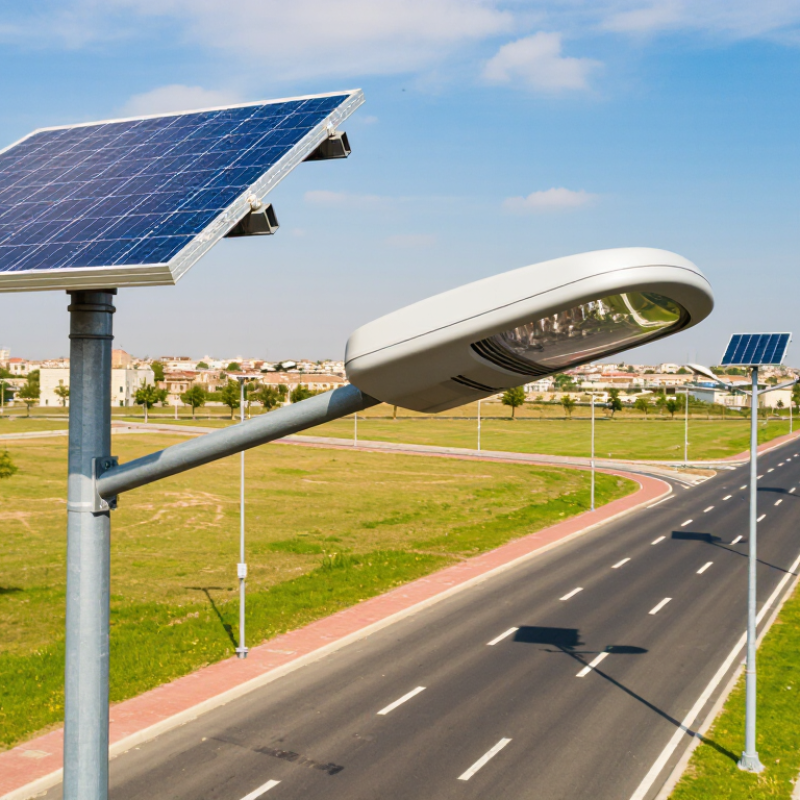
Table of Contents [Hide]
Project Requirements and Solar Street Lighting Objectives
How to Choose the Best Solar Street Light for Your Project?
Project Requirements and Solar Street Lighting Objectives
Define the site before comparing wattage or panel size. Measure road width, pole spacing, traffic levels, pedestrian movement, and nearby building shadows. A residential lane may need gentle, uniform lighting. A junction needs stronger illumination and better glare control. Specify target illuminance, uniformity, colour temperature, operating hours, and acceptable light spill. CIE 115 and EN 13201 provide useful guidance for road-lighting classifications. Local engineers should verify the final values.
Energy objectives also need numbers. The International Energy Agency’s Energy Efficiency 2023 report estimates that lighting consumes nearly 15% of global electricity. Efficient solar systems can reduce grid demand, but only when their batteries survive poor weather. Set an autonomy target, such as three to five cloudy nights, after reviewing local irradiance data. NREL’s solar-resource guidance recommends using measured or validated site data, not a single annual average. That detail matters.
Inspect the location at night. Check whether tree branches will shade the panel in December. Record battery temperature, drainage, vandalism risks, and maintenance access. A compact luminaire may look attractive, yet its output can decline sharply after several rainy nights. I would not trust a brochure’s “all-night” claim without testing real dimming schedules and discharge data. Sometimes, a lower-power system with wider spacing performs worse than expected. Recalculate the layout. Then test one section before full installation.