
-
- Products
- Indoor Household Cords
- Appliance Cords
- General Purpose Short-Length Cords
- General Purpose Extension Cords
- Landscape & Decorating Cords
- Bright Color Extension Cords
- Oil-Resistant Extension Cords
- Cold-Flex Extension Cords
- VividFlex Power Cords
- EXTREME All-Weather Cords
- Cord Management
- Task Lights
- Adapters & GFCI Devices
- Where to Buy
- About
- Careers
- Glossary
- Catalog


7 Tips to Choose the Right API 6A Seal Kit?
Choosing the right Api 6a Seal Kit is a pressure-control decision, not a simple purchasing task. A mismatched seal can leak during testing, installation, or well intervention. Small details matter: bore size, temperature rating, elastomer compound, pressure class, and service fluid compatibility.
The International Energy Agency’s Oil 2024 report expects global oil demand to approach 105.6 million barrels per day by 2029. That outlook increases pressure on operators to extend equipment reliability and reduce unplanned downtime. API Specification 6A and ISO 10423 define critical requirements for wellhead and Christmas-tree equipment. However, compliance alone does not guarantee a suitable kit. Storage conditions, installation practice, and actual field chemistry still influence performance.
Mike Sommers, API President and CEO, has stated, “API standards are the cornerstone of safety and efficiency.” That principle applies directly to seal selection. The seven tips in this guide connect standards with practical inspection: verify the equipment identification, match the pressure and temperature envelope, confirm material compatibility, check traceability, inspect packaging, review shelf life, and validate supplier competence.
Look closely.
A seal kit should arrive clean, labeled, and protected from heat, sunlight, moisture, and ozone. One overlooked detail can defeat an otherwise careful specification. This guide is not perfect; field conditions vary, and catalog descriptions may hide important limitations. Engineers should compare certificates, drawings, maintenance records, and manufacturer data before approval. Reliable decisions come from evidence, not attractive pricing or familiar packaging.
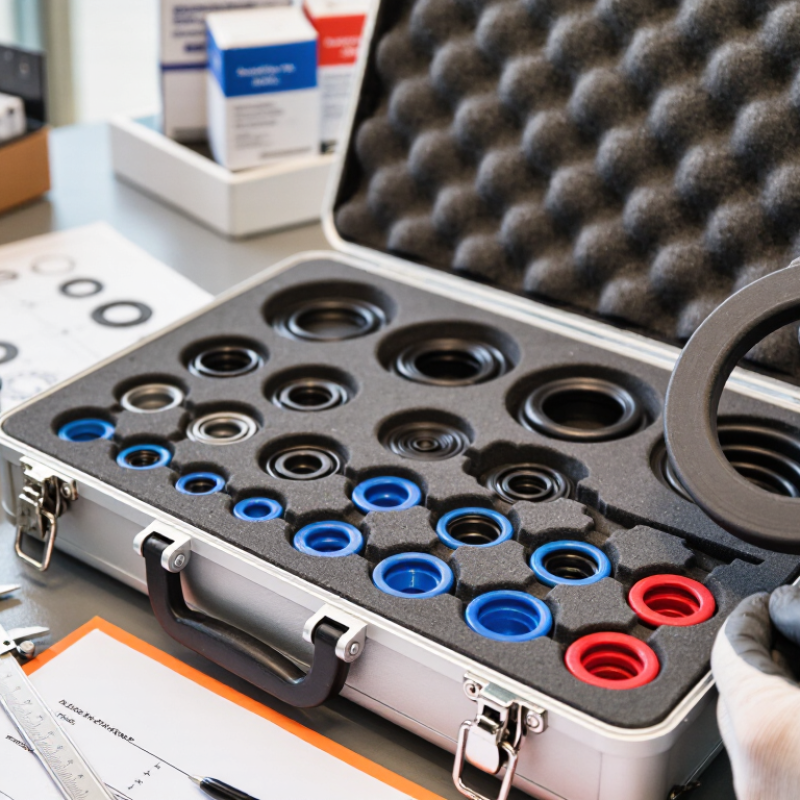
Table of Contents [Hide]
Define the API 6A Pressure Rating: 2,000–20,000 psi WP
Choosing the right API 6A seal kit starts with pressure, not appearance. API 6A equipment may have a working pressure rating from 2,000 to 20,000 psi WP. WP means working pressure, not the temporary test pressure. Always match the kit with the actual equipment rating shown on its nameplate and documentation.
Tip 1: Confirm the pressure class. A 10,000 psi WP assembly needs seals rated for that service. Never treat a lower-rated seal as an economical substitute.
Tip 2: Check temperature limits. Hot fluids can reduce seal flexibility and shorten service life.
Tip 3: Identify the fluid. Sour, abrasive, or chemically aggressive media may require different elastomer compounds. Small details matter.
Tip 4: Measure the groove carefully. Record diameter, cross-section, and gland condition before ordering.
Tip 5: Review material compatibility with pressure cycles. Repeated loading can expose weaknesses that a static test misses.
Tip 6: Verify the kit’s traceability, inspection records, and applicable API 6A requirements. Reliable documentation supports safer maintenance decisions.
Tip 7: Compare the kit with the original equipment drawing, not memory. I have seen clean-looking replacements fail because one dimension was slightly wrong. That is easy to overlook. Consider it a reminder to slow down, especially near 20,000 psi WP.