
-
- Products
- Indoor Household Cords
- Appliance Cords
- General Purpose Short-Length Cords
- General Purpose Extension Cords
- Landscape & Decorating Cords
- Bright Color Extension Cords
- Oil-Resistant Extension Cords
- Cold-Flex Extension Cords
- VividFlex Power Cords
- EXTREME All-Weather Cords
- Cord Management
- Task Lights
- Adapters & GFCI Devices
- Where to Buy
- About
- Careers
- Glossary
- Catalog


How to Choose the Right Battery Liquid Cooling Pipe?
Choosing the right Battery Liquid Cooling Pipe is a practical engineering decision, not a simple purchasing task. The pipe must move coolant steadily, resist pressure, and survive repeated heating and cooling. It also needs reliable connections near sensitive battery cells. Small details matter. Wall thickness matters. Bend radius matters.
Dr. Jeff Dahn, a respected battery researcher, has stated, “The battery is the most important component in an electric vehicle.” His point extends beyond cell chemistry. A battery pack also depends on controlled temperature, stable coolant flow, and durable thermal-management hardware. A poorly selected Battery Liquid Cooling Pipe may create uneven cooling, leakage risks, or unnecessary pressure loss. That can reduce performance and complicate maintenance.
This guide examines the factors engineers and manufacturers should compare before making a selection. These include material compatibility, operating temperature, coolant type, pressure rating, flexibility, vibration resistance, and connection design. Real installations deserve attention. A pipe passing close to sharp brackets needs protection. A pipe inside a compact pack may require tighter bends, but excessive bending can weaken it. No selection method is perfect. Testing assumptions is essential. Sometimes, a lighter pipe appears attractive but fails under long-term vibration. Sometimes, a stronger design costs more than the application needs. The correct choice balances safety, service life, manufacturability, and total system cost. Supplier documentation, sample testing, and traceable quality records should support that decision. Performance claims should never replace validation.
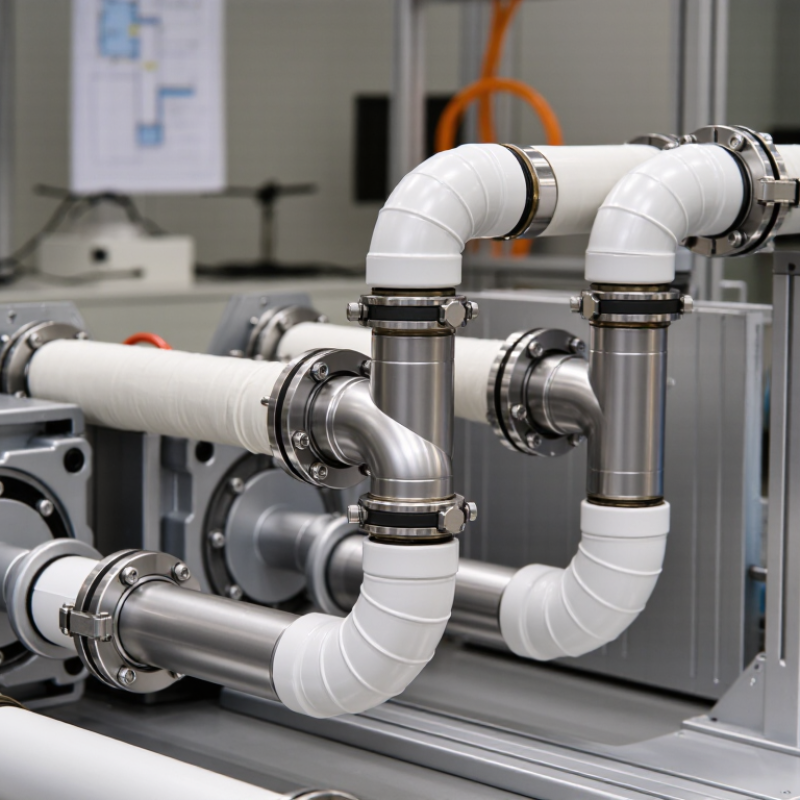
Table of Contents [Hide]
Define the Role of Liquid Cooling Pipes in Battery Thermal Management
How to Choose the Right Battery Liquid Cooling Pipe?
Define the Role of Liquid Cooling Pipes in Battery Thermal Management
Liquid cooling pipes move heat away from battery cells during charging, driving, and rapid load changes. They help maintain a stable temperature across the pack. The International Energy Agency reported over 14 million electric cars were sold globally in 2023. That growth increases thermal control demands inside tighter battery enclosures.
The U.S. Department of Energy identifies roughly 15–35°C as a practical operating range for many lithium-ion battery systems. Pipes must support consistent coolant flow across this range. Engineers should examine pressure drop, flow rate, bend radius, wall thickness, and leak resistance. Material compatibility also matters. Aluminum, stainless steel, and engineered polymers behave differently under heat, vibration, and corrosion exposure.
A good pipe is not simply highly conductive. It must fit the pack without creating stress points. Thermal expansion can loosen joints over time. Poor routing may leave cells near the outlet warmer than cells near the inlet. I would validate this with flow testing, thermal imaging, and pressure cycling. A neat CAD model is not proof. Real packs behave less politely. Some designs still overlook service access, which can turn a small leak into a costly repair. Select the pipe after mapping heat generation, coolant chemistry, assembly limits, and long-term vibration conditions.