
-
- Products
- Indoor Household Cords
- Appliance Cords
- General Purpose Short-Length Cords
- General Purpose Extension Cords
- Landscape & Decorating Cords
- Bright Color Extension Cords
- Oil-Resistant Extension Cords
- Cold-Flex Extension Cords
- VividFlex Power Cords
- EXTREME All-Weather Cords
- Cord Management
- Task Lights
- Adapters & GFCI Devices
- Where to Buy
- About
- Careers
- Glossary
- Catalog


How to Choose the Right Engine Cylinder Block?
Choosing the right Engine Cylinder Block begins with the engine’s real job, not a catalog label. A daily driver, a tow vehicle, and a track build place different demands on the same casting. Bore size, deck height, coolant passages, and main-bearing support all matter. So does the block’s condition. A clean-looking surface can hide corrosion around a water jacket or wear in a cylinder bore. Small details count.
Combustion-engine researcher John B. Heywood, author of Internal Combustion Engine Fundamentals, offers a useful systems-level perspective. A practical summary of that perspective is: “Choose the block as part of the whole engine, not on its own.” This is a paraphrase, not a direct quotation. The point is important: a block must suit the crankshaft, cylinder heads, intended operating range, and available cooling. Cast iron may offer durability and repair options; aluminum can reduce weight but may require careful attention to liners and temperature control. Neither material is automatically right.
Look beyond advertised displacement. Check the manufacturer’s specifications, casting identification, bore limits, deck condition, and compatibility with your components. Ask how the block was measured, and request inspection details when buying a used unit. A spec sheet is useful, but not enough. Sometimes the best choice is less glamorous: a sound, well-matched block instead of a larger one with uncertain history. Even careful selection has trade-offs, and overlooking one measurement can turn a promising build into an expensive rethink.
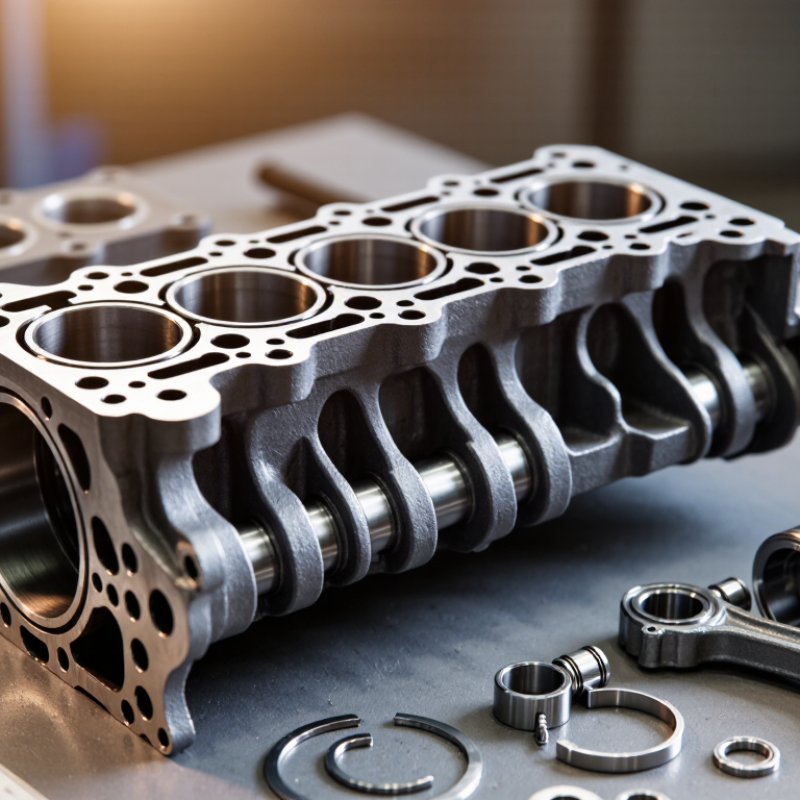
Table of Contents [Hide]
Understanding the Engine Cylinder Block and Its Role
The engine cylinder block is the structure that houses the cylinders and supports key moving parts. It also contains passages for oil and coolant, helping manage friction and heat. The crankshaft sits in the lower section, while the cylinder head attaches at the top. It carries loads. Its condition affects compression, lubrication, and overall engine stability.
When choosing a block, match its bore size, deck height, mounting points, and passage layout to the intended engine. Material matters, too: cast iron is generally durable and rigid, while aluminum is lighter and often relies on liners or coatings at the cylinder bores. Check the manufacturer’s specifications and inspect critical surfaces for cracks, corrosion, and uneven wear. A clean appearance alone proves little.
It is easy to focus on displacement and overlook how the block fits the rest of the engine. That shortcut can mislead. Confirm compatibility with the crankshaft, pistons, cylinder head, and cooling system before buying. If the block has been machined, ask for measurements and records; even small changes to bore or deck dimensions may affect assembly. Some details are easy to miss. A qualified engine machinist can verify measurements when the history or condition is uncertain.