
-
- Products
- Indoor Household Cords
- Appliance Cords
- General Purpose Short-Length Cords
- General Purpose Extension Cords
- Landscape & Decorating Cords
- Bright Color Extension Cords
- Oil-Resistant Extension Cords
- Cold-Flex Extension Cords
- VividFlex Power Cords
- EXTREME All-Weather Cords
- Cord Management
- Task Lights
- Adapters & GFCI Devices
- Where to Buy
- About
- Careers
- Glossary
- Catalog


How to Choose the Right Fuel Oil Heater for Your Needs?
Choosing the right Fuel Oil Heater involves more than comparing prices, heating capacity, or brand names. A suitable unit must match the room size, insulation quality, fuel availability, ventilation design, and local climate. An oversized heater may cycle too often, waste fuel, and create uneven temperatures. An undersized model can run continuously while leaving cold corners near windows and exterior walls.
Thomas Butcher, a fuel-oil heating researcher at Brookhaven National Laboratory, has emphasized, “A clean, properly tuned burner is essential for efficient and reliable operation.” That principle deserves attention. A heater with excellent specifications still performs poorly when its nozzle, filter, or combustion settings receive little maintenance. Look for a model with dependable controls, accessible service parts, clear efficiency information, and strong manufacturer support. Ask a qualified technician to calculate the heating load instead of guessing from floor area alone. Experience matters here.
Safety cannot be treated as an afterthought. Confirm suitable flue arrangements, carbon monoxide protection, fuel-line condition, and adequate air supply. Local installation requirements may differ, so professional inspection remains important. This guide will compare heater types, output ratings, operating costs, maintenance demands, and practical installation concerns. It will also examine details buyers often overlook, such as startup noise, tank placement, thermostat response, and performance during freezing weather. There is no perfect choice. The best Fuel Oil Heater is the one that fits your building, budget, and maintenance habits without creating avoidable risks.
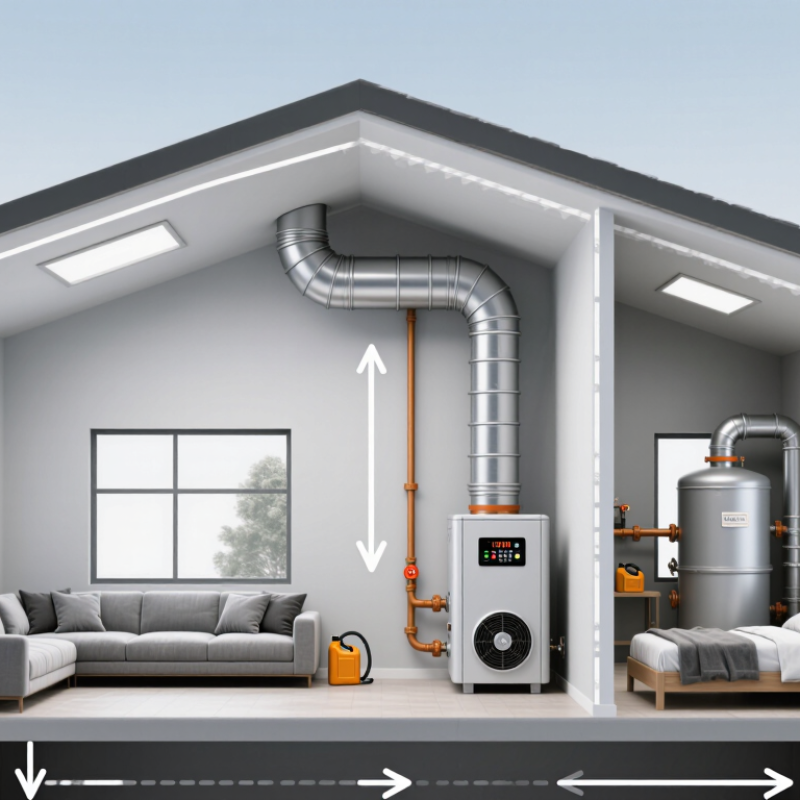
Table of Contents [Hide]
Understand How Fuel Oil Heaters Work
How to Choose the Right Fuel Oil Heater for Your Needs?
Understanding how a fuel oil heater works makes selection more practical. The unit stores fuel in a tank and sends it through a pump at a controlled rate. A nozzle turns the liquid into a fine spray. An ignition system then lights this spray inside the combustion chamber.
The flame heats a metal heat exchanger. A fan pushes room air across its warm surface, while a separate flue removes combustion gases outdoors. This separation matters. You want heated air inside, not exhaust. A thermostat controls the cycle by starting or stopping the burner as the room temperature changes. Some systems also include sensors that detect flame failure or blocked airflow.
Fuel use depends on several details. Room size matters. So does insulation, ceiling height, outdoor temperature, and ventilation. A heater that is too small may run constantly. One that is too large may cycle frequently, wasting fuel and creating uneven temperatures. That mistake is easy to make. Check the manufacturer’s heating-area guidance, but treat it as an estimate rather than a promise.
Before choosing, inspect the flue route, fuel storage location, electrical supply, and maintenance access. Dust on the air filter can reduce airflow. Soot around the burner may signal poor combustion and requires professional attention. Arrange regular servicing, keep combustible materials away, and use a qualified technician for installation. Heater performance can look acceptable while efficiency quietly declines.