How to Choose the Right Short Extension Cord for Your Needs
When it comes to powering devices at home, in the office, or during outdoor activities, a short extension cord can be an invaluable tool. These cords are designed to provide a convenient way to add a little extra length to your power supply, enabling you to reach areas that may be just out of reach from standard outlets. However, with various options available in the market, selecting the right short extension cord for your specific needs can be a daunting task.
Understanding the different features and specifications of short extension cords is crucial for ensuring safety and functionality. Factors such as cord length, gauge, power rating, and durability play a significant role in determining which cord will best suit your requirements. Whether you need to power lightweight tools at a construction site, connect holiday lights, or extend an outlet for everyday appliances, knowing how to choose the right cord will enhance your overall experience while minimizing potential risks.
In this article, we will guide you through the essential aspects to consider when selecting a short extension cord. By the end, you'll be empowered with the knowledge necessary to make an informed decision that meets your power needs efficiently and safely.
Understanding Your Power Needs and Electrical Requirements
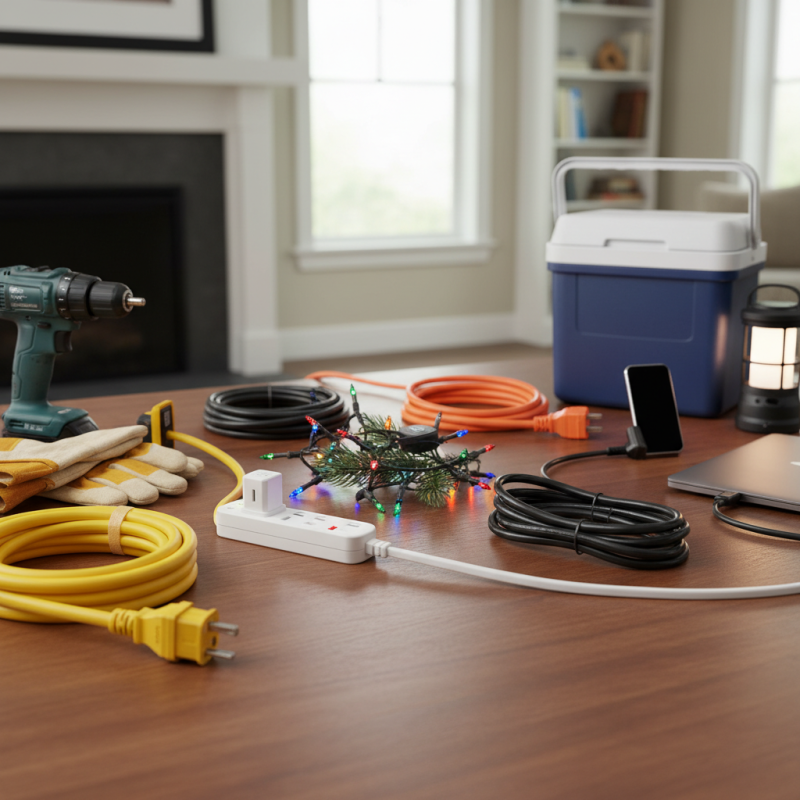
When selecting a short extension cord, understanding your power needs and electrical requirements is fundamental. Start by considering the wattage of the devices you intend to connect. Each appliance has a specific power rating, typically indicated on a label or in the manual. Summing the wattage of all devices you plan to use simultaneously will help you choose an extension cord that can handle the load without risk of overheating or damaging your appliances.
Another critical aspect is the cord's amperage rating. Extension cords are designed to carry a certain amount of current safely. Make sure the cord you choose can handle the total amperage required by your devices. Additionally, consider the length and gauge of the cord; a longer cord requires a thicker gauge to prevent voltage drop, which can affect the performance of your devices. Understanding these factors ensures that you select a short extension cord that meets your electrical needs while maintaining safety and efficiency.
Identifying the Right Length for Your Extension Cord
When selecting the right length for a
short extension cord, it's crucial to consider the distance between your power source and your devices.
Extension cords come in various lengths, typically ranging from 3 to 25 feet. A shorter cord minimizes voltage drop, which is beneficial for maintaining the efficiency of your appliances. However, choosing a cord that's too short can create safety hazards, requiring extension cords to be unnaturally stretched or placed in risky positions.
Tips: Always measure the distance from your outlet to where the device will be used and add a little extra length for flexibility. A good rule of thumb is to avoid extension cords longer than necessary, as longer cords can lead to energy loss and potential overheating.
Another factor to keep in mind is the
environment in which the extension cord will be used. If you intend to use it outdoors or in areas where it might be exposed to moisture, opt for a cord specifically rated for those conditions. Too much slack can also be a tripping hazard, so ensure your choice strikes a balance between sufficient length and safety.
Tips: Consider using cord clips or organizers to keep excess cord neat and avoid potential accidents. Regularly inspect your extension cords for any signs of wear, especially if they are longer than necessary, to ensure they remain safe and functional.
Selecting the Appropriate Gauge for Safety and Efficiency
When selecting a short extension cord, one of the most crucial factors to consider is the gauge of the wire. The wire gauge determines the amount of electrical current that the cord can safely carry. Generally, lower gauge numbers indicate thicker wires, which can handle more current and reduce the risk of overheating.
For household applications, a 16-gauge cord is commonly sufficient, but for heavier tools or appliances, a 14-gauge cord or lower may be necessary. It's essential to match the cord's gauge to your device's power requirements to ensure both safety and efficiency.
Moreover, understanding the relationship between cord length and gauge is vital. Longer cords require thicker wires to maintain the same efficiency; otherwise, there's a significant voltage drop that can lead to inadequate power supply and potential damage to your equipment.
Therefore, if you need a longer extension cord, opt for a lower gauge to minimize this effect. Always check the amperage ratings and ensure that the cord you choose can handle the load of the devices you're planning to use. By considering these factors, you can select the right short extension cord that meets your needs while ensuring safety during usage.
Exploring Different Types and Features of Short Extension Cords
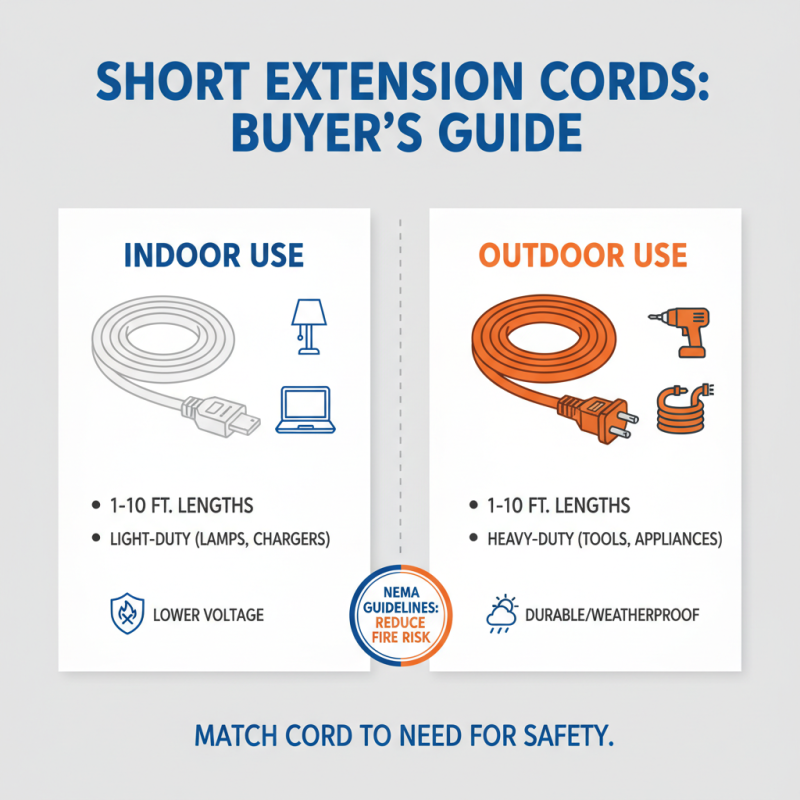
When selecting the right short extension cord, it's essential to understand the various types and features available. Short extension cords typically range from 1 to 10 feet, providing a convenient solution for reaching outlets in tight spaces. The most common types include indoor and outdoor extension cords, with indoor cords often designed for lower voltage applications while outdoor cords are built to withstand harsher conditions. According to the National Electrical Manufacturers Association, using the correct type of extension cord can significantly reduce risks of overheating and electrical fires, making it crucial to match your needs with the right specifications.
Another critical factor to consider is the cord's gauge, which affects its capacity to carry current. Cords with a lower gauge number (e.g., 14-gauge) can carry more current than those with a higher gauge (e.g., 16-gauge). For instance, a 14-gauge cord can handle up to 15 amps, making it ideal for power-hungry devices. Moreover, look for cords with built-in surge protection to shield your devices from voltage spikes. It's advisable to check the power rating of all devices you plan to connect to ensure the extension cord can accommodate them safely.
Tips: Always choose a short extension cord that meets or exceeds your device's amperage requirement. Additionally, avoid daisy-chaining multiple cords together, as this can lead to dangerous overloads. When using outdoor cords, ensure they are specifically rated for outdoor use, which provides extra insulation and weather resistance to safeguard against elements.
Tips for Safe Usage and Maintenance of Extension Cords
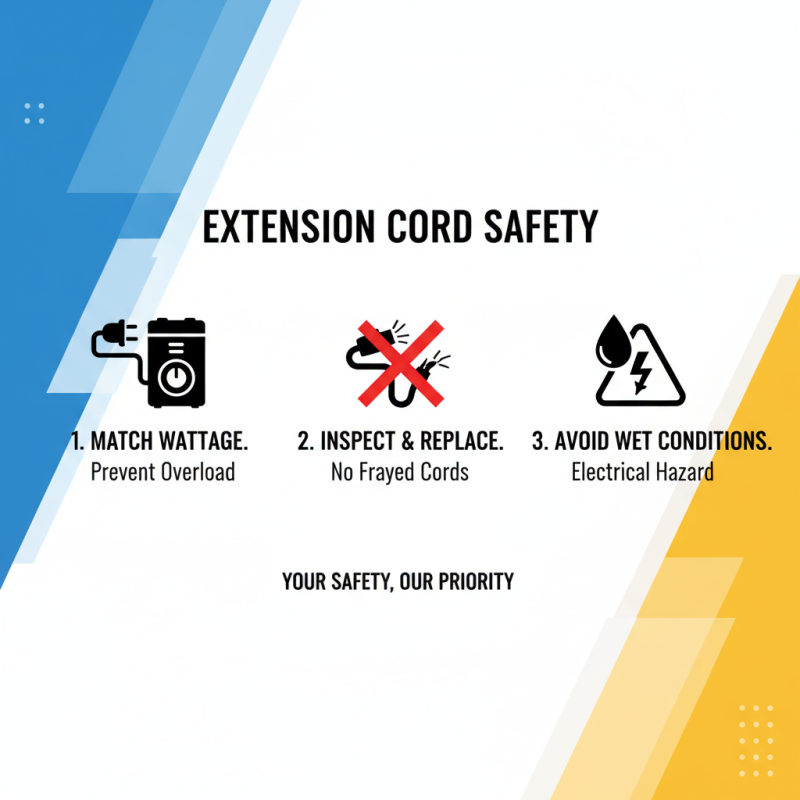
When using extension cords, safety should always be your top priority. First and foremost, ensure that the cord is rated for the wattage of the devices you'll be using. Overloading an extension cord can lead to overheating and potentially cause fires. Always check for signs of wear and tear, such as fraying or exposed wires, and replace any damaged cords immediately to prevent accidents. Additionally, you should avoid using extension cords in wet or damp conditions, as moisture can create serious electrical hazards.
Proper maintenance is also key to extending the life of your extension cord. Store cords in a dry, cool place when not in use and avoid tightly coiling them, as this can lead to kinks and damage. Instead, loosely coil the cord to prevent strain and ensure longevity. Regularly inspect your extension cords for any abnormalities, such as discoloration or burnt smells, which may indicate internal damage. Taking these simple precautions will not only help to ensure your safety but also enhance the performance of your extension cords over time.