
-
- Products
- Indoor Household Cords
- Appliance Cords
- General Purpose Short-Length Cords
- General Purpose Extension Cords
- Landscape & Decorating Cords
- Bright Color Extension Cords
- Oil-Resistant Extension Cords
- Cold-Flex Extension Cords
- VividFlex Power Cords
- EXTREME All-Weather Cords
- Cord Management
- Task Lights
- Adapters & GFCI Devices
- Where to Buy
- About
- Careers
- Glossary
- Catalog


How to Choose a Vibratory Dryer in 2026?
Choosing a Vibratory Dryer in 2026 requires more than comparing motor power, capacity, and purchase price. The right machine must protect the product while delivering stable moisture, manageable energy use, and consistent throughput. A dryer that performs well with granules may struggle with fragile crystals, sticky powders, or heat-sensitive materials.
Professor Arun S. Mujumdar, a leading authority on drying technology, has stated, “Drying is one of the oldest and most common unit operations.” His observation remains highly relevant. Drying technology is familiar, but product behavior is rarely simple. A small change in particle size can alter residence time, airflow, and final moisture. Laboratory results may also look better than factory performance.
Begin with the material. Record its inlet moisture, target moisture, bulk density, temperature limit, and tendency to agglomerate. Then examine the operating environment. A dusty plant may need improved sealing and filtration. A corrosive product may require special contact materials. A limited floor area can influence the dryer’s length, discharge design, and maintenance access.
Do not ignore vibration characteristics. Amplitude and frequency affect conveying speed, bed depth, and heat transfer. They also influence noise and mechanical wear. These details matter.
An attractive specification sheet is not proof of suitability. Pilot testing is wiser. Still, pilot data can mislead when feed conditions are unrealistically uniform. That weakness deserves attention. This guide explains how to compare dryer designs, question supplier claims, and select a Vibratory Dryer that fits real production conditions in 2026.
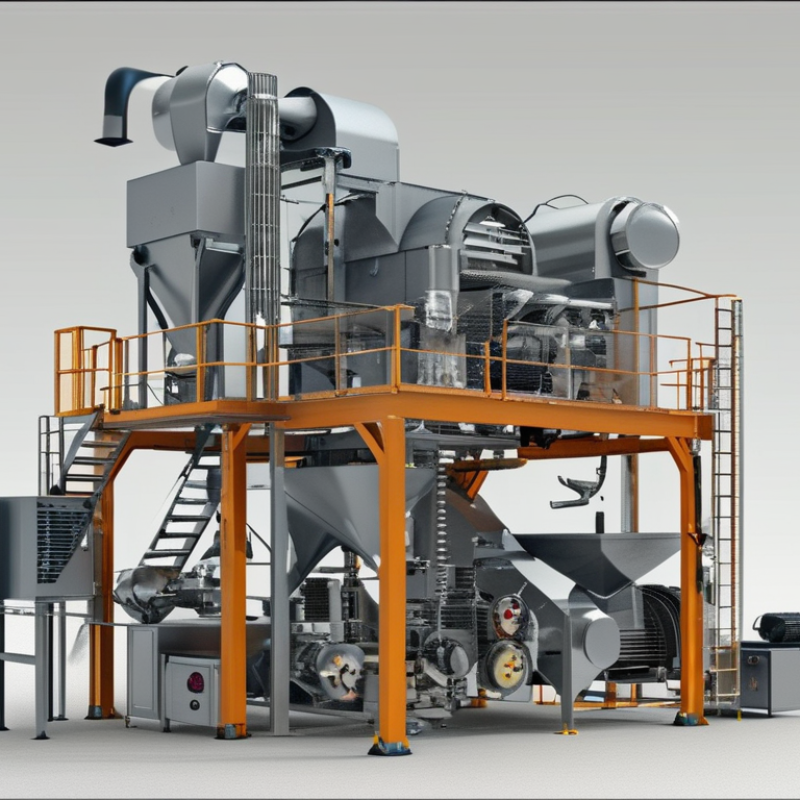
Table of Contents [Hide]
What Is a Vibratory Dryer and How Does It Work?
A vibratory dryer removes moisture while material moves across a vibrating surface. It is commonly used for granules, pellets, powders, and small components. Unlike a static tray dryer, it keeps product moving and exposes more surface area to heated air. The machine usually combines vibration, controlled airflow, and moderate temperature. That combination matters. It can dry evenly without excessive mechanical handling. Still, even drying depends on feed depth, particle size, and moisture variation.
Inside the chamber, an eccentric motor creates a steady oscillating motion. The vibration advances material along a perforated or solid deck. Warm air passes through or over the moving bed. Moisture leaves the particles, enters the air stream, and exits through an exhaust system. Operators adjust vibration intensity, air volume, residence time, and inlet temperature. A slower bed gives moisture more time to escape. Too much heat can damage sensitive material. Too little airflow can leave a damp core. I have found that small adjustments often outperform aggressive settings.
When choosing a vibratory dryer in 2026, check actual material behavior, not only rated capacity. Ask for trials using your own moisture range and target throughput. Measure outlet moisture at several points. Inspect cleanability, insulation, controls, noise, and maintenance access. A dryer that looks efficient may waste energy if air leaks around the bed. Easy to miss. I would also question optimistic drying claims. Real production rarely stays perfectly consistent.