
-
- Products
- Indoor Household Cords
- Appliance Cords
- General Purpose Short-Length Cords
- General Purpose Extension Cords
- Landscape & Decorating Cords
- Bright Color Extension Cords
- Oil-Resistant Extension Cords
- Cold-Flex Extension Cords
- VividFlex Power Cords
- EXTREME All-Weather Cords
- Cord Management
- Task Lights
- Adapters & GFCI Devices
- Where to Buy
- About
- Careers
- Glossary
- Catalog


10 Electric Tricycle Buying Tips for Global Buyers
Buying an Electric Tricycle is not simply a matter of choosing a motor and three wheels. It is a practical decision involving payload, battery safety, terrain, service access, and daily comfort. For global buyers, one attractive model may perform poorly on steep roads, rough paths, or humid coastal streets.
The International Energy Agency’s Global EV Outlook 2024 reports that electric two- and three-wheelers remain the largest electrified road-transport segment worldwide. Global sales exceeded 20 million units in 2023, with strong demand across China, India, Southeast Asia, and parts of Africa. The report also highlights battery cost, charging access, and local manufacturing as important market influences. These figures show opportunity, but they do not guarantee a suitable purchase.
Micromobility analyst Horace Dediu defines the sector as “the ability to move people and goods using lightweight vehicles.” That sentence matters here. An Electric Tricycle must move real people, groceries, tools, or parcels, not just look efficient in a product photograph. Buyers should inspect frame welds, braking distance, tire width, battery certification, controller protection, and replacement-part availability. Small details become expensive later.
This guide presents ten buying tips for international customers. It examines performance claims, supplier reliability, warranty language, and after-sales support. Some recommendations may seem obvious. They are still often missed. Even experienced buyers can overestimate range or underestimate cargo weight. A careful checklist cannot remove every risk, but it can expose weak assumptions before payment.
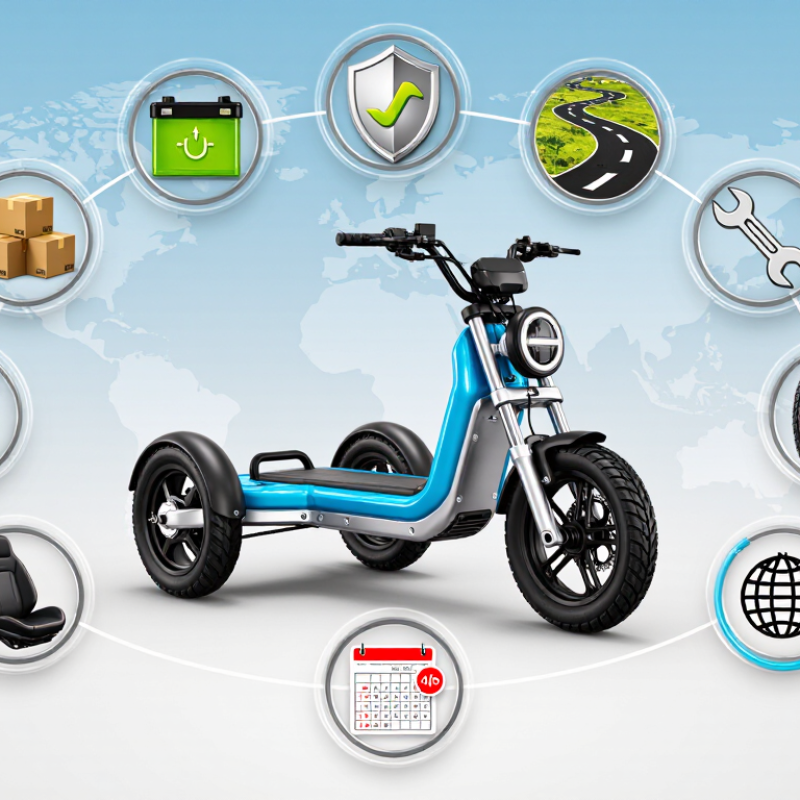
Table of Contents [Hide]
Define Your Use Case, Riders, and Daily Transport Needs
Before comparing electric tricycles, define the daily job clearly. Will it carry one adult, two children, groceries, tools, or small parcels? A passenger model may feel stable but offer limited cargo space. A cargo model may be practical but harder to park.
Write down the rider’s height, weight, strength, and riding confidence. An older rider may need a low step-through frame, wide tires, simple controls, and strong parking brakes. A taller rider needs adjustable handlebars and enough legroom. Two riders? Check the seating area, footrests, and approved load capacity. Do not estimate by appearance.
Think about the route in detail. Measure narrow gates, apartment elevators, storage doors, and turning areas. Note hills, loose gravel, rain, heat, and daily distance. A short urban trip may need easy handling more than maximum speed. A long route needs comfortable seating, predictable battery range, and accessible charging. Range claims can change with rider weight, hills, temperature, and tire pressure.
Use a normal shopping load during a test ride. Feel the steering when turning slowly. Test braking on a quiet, dry surface. Listen for rattles. Small details matter. I would also repeat the test after loading the rear basket, because balance can change noticeably. This step is easy to skip, and regrettably, it often exposes the wrong choice later. Share the route and rider details with a qualified seller, then request specifications in writing.