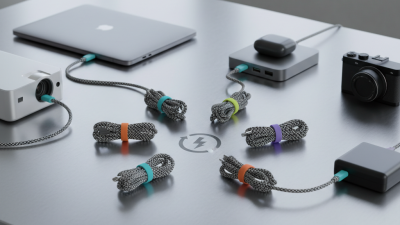
Why Are Cord and Cable Types Essential for Your Electronics Needs?
Understanding the importance of cord and cable types is crucial for any electronics user. Industry expert Mark Johnson once stated, "The right cord can elevate your device's performance." This highlights the significant role of these components in our daily lives.
Different electronics require specific cords and cables to function optimally. Each type is designed with unique features to meet various power and data transfer needs. For instance, a standard USB cable may suffice for basic charging. However, a high-speed HDMI cable is essential for high-definition video.
Yet, many people overlook these details. They often use the wrong types, leading to inefficient performance. It’s a common oversight that can cause frustration. Reflecting on these choices can help users ensure they make informed decisions. Choosing the right cord and cable isn't just about function; it’s about maximizing the potential of your devices.
Understanding Different Types of Cords and Cables in Electronics
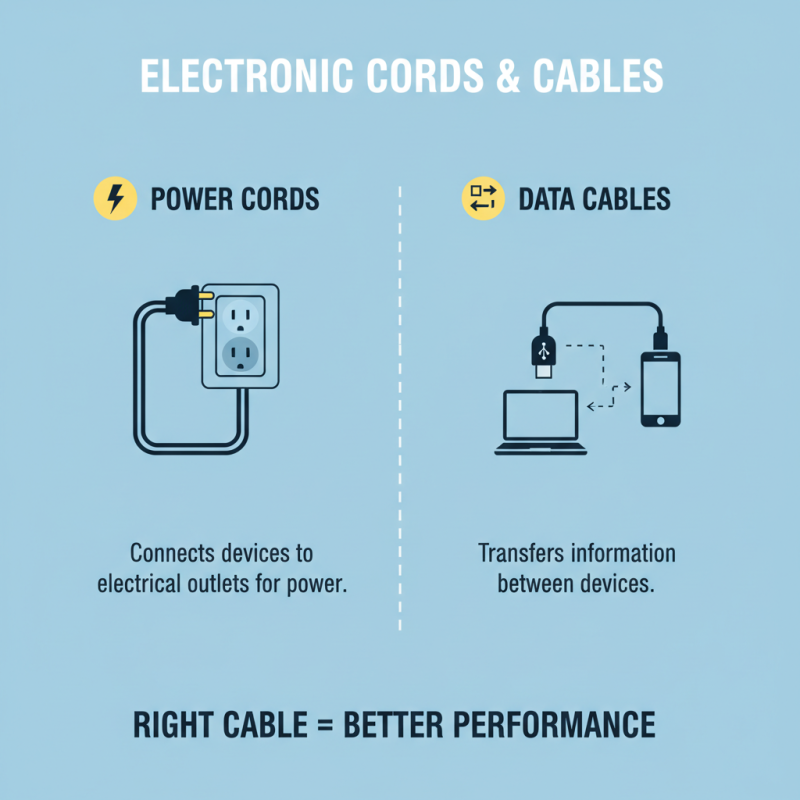
When it comes to electronics, understanding the various types of cords and cables is crucial. Each type serves a specific function. For instance, power cords are used to connect devices to electrical outlets. Data cables, on the other hand, facilitate the transfer of information between devices. Knowing which cable to use can greatly enhance performance.
Consider HDMI cables, commonly used for video and audio transfer. They support high-definition signals, making them ideal for televisions. However, not all HDMI cables are created equal; some may not support the latest technology. Similarly, USB cables come in several versions. Each version has unique data transfer speeds and compatibility requirements.
It's surprising how often people overlook these details. A mismatched cable can lead to malfunction or subpar performance. Beyond functionality, the visual aspect matters too. Many people may choose the wrong cable purely based on looks. Balancing aesthetics with practicality can be tricky but is essential for a reliable setup.
Key Specifications to Consider for Electronics Cords and Cables
When choosing cords and cables for electronics, key specifications matter. Voltage rating is crucial. It indicates how much voltage a cable can handle safely. An inappropriate rating can lead to overheating. Make sure to check this before purchase.
Another important specification is the wire gauge. Thicker wires can carry more current. A lower gauge number means a thicker wire. However, thicker wires are less flexible, which can be a problem in some setups. Think about your needs. Flexibility versus capacity is a balancing act.
Tip: Always match your cable type with its intended use. Data cables differ from power cables. Look at compatibility with devices. Not all cables perform equally.
Considering shielding is also vital. Shielded cables reduce interference. This is especially useful for audio and video devices. Poorly shielded cables can distort signals. Test your cables in different settings to see how they perform.
Lastly, think about length. Longer cables can cause voltage drops. Ensure the length suits your space without compromising performance. In the end, every choice impacts overall functionality. Choose wisely.
Common Uses of Various Cord and Cable Types in Modern Devices
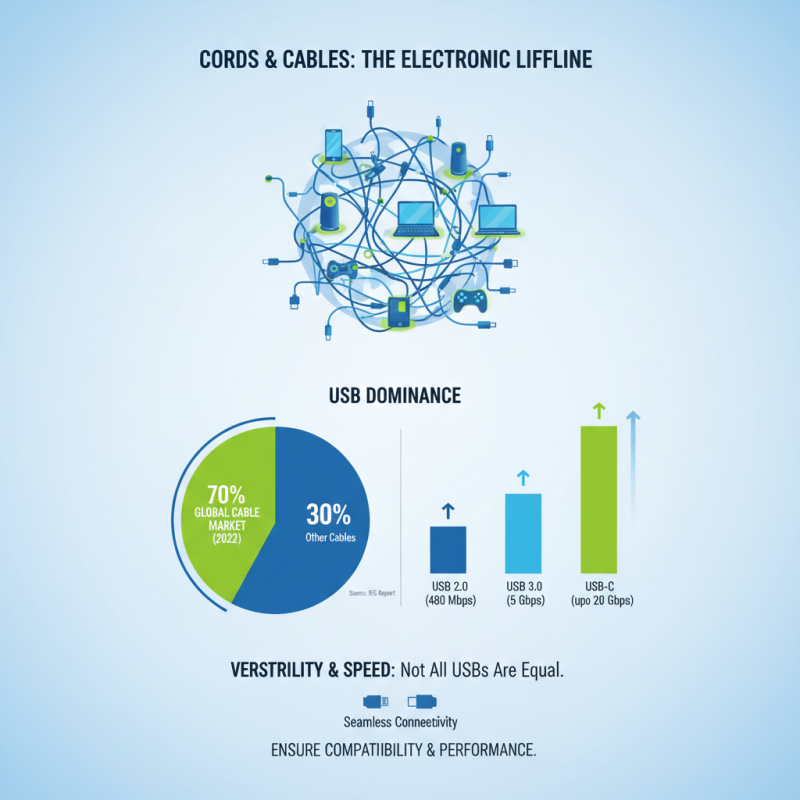
Cords and cables are crucial for modern electronics. From smartphones to smart homes, the right type ensures functionality and performance. For instance, USB cords dominate the market due to their versatility. According to a report by the International Electrotechnical Commission (IEC), USB cables accounted for approximately 70% of the global cable market in 2022. They connect devices seamlessly, but not all USB cables are equal. The speed of data transfer differs significantly among types like USB 2.0, USB 3.0, and the newer USB-C.
HDMI cables are another example of essential connections. The HDMI market is projected to reach $5 billion by 2025. They link televisions, computers, and gaming consoles while supporting high-definition video and audio. However, many consumers are unaware of the varying specifications. Using an older HDMI cable could limit your device's performance. For 4K content, only a high-speed HDMI cable suffices.
Ethernet cables are indispensable in office settings. Rapid internet is a must-have, especially with remote work trends. Statistics show that wired connections are 50% more reliable than wireless. Yet, many still rely on wireless despite frequent signal drops. Understanding these types can bridge the gap between user needs and device capabilities. Not recognizing this can lead to frustration and inefficiency.
Safety Standards and Regulations for Electronics Cords and Cables
When discussing electronics, safety standards for cords and cables hold paramount importance. According to the National Electrical Manufacturers Association (NEMA), nearly 40% of electrical accidents case involve damaged or improperly used cords. This alarming statistic underlines how essential it is to adhere to safety regulations. Proper insulation and protective features in cord designs can significantly minimize risks. Yet, many consumers remain unaware of these standards.
Regulations from organizations like the Underwriters Laboratories (UL) set specific testing criteria for cords. Products must withstand stress tests and resist fire hazards. However, not every manufacturer complies with these stringent guidelines. A 2022 report stated that only 30% of available cords passed all safety certifications. This raises serious concerns about consumer protection and product reliability. Many end-users may find themselves using subpar products without knowing the potential dangers.
It’s vital to inspect cords regularly for wear or damage. Effective maintenance can prevent electrical shorts. Despite clear guidelines, incorrect usage remains common. For instance, many people overload outlets without considering the capacity limits. This oversight can lead to serious safety issues. The awareness of these standards is crucial for any electronic user aiming to ensure their safety and efficiency.
How to Choose the Right Cord or Cable for Your Specific Needs
Choosing the right cord or cable can seem overwhelming. There are many types available, from USB to HDMI to power cables. Each type has unique features suited for different needs. For example, a USB cable is ideal for data transfer, while an HDMI cable is perfect for video and audio. Understanding these differences is crucial for your specific applications.
Consider the length of the cord. A longer cable might seem convenient, but it can also lead to signal loss. Sometimes, shorter cables work better for high-definition video. If you plan to use your electronics in different locations, flexibility is key. Keep in mind the power requirements of your devices too. A cable that offers too much or too little power can hurt your electronics.
Another aspect is durability. Some cables are thin and flimsy, while others are designed to withstand wear and tear. Investing in a robust cable can save you money in the long run. Reflect on your usage habits; are you often on the go? A tangle-free option could prove valuable. Each choice reflects not only your needs but also the quality of your electronic experience.