
-
- Products
- Indoor Household Cords
- Appliance Cords
- General Purpose Short-Length Cords
- General Purpose Extension Cords
- Landscape & Decorating Cords
- Bright Color Extension Cords
- Oil-Resistant Extension Cords
- Cold-Flex Extension Cords
- VividFlex Power Cords
- EXTREME All-Weather Cords
- Cord Management
- Task Lights
- Adapters & GFCI Devices
- Where to Buy
- About
- Careers
- Glossary
- Catalog


10 Tips for Buying an Indoor Isolating Switch
Choosing an Indoor Isolating Switch is a safety decision, not merely a product comparison. The right unit separates electrical equipment from its supply during maintenance, inspection, or emergencies. In practice, small details matter. A crowded distribution board, warm terminals, or a poorly marked handle can create serious confusion. This guide presents ten practical tips for evaluating switches before purchase. It considers current rating, voltage, number of poles, enclosure quality, terminal access, operating force, and installation space. It also explains why manufacturer documentation deserves careful attention.
Reliable selection begins with verified information. Check the product datasheet, certification marks, wiring diagram, and applicable local requirements. An experienced electrician should confirm compatibility with the circuit and installation environment. Indoor locations still vary widely. A clean office panel differs from a dusty workshop or humid utility room. Look closely at IP protection, insulation materials, mechanical durability, and visible isolation markings. Do not rely on a low price alone.
Small errors matter.
A checklist improves decisions, but it cannot replace professional judgment. I have seen specifications appear suitable until terminal capacity or mounting depth was checked closely. That is an easy mistake to repeat. Ratings may also differ between resistive, motor, and mixed loads. The following tips aim to make those questions clearer before money is spent. They encourage careful comparison, realistic planning, and documentation that remains useful after installation. Safety should guide every choice.
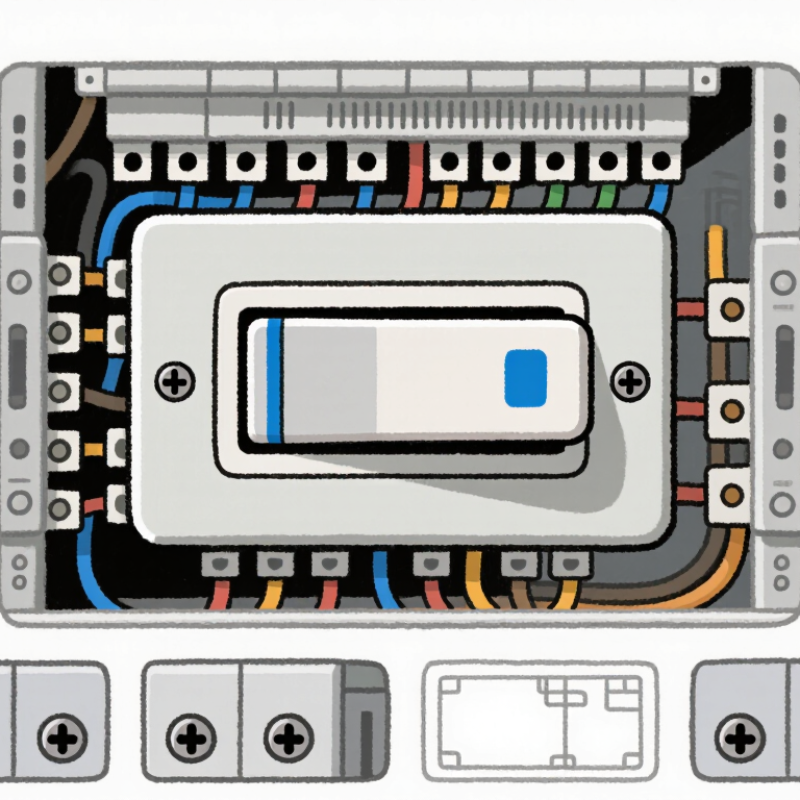
Table of Contents [Hide]
Define the Application: Match 50/60 Hz Voltage, Current, and Installation Class
10 Tips for Buying an Indoor Isolating Switch
Define the application before comparing prices. Tip 1: Confirm whether the circuit uses 50 Hz or 60 Hz. Tip 2: Match the switch’s rated operational voltage to the system voltage. Tip 3: Check continuous current, not only the normal load. Tip 4: Review short-circuit withstand requirements. IEC 60947-3:2020 separates isolating devices by utilization category and operating conditions. Its guidance helps prevent unsafe assumptions. The IEA Electricity 2024 report recorded a 2.2% rise in global electricity demand during 2023. More demand means more retrofit work. Small selection errors can spread quickly.
Tip 5: Identify AC-22A or AC-23A duty when motor or mixed loads are involved. Tip 6: Verify the installation class, including overvoltage category and pollution degree. Tip 7: Check indoor altitude limits and temperature derating. Tip 8: Select an enclosure with suitable IP protection. Indoor does not mean dry. Condensation still appears near cold walls and unheated rooms.
Tip 9: Confirm the number of poles, neutral switching, and earthing arrangement. Tip 10: Compare terminal size with the actual cable cross-section. NFPA 70 guidance also requires equipment ratings to suit the installation and available fault current. A neat label is not enough. Ask for test certificates and clear technical drawings. One imperfect habit remains common: buyers check amperes first and frequency last. That order deserves reconsideration. Test the handle clearance, too. Space can be surprisingly tight.