| Hole diameter | Approximately 90–311 mm, depending on the application | Drilling diameter range, DTH hammer size, drill pipe diameter, and compressor capacity | Choose a machine whose standard operating range includes the required hole diameter without relying on its maximum limit continuously | Oversized holes require more air, torque, and power. Undersized equipment can reduce penetration and increase component wear. |
| Required drilling depth | About 30–500 m for common construction, water-well, quarry, and geothermal work | Rated drilling depth, feed stroke, mast length, rod length, and rod-handling capacity | Select a rated depth at least 15–25% above the planned depth when ground conditions and casing requirements are uncertain | The usable depth is affected by rod weight, borehole deviation, casing friction, and the number of rod connections. |
| Rock hardness and abrasiveness | Soft to very hard rock; hard rock commonly exceeds approximately 100 MPa unconfined compressive strength | Hammer impact energy, impact frequency, rotation torque, thrust force, and carbide button bit design | For hard or abrasive rock, prioritize higher impact energy, stable feed control, sufficient torque, and wear-resistant drill tools | Hard formations need adequate impact energy and bit loading. Excessive thrust can cause premature bit, shank, and rod damage. |
| Compressed-air supply | Approximately 18–35 bar and 10–50 m³/min, depending on hole size and hammer design | Compressor working pressure, free-air delivery, air hose diameter, and air-treatment system | Match both pressure and air volume; allow for pressure loss in hoses, valves, drill pipe, and altitude-related performance reduction | Insufficient air reduces flushing efficiency, slows penetration, and may allow cuttings to remain in the hole. |
| Borehole flushing and cuttings removal | Dry air flushing, mist injection, foam, or other approved drilling fluids | Air-flow control, dust suppression, water injection, foam pump, cyclone, or wet dust collector | Use dust control and managed flushing where silica-bearing rock, urban work, or environmental restrictions are present | Effective flushing improves drilling speed, protects the hammer, and reduces airborne dust and hole blockage. |
| Rotation torque and speed | Common operating speeds are approximately 20–60 rpm; torque varies with hole size and ground conditions | Hydraulic rotation torque, variable rotation speed, gearbox rating, and overload protection | Choose enough torque for the largest bit, casing, and expected friction rather than matching only the average drilling condition | Low torque can cause stalling, while excessive rotation speed may accelerate bit wear and reduce drilling control. |
| Feed force and pullback capacity | Typically selected according to drill-string weight, casing friction, hole diameter, and formation resistance | Maximum feed force, pullback force, feed speed, chain or cylinder system, and mast strength | Verify that pullback capacity exceeds the combined weight and expected resistance of the rods, hammer, bit, and casing | Adequate feed and pullback force improve penetration, casing recovery, rod handling, and safety during difficult ground conditions. |
| Drilling angle and alignment | Vertical drilling, inclined holes, or controlled angles from approximately 45° to 90° | Mast tilt range, hydraulic leveling, boom articulation, angle indicators, and anchoring system | Select a mast and chassis configuration that covers the required angle while maintaining stable contact with the ground | Accurate alignment reduces hole deviation, casing problems, tool wear, and the risk of unstable operation. |
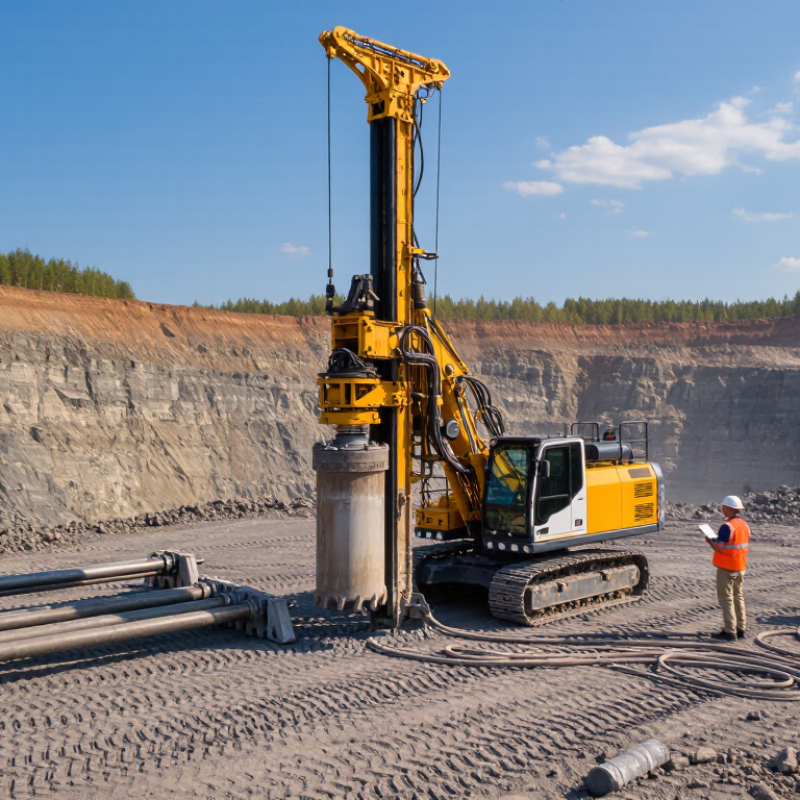
| Working environment and mobility | Open quarry sites, construction areas, steep terrain, confined spaces, or remote locations | Crawler or truck-mounted chassis, overall dimensions, ground clearance, gradeability, and platform stability | Prioritize compact dimensions for restricted sites and crawler stability or suitable transportability for rough terrain | A machine that cannot safely reach or stabilize at the work location will not deliver its rated drilling performance. |
| Power and fuel efficiency | Power demand increases with hole diameter, depth, air pressure, ground hardness, and auxiliary equipment | Engine power, hydraulic pump capacity, compressor drive, fuel consumption, and emission compliance | Choose sufficient reserve power for simultaneous drilling, tramming, dust control, and auxiliary hydraulic functions | Operating continuously near maximum engine load can increase fuel use, heat generation, downtime, and component wear. |
| Casing and overburden conditions | Loose soil, fractured rock, weathered formations, gravel, or unstable overburden | Casing capacity, casing oscillator compatibility, dual-rotation capability, and auxiliary drilling tools | Specify casing systems when the hole cannot remain open or when groundwater and collapsing formations are expected | A standard DTH setup may not be sufficient in unstable ground without casing or a suitable alternative drilling method. |
| Operator safety and serviceability | Daily operation in dusty, noisy, high-vibration, or remote working conditions | Emergency stops, guarding, dust suppression, noise controls, centralized lubrication, access to service points, and diagnostic displays | Confirm compliance with applicable local safety, emissions, noise, and occupational exposure requirements | Good access and safety systems reduce maintenance time, exposure risks, unplanned downtime, and operating errors. |