
-
- Products
- Indoor Household Cords
- Appliance Cords
- General Purpose Short-Length Cords
- General Purpose Extension Cords
- Landscape & Decorating Cords
- Bright Color Extension Cords
- Oil-Resistant Extension Cords
- Cold-Flex Extension Cords
- VividFlex Power Cords
- EXTREME All-Weather Cords
- Cord Management
- Task Lights
- Adapters & GFCI Devices
- Where to Buy
- About
- Careers
- Glossary
- Catalog


How to Choose a Hydrophobic Vent in 2026?
A Hydrophobic Vent may look like a small membrane in a housing, but its performance can affect pressure balance, moisture protection, and equipment reliability. Choosing one for a design planned in 2026 means checking the operating conditions—not just the pore-size label. Will the vent face rain splash, detergent mist, salt air, or repeated pressure changes? A stainless-steel enclosure beside a washdown line has different needs from a sensor exposed to outdoor condensation. Small details matter.
Professional test methods help separate measurable properties from marketing claims. ASTM F316-03(2019) describes capillary-flow porometry for measuring membrane pore characteristics; it does not, by itself, prove performance in a finished assembly. ASTM F838-20 evaluates bacterial retention in liquid-filter applications, so its results should not be treated as a universal rating for every vent. Check what was tested, under which conditions, and whether the results match your application. Ask for water-entry pressure, airflow, temperature limits, and chemical-compatibility data. Also confirm that the complete vent—not only a membrane sample—has been evaluated.
That sounds simple. It isn’t. A vent with high airflow may admit more contaminants if the enclosure design or installation is poor. A conservative choice can also restrict pressure equalization. In this guide, we’ll compare the evidence, materials, and mounting details that shape a practical decision. One limitation deserves attention: test data rarely reproduce every field condition. Treat the figures as a starting point, then verify the vent in the actual assembly.
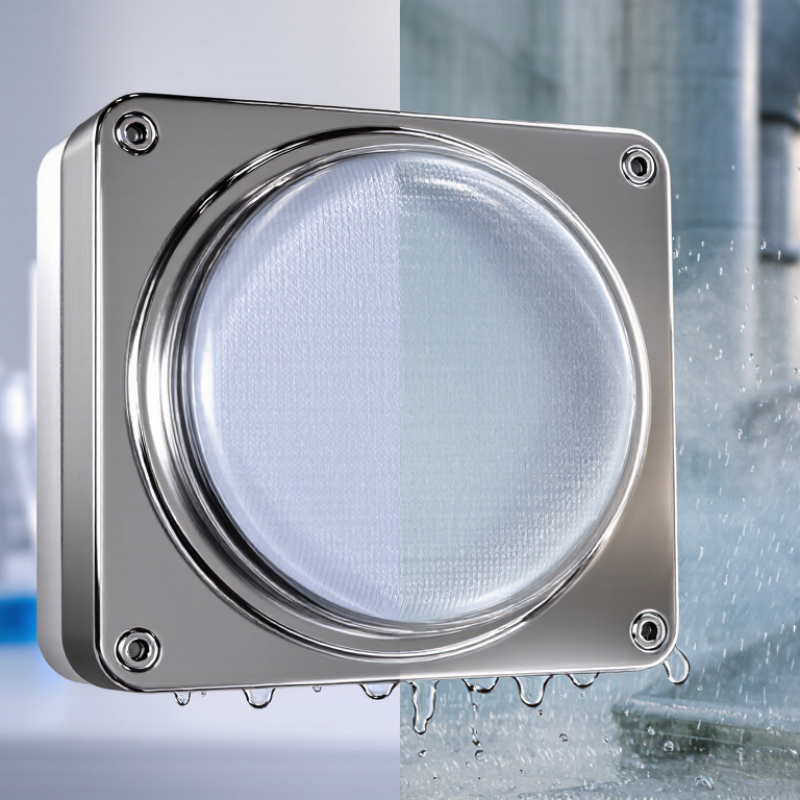
Table of Contents [Hide]
Define the Application and Operating Requirements
Choosing a hydrophobic vent begins with the enclosure’s real job, not a generic airflow target. Will it equalize pressure during altitude changes, protect electronics from splashes, or reduce dust ingress? Write down the expected airflow, water exposure, temperature range, and pressure swings. Small details matter. An outdoor sensor facing wind-driven rain needs a different safety margin than a sheltered indoor control box.
Check the vent’s water-entry pressure against the worst credible exposure, including spray direction and duration. A hydrophobic membrane is not an unlimited waterproof seal; performance depends on its structure, assembly, and condition. Specify acceptable pressure drop at the required airflow, since a protective vent may equalize pressure too slowly. Account for oils, cleaning agents, salt, and fine particles if they could reach the membrane. Compatibility is often overlooked.
Confirm the mounting method, available surface area, and sealing geometry before selecting a vent format. A small gap around an adhesive vent can defeat careful material selection. Check operating temperatures and brief pressure peaks, not only steady-state values. Test the complete enclosure under realistic conditions. Bench results are useful, but they may miss installation variation; that is easy to underestimate. Record assumptions and revise them after prototype testing.