
-
- Products
- Indoor Household Cords
- Appliance Cords
- General Purpose Short-Length Cords
- General Purpose Extension Cords
- Landscape & Decorating Cords
- Bright Color Extension Cords
- Oil-Resistant Extension Cords
- Cold-Flex Extension Cords
- VividFlex Power Cords
- EXTREME All-Weather Cords
- Cord Management
- Task Lights
- Adapters & GFCI Devices
- Where to Buy
- About
- Careers
- Glossary
- Catalog


How to Choose a POS Machine Battery in 2026?
Choosing a Pos Machine Battery in 2026 requires more than comparing milliamp-hours. Payment terminals are becoming busier, more connected, and less tolerant of unexpected downtime. Worldpay’s Global Payments Report 2024 found that digital wallets represented about 50% of global e-commerce value and 30% of point-of-sale spending in 2023. That shift increases the need for reliable terminals during long queues, outdoor events, and mobile checkout.
Battery specialist Dr. Isidor Buchmann, founder of Cadex Electronics, has written, “The battery is the most delicate part of a portable device.” His warning remains practical. Heat, frequent charging, deep discharge, and poor storage can shorten service life. A high-capacity pack may still disappoint if its connector, protection circuit, or charging profile does not match the terminal.
This guide examines lithium-ion and lithium-polymer options, rated voltage, usable capacity, cycle life, recharge time, operating temperature, and physical fit. It also considers safety evidence, including IEC 62133-2 testing and UN 38.3 transport requirements. The right Pos Machine Battery should support a full working shift without creating excessive weight or charging delays. Measure the original pack carefully. Check the terminal manufacturer’s specifications. Confirm replacement compatibility before ordering.
No checklist is perfect. Real usage often differs from laboratory ratings. A battery advertised for ten hours may provide less under constant Bluetooth, Wi-Fi, receipt printing, and bright-screen use. That gap matters. In 2026, the best choice will balance endurance, safety, availability, and long-term replacement cost—not simply the largest number on the label.
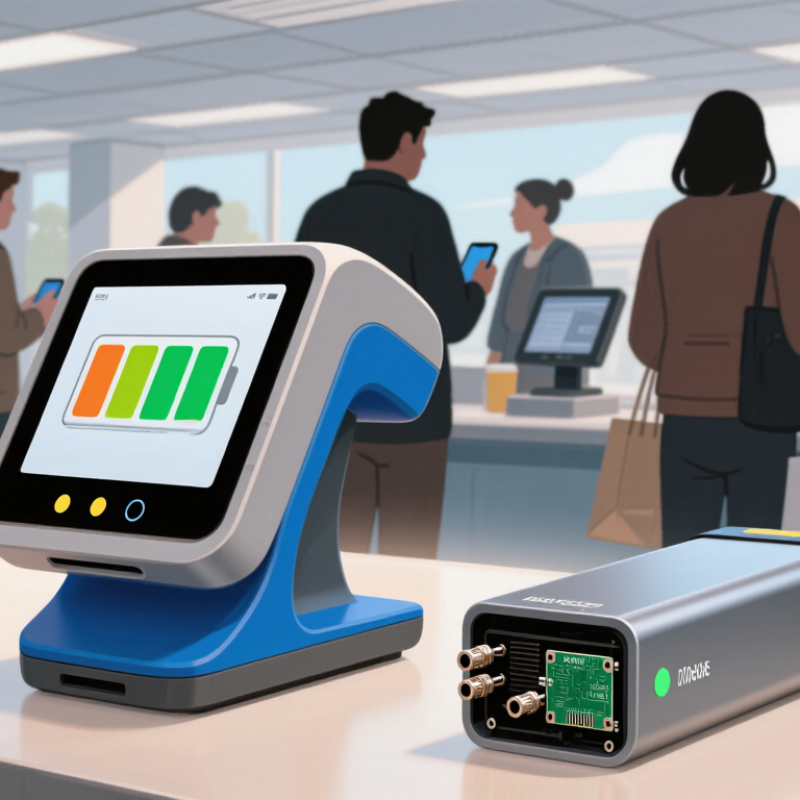
Table of Contents [Hide]
What a POS Machine Battery Does and Why It Matters in 2026
How to Choose a POS Machine Battery in 2026?
What a POS Machine Battery Does and Why It Matters in 2026
A POS machine battery stores energy for payment terminals used at counters, stalls, and mobile checkout points. It keeps the screen, processor, card reader, and wireless connection working when no outlet is nearby. Without stable power, a transaction may stop halfway. That creates delays, repeated payments, and frustrated customers. Small battery details matter.
Capacity is important, but capacity alone can mislead. A higher mAh rating does not always mean longer service. The machine’s voltage, display brightness, network use, and software load also affect runtime. Check the original voltage range and connector before choosing a replacement. A qualified technician should verify compatibility. Guessing is risky.
Look for a battery with dependable cycle life, controlled heat, and protection against overcharging and deep discharge. Lithium-based batteries are common, but their quality varies widely. A reliable unit should include clear electrical specifications and traceable safety testing. In busy shops, measure how long the terminal actually runs during peak hours. Laboratory figures can feel optimistic.
The calculation is rarely perfect. Cold storage rooms, weak signals, and aging components reduce runtime. A practical choice leaves some reserve instead of operating at zero. Replace swollen, leaking, or unusually hot batteries immediately. Never force a damaged pack into the terminal. Clean contacts help, but they cannot repair a failing cell.