
-
- Products
- Indoor Household Cords
- Appliance Cords
- General Purpose Short-Length Cords
- General Purpose Extension Cords
- Landscape & Decorating Cords
- Bright Color Extension Cords
- Oil-Resistant Extension Cords
- Cold-Flex Extension Cords
- VividFlex Power Cords
- EXTREME All-Weather Cords
- Cord Management
- Task Lights
- Adapters & GFCI Devices
- Where to Buy
- About
- Careers
- Glossary
- Catalog


2026 How to Choose a Rough Terrain Pallet Truck?
Choosing a Rough Terrain Pallet Truck in 2026 starts with the ground, not the brochure. Warehouses, farms, construction sites, and outdoor yards present different challenges. Loose gravel can swallow small wheels. Wet concrete can reduce braking confidence. A pallet carrying 1,000 kilograms may feel stable on level ground, then shift on a short ramp. That change matters. During equipment evaluations, experienced operators usually inspect the load center, handle control, wheel material, and braking response before comparing brand names. They also measure aisle width and turning space. A truck that moves well outside may struggle beside a loading dock. Small details become expensive quickly.
A reliable buying decision combines manufacturer specifications with practical site testing. Check rated capacity, lift range, fork dimensions, ground clearance, steering angle, and service requirements. Confirm that the stated capacity applies to your actual load center, not an idealized example. Ask for test records, warranty terms, spare-parts availability, and operator guidance. Reputable suppliers should explain limitations clearly, including performance on slopes, mud, and uneven surfaces. Independent standards and documented inspections can strengthen confidence, but paperwork cannot replace a hands-on trial. Try the truck with a representative pallet on the surfaces it will actually face. Listen for wheel drag. Watch the load. Notice operator fatigue. No checklist is perfect. Some choices still involve judgment, budget pressure, and imperfect information. The best 2026 model is not necessarily the newest or cheapest. It is the Rough Terrain Pallet Truck that safely matches your loads, terrain, operators, and maintenance capacity over time.
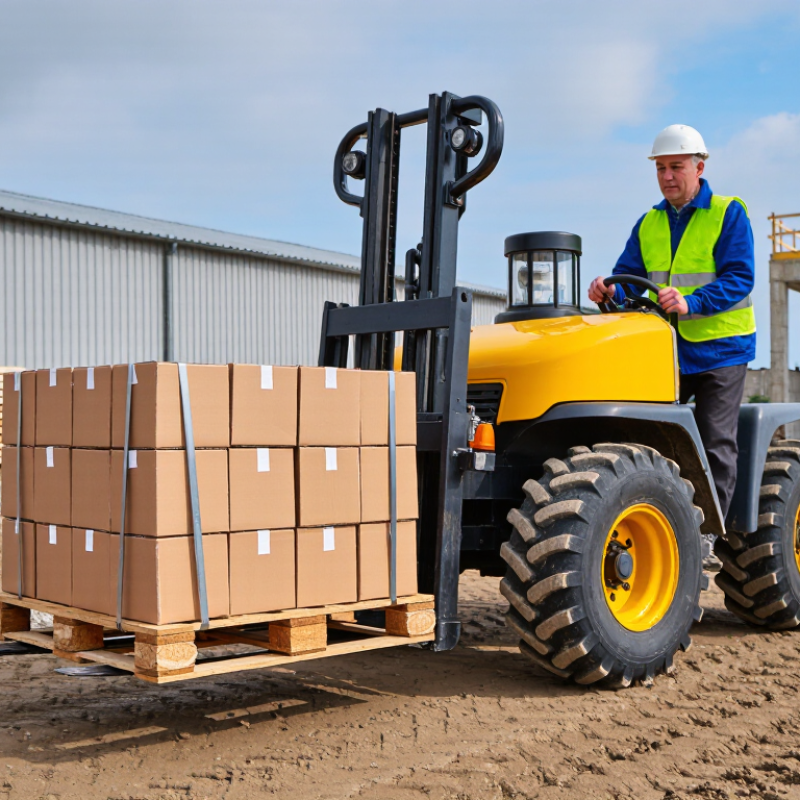
Table of Contents [Hide]
Understanding Rough Terrain Pallet Truck Applications and Work Environments
2026 How to Choose a Rough Terrain Pallet Truck?
Understanding Rough Terrain Pallet Truck Applications and Work Environments
Choosing a rough terrain pallet truck starts with the ground, not the advertised lifting capacity. These machines suit farms, construction sites, garden centers, timber yards, and outdoor warehouses. Their work areas may include gravel, compacted soil, wet grass, loading ramps, or shallow ruts. Measure the route while carrying a typical load. A smooth yard can hide soft edges after rain. It happens.
Look for pneumatic or traction-focused wheels, adequate ground clearance, stable steering, and dependable braking. Fork length must match pallets and still leave room for turning. In narrow outdoor aisles, a shorter chassis may matter more than extra capacity. On slopes, confirm the truck’s rated performance and keep loads low.
Never judge stability from a showroom floor. A pallet truck that moves well on concrete may sink into loose soil or bounce across broken ground. That difference changes productivity and operator fatigue.
Before choosing, observe the actual shift. Note travel distance, gradients, weather exposure, pallet condition, and charging or refueling access. Ask operators where wheels slip and where visibility disappears. Their comments often reveal more than a specification sheet. Review maintenance access, corrosion protection, emergency controls, and training requirements with a qualified technician. I would also test a partly loaded unit, because perfect test pallets can create false confidence. Some choices still need revision after seasonal use. A simple site trial can expose weak traction, poor ergonomics, or insufficient clearance before expensive problems appear.