
-
- Products
- Indoor Household Cords
- Appliance Cords
- General Purpose Short-Length Cords
- General Purpose Extension Cords
- Landscape & Decorating Cords
- Bright Color Extension Cords
- Oil-Resistant Extension Cords
- Cold-Flex Extension Cords
- VividFlex Power Cords
- EXTREME All-Weather Cords
- Cord Management
- Task Lights
- Adapters & GFCI Devices
- Where to Buy
- About
- Careers
- Glossary
- Catalog


How to Choose the Best HDPE Welding Equipment in 2026?
Choosing Hdpe Welding Equipment in 2026 is not just a matter of comparing price tags. A crew working beside a muddy trench needs a machine that handles the pipe diameter, joining method, and site conditions—not merely one with impressive specifications. Reliability matters. So does repeatable joint quality.
Market reports can provide useful context, but broad HDPE or pipe-market forecasts do not establish which welding machine performs best. Buyers should verify figures against the original report and compare them with practical evidence: documented temperature and pressure controls, traceable calibration, operator training, and service access. The Plastics Pipe Institute’s guidance on polyethylene pipe joining is a useful technical reference; it emphasizes following qualified procedures and equipment instructions. A report cannot replace a welding log or a sound inspection.
One limitation deserves attention: without a verifiable source, attributing a quotation to a named HDPE welding expert would be misleading. This guide therefore focuses on checkable criteria rather than an unsupported endorsement. When assessing Hdpe Welding Equipment, ask whether it can maintain controlled heating and alignment across the pipe sizes you actually use. Check the data logger, clamps, power requirements, and availability of replacement parts. Then consider the setting: a compact workshop and a windy field site make different demands. The best choice is the one your team can operate consistently, document clearly, and support over time.
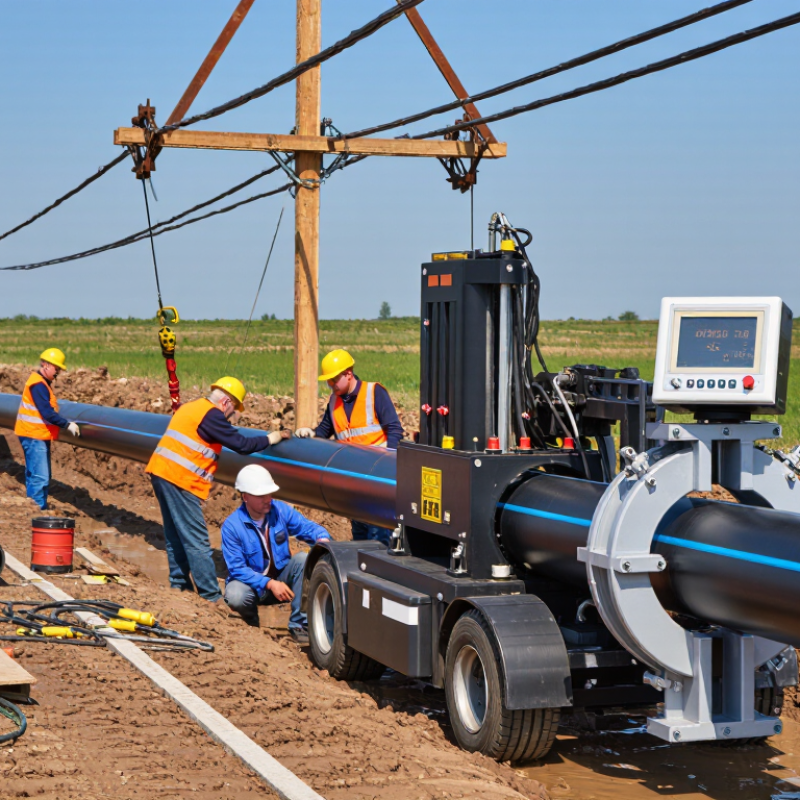
Table of Contents [Hide]
Understanding HDPE Welding Methods and Their Equipment Needs
HDPE pipe can be joined by several methods, and each calls for different equipment. Butt fusion uses a heater plate, a pipe-facing tool, and a machine that holds and presses the pipe ends together. The operator trims the ends square, checks alignment, and follows the required heating and cooling times. Small details matter. A slight mismatch can leave a weak joint, even when the bead looks neat.
For fittings and restricted work areas, electrofusion uses compatible fittings, a control unit, and clean, properly prepared pipe surfaces. Scraping and clamping are essential; skipping either step can compromise the connection. Where pipe size, site conditions, and project requirements allow, extrusion welding may suit fabrication or repairs. It needs an extruder, suitable welding rod, and careful control of temperature and travel speed. Not every method fits every job. I find equipment selection is easy to overfocus on: capacity and features matter, but maintenance, operator training, and access to stable power matter too. Before choosing, compare the pipe dimensions and material specifications with the machine’s documented limits, then consider how it will perform in the actual workspace. I would leave room for reassessment; site conditions rarely match a tidy workshop.