
-
- Products
- Indoor Household Cords
- Appliance Cords
- General Purpose Short-Length Cords
- General Purpose Extension Cords
- Landscape & Decorating Cords
- Bright Color Extension Cords
- Oil-Resistant Extension Cords
- Cold-Flex Extension Cords
- VividFlex Power Cords
- EXTREME All-Weather Cords
- Cord Management
- Task Lights
- Adapters & GFCI Devices
- Where to Buy
- About
- Careers
- Glossary
- Catalog


2026 How to Choose the Right Water Tank Filter?
In 2026, choosing a Water Tank Filter is not simply a matter of buying the finest-looking cartridge. The right choice depends on the tank’s source, storage conditions, and intended use. Rainwater may carry leaves, roof grit, bird droppings, and fine sediment. Bore water can bring iron, hardness, or an unpleasant metallic taste. Municipal backup supplies create different concerns. A filter that performs well in one home may restrict flow in another. That detail is easy to miss.
Dr. Joseph Cotruvo, a water-quality and drinking-water treatment expert, has stated, “There is no such thing as zero risk.” His warning matters here. A Water Tank Filter can reduce selected contaminants, but it cannot correct every water-quality problem. Effective selection begins with a recent laboratory test. Then compare micron rating, flow rate, filter media, tank volume, and replacement intervals. Check whether the housing is suitable for potable water. Look for transparent performance data, not vague claims.
A rural household may need a washable pre-screen, sediment stage, and activated carbon stage. A compact tank may need a smaller system with less pressure loss. UV treatment may be relevant when microbial control is required, but it still needs clear water and reliable power. Maintenance is part of filtration. A clogged cartridge can cause weak pressure and bypass risk. Not every recommendation will fit every property. That is the uncomfortable truth. This guide will compare practical filter types, installation points, operating costs, and warning signs. It will also question attractive specifications that lack independent testing. The best decision is usually measured and based on the water in your actual tank.
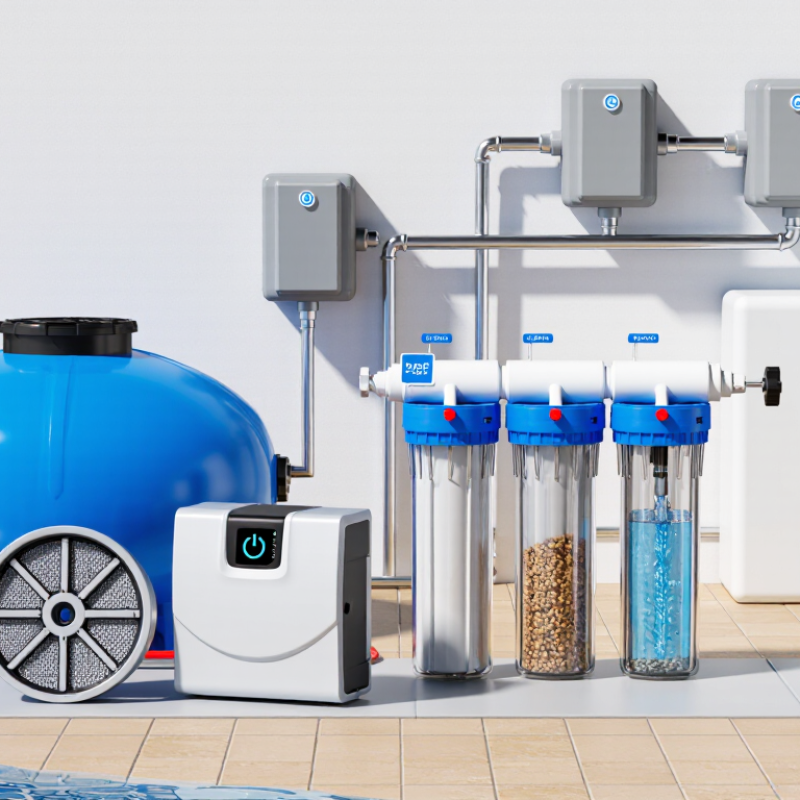
Table of Contents [Hide]
Understanding Water Tank Filter Types and Their Main Uses
Choosing the right water tank filter starts with identifying the water source and its main contaminants. A tank filter is not a universal device.
Mesh or screen filters catch leaves, insects, and larger particles before water enters the tank. They work well for rainwater collection systems. Sediment filters remove sand, rust, and fine silt from stored or incoming water. Their pore size matters. A filter that is too fine may clog quickly, especially after heavy rain.
Carbon filters are useful when water has unpleasant taste, odor, or traces of certain organic compounds. They do not reliably remove all microorganisms. That limitation is important. Activated carbon may need support from disinfection or another treatment stage.
Ceramic filters can reduce many bacteria and suspended particles, but their performance depends on pore structure, flow rate, and proper cleaning. Ultraviolet systems treat microorganisms in clear water, yet they cannot remove mud or chemical pollutants.
The best setup often uses several stages. A coarse screen protects a finer filter, while a final cartridge improves household water quality. During inspections, blocked filters are common. People often choose by price, then overlook replacement intervals. Check flow rate, tank volume, maintenance access, and local water test results. An oversized filter may waste money. An undersized one may restrict supply. I would also leave room for improvement, because seasonal changes can reveal problems that a single test misses.