
-
- Products
- Indoor Household Cords
- Appliance Cords
- General Purpose Short-Length Cords
- General Purpose Extension Cords
- Landscape & Decorating Cords
- Bright Color Extension Cords
- Oil-Resistant Extension Cords
- Cold-Flex Extension Cords
- VividFlex Power Cords
- EXTREME All-Weather Cords
- Cord Management
- Task Lights
- Adapters & GFCI Devices
- Where to Buy
- About
- Careers
- Glossary
- Catalog


What Is a Li Polymer Battery and How Does It Work?
A Li-Polymer battery is a rechargeable lithium battery designed with a polymer-based electrolyte and a flexible pouch structure. It powers smartphones, drones, tablets, wearable devices, and many compact electronic products. Unlike traditional cylindrical batteries, its shape can be customized more easily. That flexibility is useful when engineers have very little space.
Inside the cell, lithium ions move between the negative electrode and positive electrode through the electrolyte. During charging, an external power source drives the ions toward the negative electrode. During use, the ions travel back while electrons flow through the device’s circuit. This controlled movement creates the electrical energy that runs the product. The battery management system monitors voltage, temperature, and current. It helps reduce risks caused by overcharging, deep discharge, or overheating.
The term “polymer” can be misleading. Many Li-Polymer designs still use a gel-like electrolyte rather than a completely solid material. Battery performance also depends on chemistry, manufacturing quality, age, temperature, and charging habits. A thin pouch cell may feel lightweight and efficient, but it can swell or become damaged if abused. That point deserves attention.
Reliable battery knowledge comes from manufacturer specifications, laboratory testing, and safe handling practices. Real-world use is less tidy than a diagram suggests. A battery may lose capacity in cold weather or degrade faster under frequent high-power loads. Understanding how a Li-Polymer battery works helps users choose suitable chargers, recognize warning signs, and use modern portable electronics more responsibly.
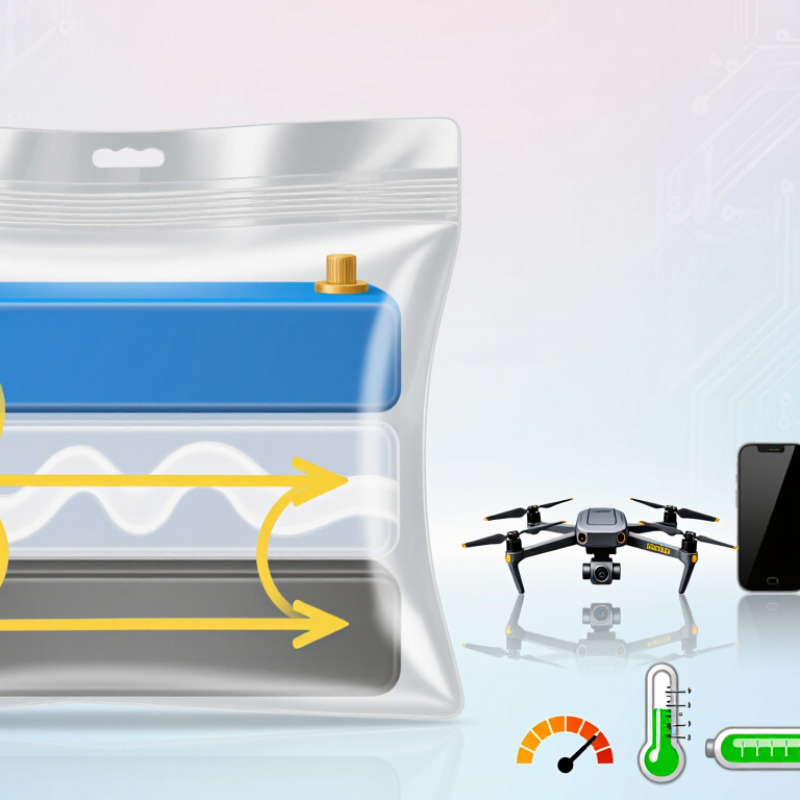
Table of Contents [Hide]
What Is a Lithium Polymer Battery?
What Is a Lithium Polymer Battery?
A lithium polymer battery is a rechargeable lithium-ion cell using a polymer-based electrolyte. It is often built in a soft pouch rather than a rigid metal case. The term is slightly misleading. Most lithium polymer cells still contain liquid or gel electrolyte, not a completely solid electrolyte.
Inside, lithium ions travel between the cathode and anode during charging. They return through the electrolyte during use. Electrons move through the external circuit and power the device. A thin separator prevents direct contact between the electrodes. This structure allows manufacturers to create slim, curved, or custom-shaped battery packs.
The format has practical benefits. It can reduce unused space in compact electronics and support high discharge rates. However, its pouch may swell after damage, aging, heat exposure, or overcharging. It needs protection circuitry and careful charging control.
Small details matter.
Industry data shows the wider lithium-ion market is expanding rapidly. The International Energy Agency reported more than 750 gigawatt-hours of electric-vehicle battery demand in 2023.
BloombergNEF recorded an average lithium-ion pack price of 139 dollars per kilowatt-hour in its 2023 survey.
These figures do not represent lithium polymer cells alone, but they show the scale and cost pressure affecting related technologies.
In daily use, users should avoid crushing, puncturing, or charging a visibly swollen pack. A polymer electrolyte does not make a battery risk-free.
That assumption needs reconsideration. Proper design remains more important than the label.