
-
- Products
- Indoor Household Cords
- Appliance Cords
- General Purpose Short-Length Cords
- General Purpose Extension Cords
- Landscape & Decorating Cords
- Bright Color Extension Cords
- Oil-Resistant Extension Cords
- Cold-Flex Extension Cords
- VividFlex Power Cords
- EXTREME All-Weather Cords
- Cord Management
- Task Lights
- Adapters & GFCI Devices
- Where to Buy
- About
- Careers
- Glossary
- Catalog


What Are Marine Generator Sets and How Do They Work?
Marine Generator Sets are the quiet workhorses behind modern vessel operations. They produce electrical power when the main engine is stopped, running slowly, or unable to support onboard demand. This power may operate navigation lights, radar, pumps, refrigeration, communication systems, and emergency equipment. Without dependable generation, a comfortable vessel can become a dark and unsafe steel box within minutes.
Marine systems author Nigel Calder offers a practical reminder: “Understand your machinery before you need it.” That principle explains why Marine Generator Sets require more than a powerful diesel engine. Each set combines an engine, alternator, fuel system, cooling circuit, exhaust arrangement, control panel, and protective devices. Together, these parts convert fuel into stable electrical energy. The alternator creates electricity through electromagnetic induction. The control system regulates voltage and frequency, while sensors monitor temperature, oil pressure, and engine speed.
The process sounds straightforward. It is not always so. Salt air, vibration, restricted airflow, contaminated fuel, and poor grounding can shorten equipment life. A generator may start perfectly at the dock, then struggle under a heavy load offshore. That uncomfortable possibility deserves attention. Correct sizing, routine inspections, load testing, and clean maintenance records improve reliability, but they cannot remove every risk. Operators should examine real operating conditions, not only brochure ratings. A reliable set is built through sound engineering, careful installation, and practiced human judgment. That is where this article begins.
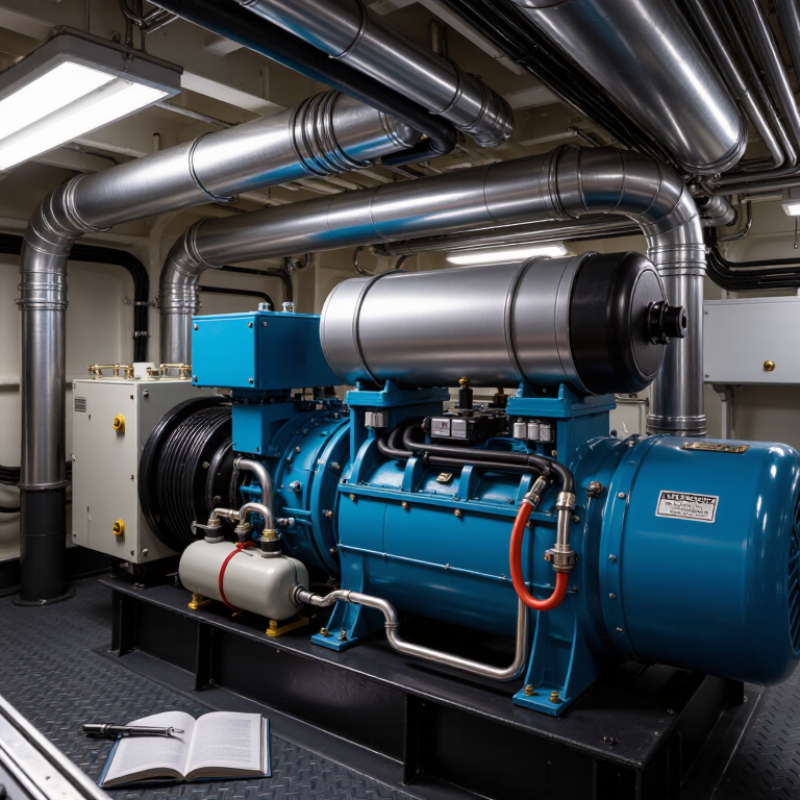
Table of Contents [Hide]
Marine Generator Sets: Roles, Ratings, and ISO 8528 Classification
Marine generator sets convert diesel engine power into electricity for navigation, pumps, lighting, communications, and hotel services. They usually operate in a harsh engine-room environment, where salt air, vibration, heat, and changing loads test every component. Their role is not limited to producing power. They must also support safe operation when the main electrical source fails.
ISO 8528-1 defines several rating categories. Continuous Operating Power, or COP, supports a constant load for unlimited hours. Prime Running Power, or PRP, allows variable loads with defined limits and maintenance conditions. Limited-Time Running Power, or LTP, applies for a restricted operating period. Emergency Standby Power, or ESP, supplies backup power during an outage, but not continuous duty.
A rating label can mislead. The real choice depends on load profiles, running hours, cooling capacity, and required reserve.
ISO 8528 also uses performance classes from G1 to G4. G1 covers basic loads with modest voltage and frequency demands. G2 suits common commercial power needs. G3 requires tighter control for sensitive equipment, while G4 involves highly demanding electrical performance. Marine operators should compare these classes with vessel rules, emergency-load requirements, and generator testing procedures. In practice, engineers should record starting currents, step-load response, and fuel use under realistic sea conditions. Laboratory figures alone may not predict life at sea.