
-
- Products
- Indoor Household Cords
- Appliance Cords
- General Purpose Short-Length Cords
- General Purpose Extension Cords
- Landscape & Decorating Cords
- Bright Color Extension Cords
- Oil-Resistant Extension Cords
- Cold-Flex Extension Cords
- VividFlex Power Cords
- EXTREME All-Weather Cords
- Cord Management
- Task Lights
- Adapters & GFCI Devices
- Where to Buy
- About
- Careers
- Glossary
- Catalog


What Is a Nylon Ring Nut and How Does It Work?
A Nylon Ring Nut looks ordinary at first glance, yet its small nylon insert changes how a threaded joint behaves. This insert grips the bolt threads and increases resistance against loosening from vibration. It does not permanently lock the fastener. Instead, it creates controlled friction while allowing later removal with suitable tools. That difference matters in machinery, automotive assemblies, electrical enclosures, and light structural applications.
Fastener specialist John H. Bickford wrote, “The reliability of a bolted joint depends on understanding how the joint works.” This principle explains why a Nylon Ring Nut should never be selected by appearance alone. The nut must match the bolt diameter, thread pitch, strength grade, temperature range, and installation torque. A practical check is simple: inspect the nylon ring before assembly. It should remain flexible, complete, and firmly seated. Damaged threads or repeated reuse can reduce its holding ability.
The mechanism is straightforward, but real performance is less predictable. Excessive torque may crush the insert or stretch the bolt. Heat, solvents, and outdoor exposure can weaken nylon over time. The nut may still look secure while its locking effect has faded. That is an easy detail to miss. This guide explains the construction, working principle, selection limits, installation process, and inspection points of a Nylon Ring Nut. It also considers a common mistake: assuming more tightening always means better security. Usually, careful fit and accurate torque matter more.
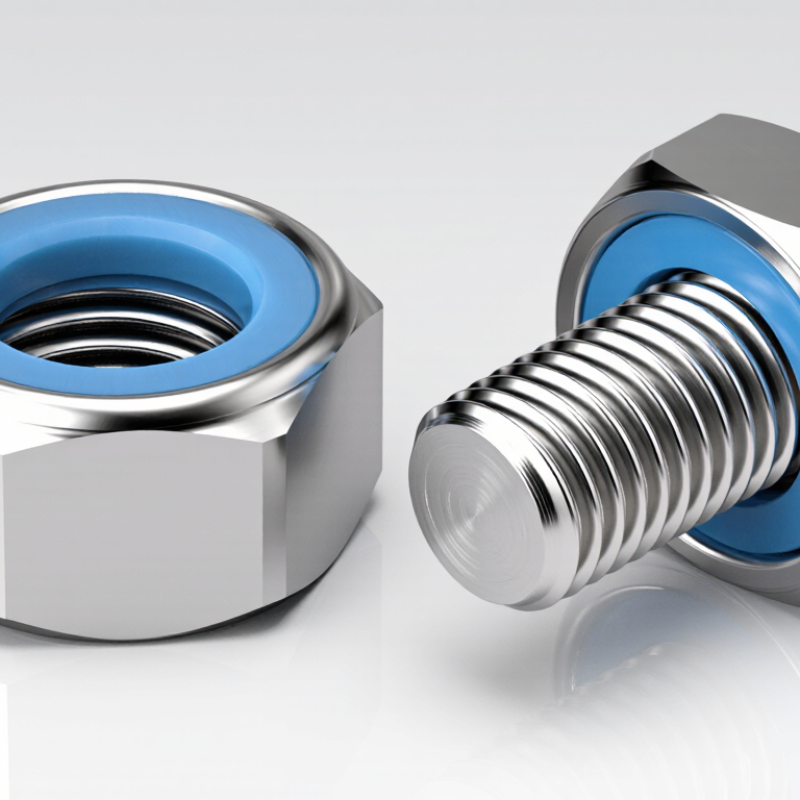
Table of Contents [Hide]
Nylon Ring Nut: Definition and Basic Structure
A nylon ring nut is a threaded nut with an integrated nylon collar, often called a nylon-insert locknut. Its basic structure has three parts: a metal hexagonal body, an internal thread, and a slightly smaller nylon ring at the top. The metal carries the clamping load. The ring creates resistance against the bolt threads.
During installation, the bolt pushes through the nylon insert and slightly deforms it. This deformation increases friction and helps prevent loosening from vibration. The nylon ring is not adhesive. It works through elastic pressure and thread interference. A practical inspection should check thread damage, insert cracking, and smooth engagement. Small defects matter.
NASA’s Fastener Design Manual, NASA-RP-1228, explains that torque alone can produce roughly 25% variation in preload under ordinary conditions. This matters because a nylon ring nut adds prevailing torque before clamping begins. ISO 7040 also specifies dimensions and performance requirements for hexagon nuts with non-metallic inserts. These standards support controlled selection, but field conditions remain important. Heat, chemicals, repeated installation, and dirty threads can reduce reliability.
The nut must fit the bolt correctly.
A common mistake is treating it as permanently reusable. It is not. After removal, the nylon insert may lose interference, although the exact limit depends on the specification and application. I would verify the remaining locking resistance instead of trusting appearance alone. The ring can look intact and still grip poorly.