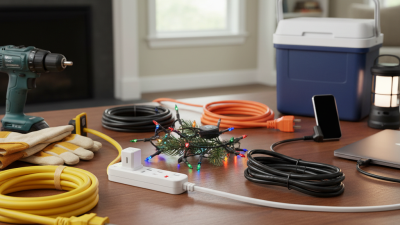
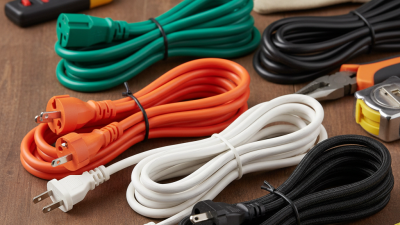
What is a Power Cord Extension Cable and Its Uses?
Power cord extension cables are essential tools in modern electrical usage. They allow devices to connect over longer distances, providing flexibility in various settings. According to a report by the National Electrical Manufacturers Association (NEMA), the demand for such cables has seen a significant rise, with usage increasing by over 25% in the last five years. This trend reflects the growing reliance on portable electronics in both residential and commercial environments.
These cables come in various lengths and ratings, catering to specific power needs. However, not all extension cables are created equal. Quality varies greatly, impacting safety and performance. Inadequate cables can lead to overheating or even electrical fires. A recent safety report highlighted that faulty extension cords were involved in approximately 3,000 residential fires annually in the U.S. This statistic underscores the importance of choosing reliable power cord extension cables.
Using these cables effectively requires understanding their specifications and limitations. Users often overlook crucial details like wattage capacity and outdoor compatibility. This ignorance can lead to hazardous situations. As the popularity of power-intensive gadgets grows, it’s vital to reevaluate how we use power cord extension cables for efficiency and safety.
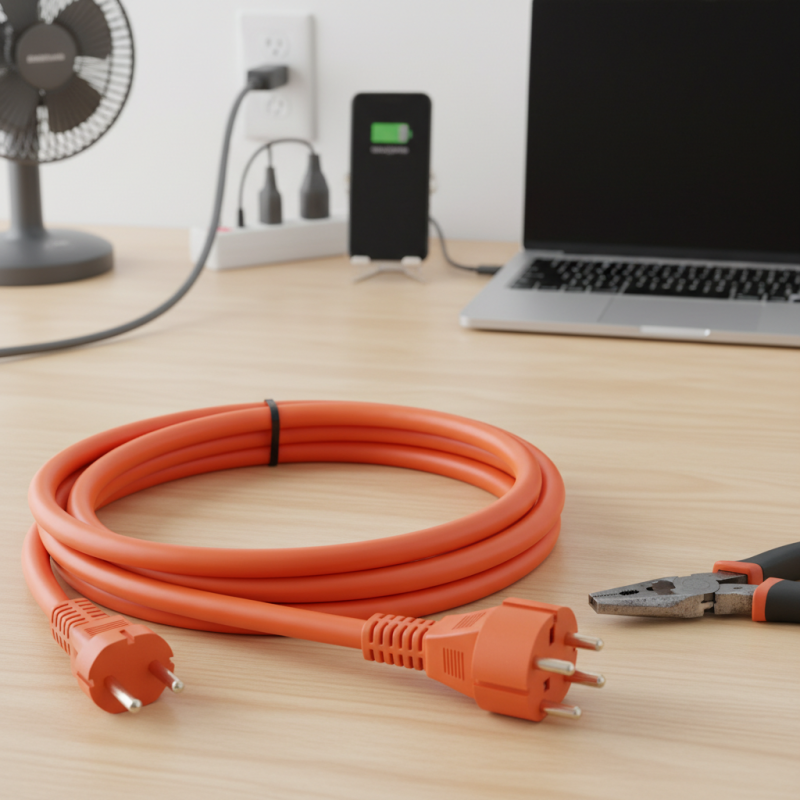
What is a Power Cord Extension Cable?
Power cord extension cables are essential tools for many households and workplaces. These cables extend the reach of electrical power from outlets to devices, allowing for greater flexibility. In fact, over 50% of users report increased productivity when using these extensions, according to industry studies. Power cord extension cables come in various lengths, typically ranging from 3 to 25 feet. This variety ensures that users can find the right length for their specific needs.
When choosing a power cord extension cable, always consider the wattage and the amperage rating. Most homes use standard 15-amp circuits. Using cables that support higher ratings ensures safety and prevents overheating. Research indicates that more than 30% of electrical fires in homes stem from improper extension cord use. Select cables with built-in surge protectors for added safety.
Tips: Always inspect your power cord extension cable regularly. Look for frays or exposed wiring. If you find any damage, replace the cable immediately. Keep cords organized to avoid tripping hazards. If multiple devices need power, opt for a multi-outlet extension to enhance convenience. However, avoid overloading a single cord, as it can compromise safety.
Types of Power Cord Extension Cables Available in the Market
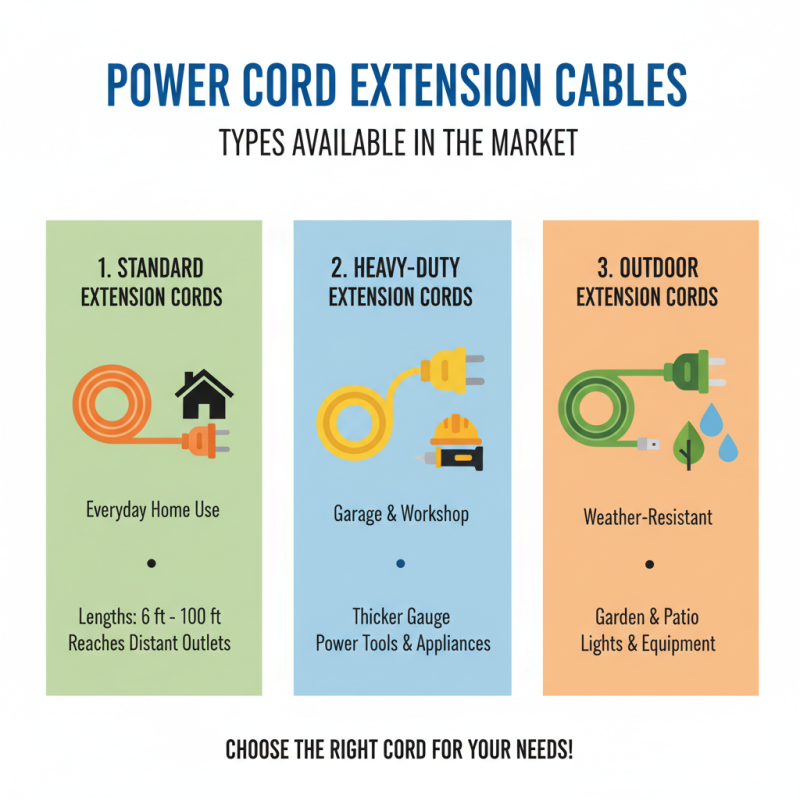
When considering power cord extension cables, it’s essential to understand the types available. First, there are standard extension cords. These cords are designed for everyday home use. They come in various lengths, typically ranging from 6 feet to 100 feet. Homeowners often use them to reach distant outlets.
Another type is heavy-duty extension cords. These cords are thicker and made to handle higher power loads. They’re ideal for outdoor use or when plugging in tools. While heavy-duty cables offer more durability, they can be cumbersome. Users must be cautious about their weight and storage.
Three-prong extension cords are also popular. They offer additional safety for devices that require grounding. Many appliances need this grounding for safety reasons. Lastly, surge protector extension cords provide extra protection. They shield devices from voltage spikes. However, users must remember that these cords can limit the number of devices connected. Understanding these types can help in selecting the right one for specific needs.
Common Uses of Power Cord Extension Cables in Households
Power cord extension cables are quite common in households. They provide extra length when standard cords fall short. Many people find these cables useful for a variety of reasons.
In a living room, extension cords help power devices like lamps, TVs, and chargers. A cozy corner with a reading light may require an extension to avoid clutter. It’s important to choose the right length to keep the area tidy and functional. Occasionally, the placement of furniture can create awkward situations where outlets are out of reach.
In the kitchen, extension cables can connect appliances on countertops. However, wiring must be managed carefully to prevent tripping hazards. Some may overlook the risk of overloading circuits. This could lead to equipment malfunction or, worse, fire hazards. Thoughtful placement can enhance safety and convenience, ensuring that every appliance runs smoothly without compromising safety.
Safety Guidelines and Standards for Power Cord Extension Cables
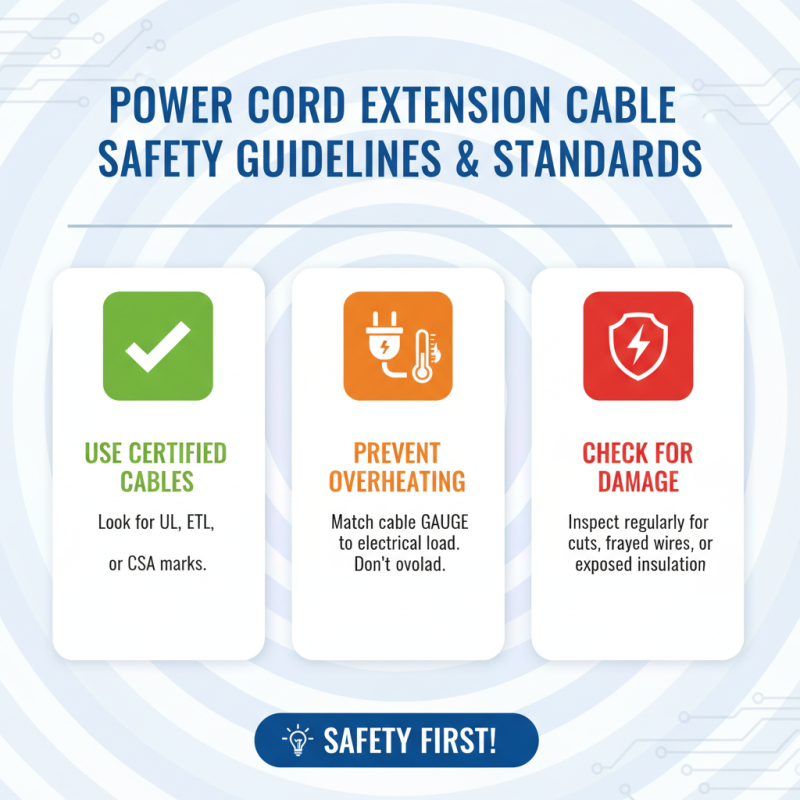
When using power cord extension cables, safety should be a top priority. These cables are helpful, but they can pose risks if not used correctly. To ensure safety, look for cables that meet recognized industry standards. These standards include proper insulation and optimal gauge size to handle the electrical load. Using an inadequate extension can lead to overheating or even fire hazards.
Always inspect the cord before use. Check for frays, exposed wires, or damaged connectors. If any issues arise, do not use the cable. Allowing children or pets near the setup can pose additional risks. Keep the cables out of walkways to prevent tripping hazards. Consider using wraps or covers to manage the cords effectively.
Monitoring the load on the extension cord is crucial. Overloading can easily occur if many devices are connected simultaneously. It’s essential to be aware of the total wattage to avoid exceeding the cable’s capacity. Maintain a clean workspace and regularly reassess your setup. Taking these precautions can significantly decrease risks associated with power cord extension cables.
Factors Influencing the Performance and Limitations of Extension Cables
Power cord extension cables are convenient tools for providing additional reach for electrical devices. However, their performance can be affected by various factors. One essential aspect is the wire gauge. Thicker wires can carry more current, reducing heat build-up. Conversely, thin cables may lead to overheating, posing safety risks.
Another factor is the length of the extension cable. Longer cables can result in voltage drop. This means that devices at the end of the cable might not receive sufficient power. Choosing the appropriate length is vital for optimal performance.
Tips: Always check the cable's specifications before use. Make sure it matches the power needs of your devices. Additionally, avoid daisy-chaining multiple extension cables. This can create overload conditions and reduce safety. Regularly inspect cables for signs of wear or damage. Promptly replace any faulty cables to ensure safety.
Multipurpose use is common for extension cables, but they are not impervious to limitations. For instance, environmental factors like moisture can degrade cables. This can lead to short circuits or failures. Being aware of such vulnerabilities is crucial for effective usage.
What is a Power Cord Extension Cable and Its Uses?
| Type of Power Cord Extension Cable |
Maximum Length (feet) |
Current Rating (Amps) |
Common Uses |
Limitations |
| Standard Extension Cable |
25 |
15 |
Home appliances, lamps |
Limited to indoor use |
| Heavy-Duty Extension Cable |
50 |
20 |
Power tools, outdoor equipment |
Bulkier, heavier to carry |
| Outdoor Extension Cable |
100 |
15 |
Garden tools, holiday lights |
Temperature sensitive, may need protection |
| Reel Extension Cord |
150 |
15 |
Workshops, garages |
Limited to winding and rewinding |