
-
- Products
- Indoor Household Cords
- Appliance Cords
- General Purpose Short-Length Cords
- General Purpose Extension Cords
- Landscape & Decorating Cords
- Bright Color Extension Cords
- Oil-Resistant Extension Cords
- Cold-Flex Extension Cords
- VividFlex Power Cords
- EXTREME All-Weather Cords
- Cord Management
- Task Lights
- Adapters & GFCI Devices
- Where to Buy
- About
- Careers
- Glossary
- Catalog


What Is a PP Dunnage Bag and How Does It Work?
What Is a PP Dunnage Bag and How Does It Work? The answer begins with a simple idea: controlled air pressure can prevent cargo movement. A PP Dunnage Bag is an inflatable cargo-protection device made with a strong polypropylene outer layer and an airtight inner bladder. Workers place it inside gaps between pallets, cartons, drums, or other unitized loads. They then inflate it with air.
Packaging specialist Peter MacDonald explains the principle clearly: “A dunnage bag does not carry the cargo; it limits the space in which cargo can move.” That distinction matters. Air does the work. When a vehicle accelerates, brakes, or turns, the bag presses gently against nearby cargo. It reduces sliding, tipping, vibration, and impact between separate loads. The woven PP fabric helps the bag resist abrasion during handling.
The process sounds straightforward, but real shipments are less tidy. A bag needs the correct size, suitable pressure, and a clean contact surface. Operators should inspect the valve, seams, and outer fabric before inflation. They should also avoid sharp edges and never use the bag as a lifting device. A correctly inflated bag can still perform poorly if the load is unstable or the surrounding void is too large. That is an important limitation. In practice, effective cargo securing combines PP Dunnage Bag placement with sound pallet stacking, restraint planning, and careful inspection. This article examines the bag’s structure, operating principle, benefits, limitations, and practical use inside transport units.
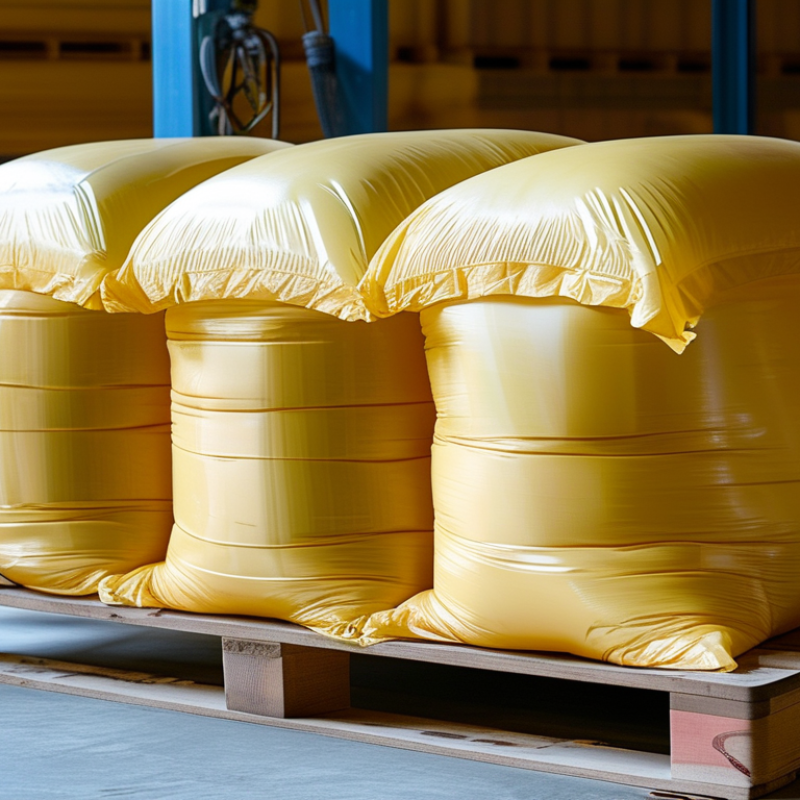
Table of Contents [Hide]
PP Dunnage Bag: Definition and Core Components
What Is a PP Dunnage Bag and How Does It Work?
PP dunnage bags are inflatable cargo-securing cushions made mainly from woven polypropylene. “PP” means polypropylene, a lightweight polymer with useful tensile strength and moisture resistance. The outer shell usually contains woven PP fabric, while the inner bladder holds compressed air. A valve controls inflation and pressure release. Heat-sealed or stitched seams connect these components.
Some bags also include a paper or polymer laminate. This layer improves air retention and protects the woven shell from abrasion. The bag does not lift cargo. It fills the empty space between pallets, cartons, or coils. Internal air pressure then creates counterforce when cargo shifts during braking, vibration, or vessel movement. It works best when the void is properly measured.
The 2023 UNCTAD Review of Maritime Transport reports that over 80% of global merchandise trade by volume moves by sea. That scale makes small securing failures expensive. The World Bank’s 2023 Logistics Performance Index assessed 139 economies and highlighted reliability as a key logistics challenge. A dunnage bag supports reliability, but it is not a complete securing system. The CTU Code still requires suitable loading, blocking, and restraint practices.
In practice, installers should inspect corners, estimate the void, and use the correct bag level. Overinflation can damage packaging or seams. Underinflation may leave movement space. This is where judgment matters. Packaging drawings rarely show every real-world condition. Even a strong PP shell cannot compensate for poor cargo distribution, sharp edges, or an unsuitable valve.