What is the Purpose of Colored Extension Cords?
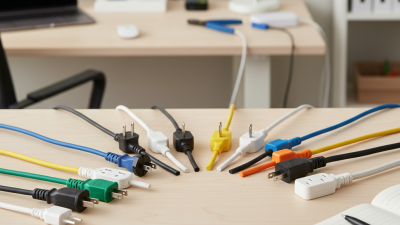
Colored extension cords serve various purposes beyond simple functionality. These cords are essential tools for both home and outdoor use. They come in vibrant colors that help prevent accidents and enhance visibility.
Using colored extension cords allows for easy identification. You can spot which cord belongs to which device or area. This eliminates confusion, especially in busy environments. The bright colors stand out against dark backgrounds, reducing the chances of tripping.
However, the choice of color can reflect personal preference or safety needs. Some may argue that the color doesn't matter as much as the cord's quality. Yet, bright colors often catch the eye. This can lead to more conscious usage and better organization. In contrast, ignoring the benefits of colored extension cords might lead to mix-ups or unsafe setups.
The Role of Color in Electrical Safety and Visibility
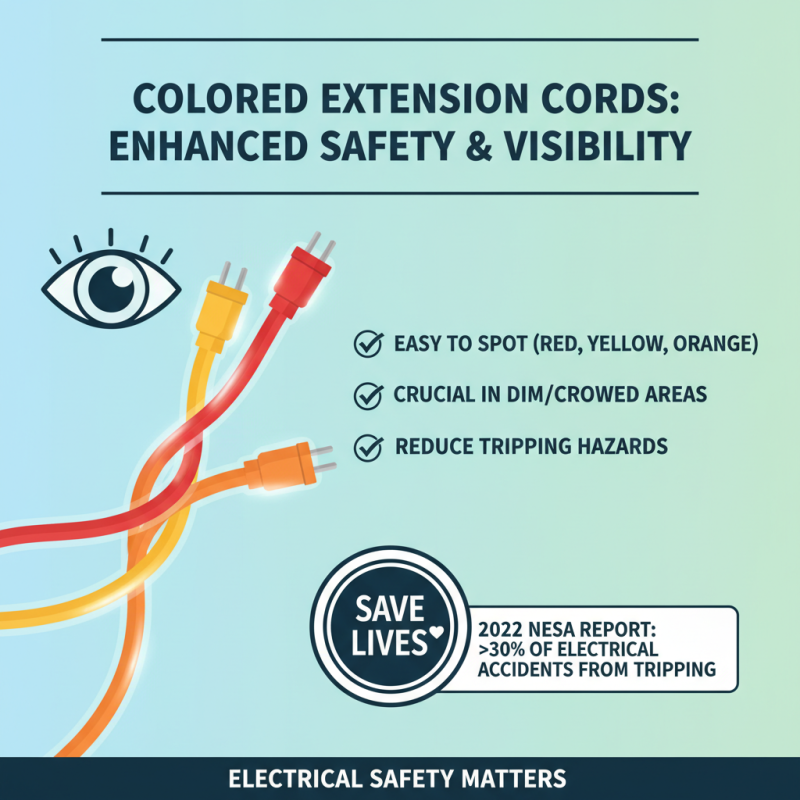
Colored extension cords serve more than just aesthetic purposes; they enhance electrical safety and visibility. Bright colors like red, yellow, and orange are easy to spot. This visibility is crucial in crowded or dimly lit environments. According to a 2022 safety report by the National Electrical Safety Association (NESA), over 30% of electrical accidents occur due to tripping over cords. Colored cords significantly reduce this risk.
However, color coding goes beyond visibility. Different colors can indicate cord capacity and intended use. For instance, a blue cord might signify it can handle higher wattage safely. NESA indicates that using color-coded cords can optimize safety protocols, helping workers make informed decisions quickly. But there is still confusion regarding the accurate interpretation of these colors. Without standardized color codes, the effectiveness of this system can falter.
Despite best efforts, human error remains a factor. Misplacing or misidentifying extension cords can still lead to shoddy practices. A recent survey found that nearly 25% of users admitted to using the wrong cord for the task. This negligence can compromise safety, making awareness vital. Clear visual distinctions can aid understanding, yet they are not foolproof. Constant training and education on proper cord use should not be neglected.
Understanding Different Colors of Extension Cords and Their Uses
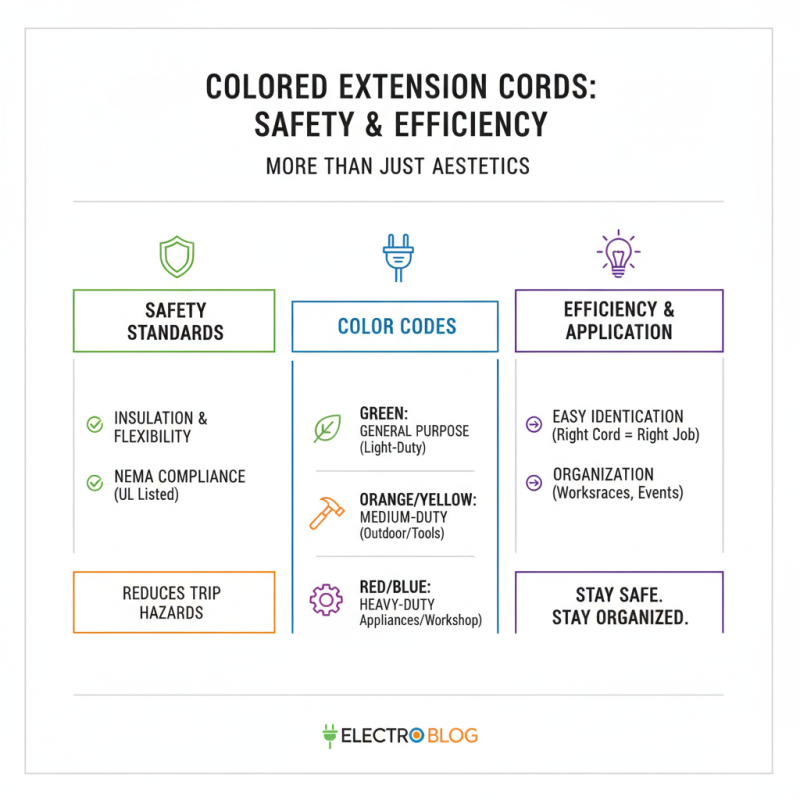
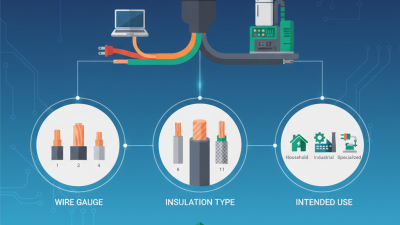
Extension cords come in various colors, and each color serves a different purpose. Knowing the meaning behind these hues can help you make the right choice for your project. For instance, yellow cords are often used for heavy-duty tasks outdoors. They can withstand tougher conditions, including rain and extreme temperatures. Blue cords are typically used indoors for lighter chores, like powering tools or appliances.
Here's a tip: Always match the cord color to the job's environment. A mismatched cord can lead to safety issues. Red cords indicate a need for caution and should be used where high voltage is involved. In contrast, green cords are associated with low-voltage applications, often for landscaping lights or small outdoor devices. Consider the specific needs before selecting your cord.
When using extension cords, it's important to inspect them regularly. Look for fraying or damage. These defects can pose hazards. Additionally, make sure your cord is long enough for your use. A too-short cord can stretch the length and create risk. Remember, not all cords are created equal. Understanding the colors can improve your experience and help you avoid mishaps.
Usage of Different Colored Extension Cords
Industry Standards for colored Extension Cord Manufacturing
Colored extension cords serve more than an aesthetic purpose. They are essential for safety and efficiency in various environments. Industry standards dictate that these cords must meet specific requirements for insulation and flexibility. The National Electrical Manufacturers Association (NEMA) reports that certain color codes help distinguish between cord types, voltage levels, and application settings.
For instance, a red cord might indicate high voltage, while a yellow cord may suggest outdoor use. These visual cues improve workplace safety and facilitate quick decision-making. According to a 2021 safety report, improper use of extension cords contributes to 3,300 electrical fires annually in the U.S. Adhering to color coding can significantly reduce this risk.
Manufacturers face challenges in balancing color durability and cord flexibility. Some colors fade quickly under UV light, limiting their visibility. A survey by the Electrical Safety Foundation International highlights that over 40% of employees feel unsure about the correct usage of colored cords. This confusion can lead to improper practices and safety hazards. Thus, while color standards are established, there remains a need for better education on their significance and proper usage.
Impact of Color on User Behavior and Safety Awareness
Colored extension cords serve more than just a functional purpose. Their vibrant hues significantly influence user behavior and safety awareness. Research from the National Safety Council indicates that color can enhance visibility, helping to prevent accidents. For instance, a bright yellow cord might alert users to potential trip hazards. It’s crucial to consider how colors can impact our interactions with everyday tools.
A study by the University of Maryland found that individuals are 70% more likely to notice and avoid hazards associated with brightly colored equipment. However, users sometimes underestimate the importance of color. Many consumers still opt for standard black or white cords, overlooking the potential safety benefits. An extension cord’s visibility can differ not only by color but also by context. For example, using a green cord in a grassy area may diminish its visibility.
While many recognize the safety advantages of colored cords, awareness is inconsistent. Users often forget that a well-chosen color enhances electrical safety. Reports show that only 45% of people consider color when purchasing extension cords. This gap highlights an area for improvement in user education. Awareness of color's impact can lead to better safety practices and a reduction in accidents. Choosing the right color is more than aesthetics; it’s a matter of safety and awareness.
Case Studies: Incidents Prevented by Using Colored Extension Cords
Colored extension cords serve a vital role in enhancing safety and organization. They can prevent mishaps during busy events or in crowded workspaces. For instance, a brightly colored cord can be easily spotted among obstacles. This visibility decreases the chance of tripping over it. In a well-lit area, a yellow cord stands out, making it easier to identify.
Incidents prevented by using colored cords illustrate their importance. At a recent outdoor festival, organizers used red extension cords to mark off high-traffic areas. Attendees were less likely to walk into them. In a warehouse setting, workers used blue cords to indicate equipment areas. This practice reduced accidents and improved workflow. However, some workers initially overlooked the colors. They didn’t realize the significance of using distinct colors. Awareness of this need developed over time through training.
Through these examples, it becomes clear that colored extension cords are more than just tools. They enhance safety and efficiency. Yet, the success of such systems relies on individual awareness and training. People need to recognize the importance of these clear visual cues. Failure to understand this can still lead to potential risks. As organizations adopt these practices, they must underscore the value of visibility in preventing accidents.