
-
- Products
- Indoor Household Cords
- Appliance Cords
- General Purpose Short-Length Cords
- General Purpose Extension Cords
- Landscape & Decorating Cords
- Bright Color Extension Cords
- Oil-Resistant Extension Cords
- Cold-Flex Extension Cords
- VividFlex Power Cords
- EXTREME All-Weather Cords
- Cord Management
- Task Lights
- Adapters & GFCI Devices
- Where to Buy
- About
- Careers
- Glossary
- Catalog


7 Tips for Choosing a Pasta And Noodle Maker
Choosing a Pasta And Noodle Maker is no longer only a matter of kitchen convenience. It reflects changing habits, ingredient preferences, and the growing appeal of handmade food. The World Instant Noodles Association reported 120.42 billion servings consumed worldwide in 2023. That figure shows the scale of noodle demand, although instant products and fresh homemade noodles are not identical. Industry reports from Grand View Research and Mordor Intelligence also connect food-appliance growth with home cooking, convenience, and personalization. Their market estimates differ because product definitions vary. That is worth remembering.
A useful machine should turn flour and water into consistent sheets, strands, or dumpling wrappers without making the counter look like a workshop. The rollers should move smoothly. The cutter should release noodles cleanly. Parts should also wash easily after dough dries along the edges. Small details matter. A heavy stainless-steel body may feel stable, while a lightweight model can slide during kneading. Electric machines save effort, but manual models often offer greater control over thickness and texture. Neither option is perfect.
This guide presents seven practical tips for choosing a Pasta And Noodle Maker. It considers dough capacity, adjustment settings, motor strength, cleaning, accessories, storage, and long-term value. These factors are supported by practical kitchen experience and manufacturer specifications, not attractive claims alone. Still, user needs differ. A busy family may prioritize speed, while a serious home cook may prefer slower control. One overlooked issue is noise. A powerful motor can sound impressive, but it may become irritating in a small apartment. Careful comparison helps transform an appealing appliance into a reliable everyday tool.
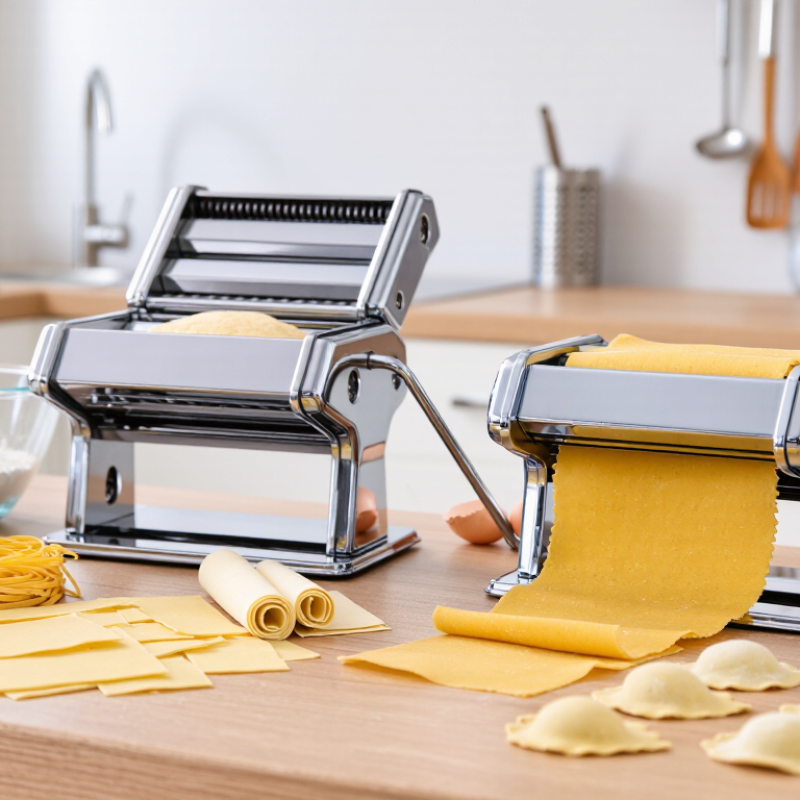
Table of Contents [Hide]
Define Your Pasta and Noodle Making Needs
Define Your Pasta and Noodle Making Needs
Before choosing a pasta and noodle maker, decide what you actually plan to prepare. Fresh egg pasta needs different handling from firm wheat noodles. If you enjoy lasagna sheets, check the machine’s width and thickness settings. For ramen-style noodles, cutting options and dough strength matter more. Your favorite recipes should guide the purchase, not attractive features.
Think about quantity and frequency. A small household may need only two portions on weekends. A larger family might process 500 grams of dough at once. I once chose a compact machine for limited storage, then found its narrow rollers frustrating during dinner preparation. That experience taught me to measure both counter space and working space. The machine must fit where you will use it, not merely where you can store it.
Cleaning is part of the real workload. Dough caught inside cutters can become stubborn, especially when the mixture is too wet. Removable parts make maintenance easier, but they may also require careful drying. Consider your strength and patience, too. Manual turning offers control and quiet operation, while an electric model can reduce effort during larger batches. I still prefer manual shaping for small portions, although my choice is not always the most efficient. Test the dough texture, expected serving size, storage area, and cleaning routine before deciding.