
-
- Products
- Indoor Household Cords
- Appliance Cords
- General Purpose Short-Length Cords
- General Purpose Extension Cords
- Landscape & Decorating Cords
- Bright Color Extension Cords
- Oil-Resistant Extension Cords
- Cold-Flex Extension Cords
- VividFlex Power Cords
- EXTREME All-Weather Cords
- Cord Management
- Task Lights
- Adapters & GFCI Devices
- Where to Buy
- About
- Careers
- Glossary
- Catalog


10 Tips for Choosing the Right Extension Wire?
Choosing the right extension wire looks simple until the details become practical. A longer cable is not automatically better. Gauge, length, insulation, grounding, and power demand must work together. A thin wire running a heater can become warm beneath a rug. That warning sign is easy to miss.
Mike Holt, a respected electrical educator, often stresses, “An extension cord is not a substitute for permanent wiring.” His point shapes this guide. An extension wire should support a temporary connection, not replace safe, fixed electrical installation. Before buying, check the appliance’s wattage and the wire’s rated capacity. Match the plug and socket carefully. For outdoor work, choose weather-resistant insulation and a suitable outdoor rating. For workshops, select a grounded, heavy-duty cable with a robust jacket. A short, thicker wire is often safer than a very long, lightweight one.
Look for recognized certification marks, such as UL or ETL, where applicable in your region. Read the manufacturer’s instructions, because ratings can differ between products and countries. Do not connect multiple extension wires casually. Avoid crushing, coiling tightly, or placing them under carpets. These habits can trap heat.
The tempting shortcut is choosing by price. That can be a costly mistake. I would also question labels like “heavy duty” without checking the actual gauge and amperage. Small print matters. This article explains ten practical tips for selecting an extension wire with greater confidence, clearer judgment, and fewer surprises during everyday use.
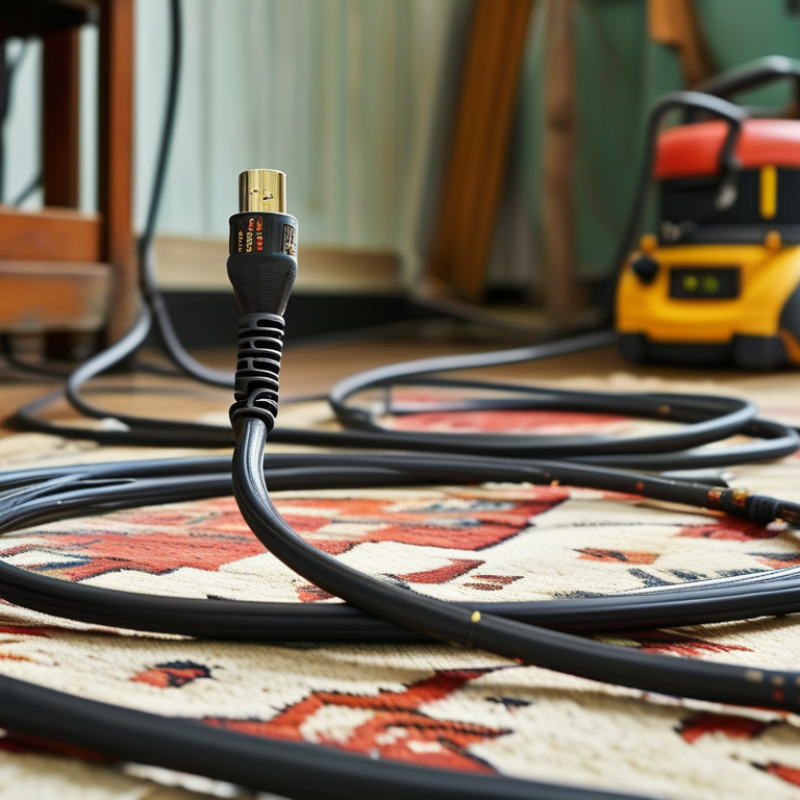
Table of Contents
[Hide]
Identify the Electrical Load and Power Requirements
Choosing the right extension wire starts with identifying the electrical load. Check each appliance’s label for voltage, wattage, or amperage. Use this formula: watts equal volts multiplied by amps. A 1,500-watt heater draws far more power than a small lamp. The wire must handle the appliance’s demand without becoming hot.
Tip: Add the wattage of devices used together. Leave a safety margin. Motors, compressors, and power tools may require extra power when starting. Their running wattage can look harmless, yet the startup surge may overload a light-duty extension wire. A longer wire can also create voltage drop. The tool may run weakly, while the wire quietly heats.
Inspect the wire before connecting it. Look for its rated amperage, length, conductor size, and indoor or outdoor approval. Thicker conductors usually carry higher loads, but length still matters. Do not rely only on appearance. I once underestimated how quickly a tightly coiled wire could warm under continuous demand; that mistake deserved more attention. Uncoil it fully, keep connections dry, and stop using it if the plug, socket, or insulation feels hot. Never connect multiple extension wires to reach farther. When the load is unclear, ask a qualified electrician to check the circuit and calculate the demand.
Related Posts
-
How to Choose the Best Extension Cord Cable for Your Needs?
-
What Is an Extension Cable and How Does It Work?
-
Top 10 Extension Cables: Your Ultimate Guide to Choosing the Best
-
How to Choose the Right Short Extension Cord for Your Needs
-
Top Extension Cord Wire Types and Their Best Uses?
-
10 Best Extension Cord Wire Options for Safe and Reliable Power Supply?